

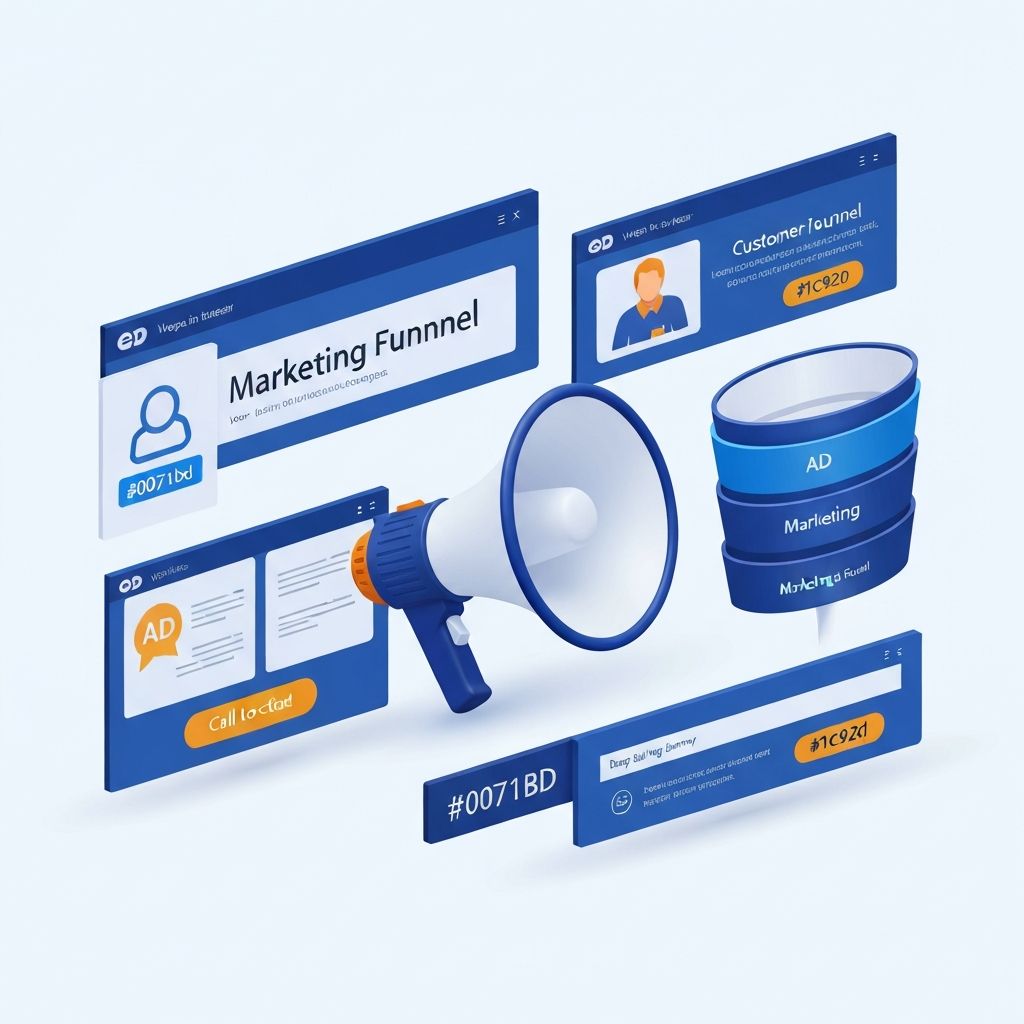
Web Design Ads
The Intersection of Web Design and Advertising
Web design and digital advertising are deeply interconnected disciplines that work together to drive business results. While advertising brings visitors to websites, web design determines whether those visitors convert into customers. Understanding both disciplines—and how they interact—is essential for maximizing marketing return on investment. At AAMAX.CO, our full-service digital marketing approach integrates web design excellence with advertising strategy to create cohesive campaigns that perform.
The relationship between web design and advertising extends beyond landing pages. Ad creative design, display banner creation, remarketing strategies, and conversion optimization all require design thinking applied within advertising contexts. Designers who understand advertising principles create more effective campaigns, while marketers who appreciate design constraints make better strategic decisions.
Landing Page Design Fundamentals
Landing pages are purpose-built web pages designed to receive advertising traffic and drive specific conversions. Unlike general website pages that serve multiple purposes, landing pages focus singularly on converting visitors from specific campaigns. This focused purpose demands specialized design approaches.
Message match between ads and landing pages is fundamental. When users click an ad promising a specific offer, the landing page must immediately reinforce that promise. Headlines, imagery, and value propositions should align with ad creative, creating seamless experiences that build trust and maintain momentum toward conversion.
Landing page layouts typically follow established patterns optimized for conversion. Above-the-fold content captures attention and communicates core value propositions. Social proof elements build credibility. Clear calls-to-action guide visitors toward conversion. Minimized navigation prevents visitors from wandering away from the conversion path. Our website design services include specialized landing page design for advertising campaigns.
Designing for Different Campaign Types
Different advertising campaigns require different landing page approaches. Lead generation campaigns need form-focused pages optimized for contact information capture. E-commerce campaigns may direct traffic to product pages, category pages, or special offer pages. Brand awareness campaigns might prioritize engagement and content consumption over immediate conversion.
Search advertising landing pages must address specific user intent expressed through search queries. Users searching for "buy running shoes" have different expectations than those searching "best running shoes for beginners." Landing page content and design should align with these varying intents.
Social media advertising often reaches users who weren't actively searching for products or services. These interruptive contexts require landing pages that quickly establish relevance, build interest, and overcome the lower initial intent. Compelling visuals, strong headlines, and clear value propositions are especially important for social advertising landing pages.
Display Advertising Design
Display advertising—banner ads, rich media ads, and native ad units—requires design work that functions within significant constraints. Limited space, varied placements, and brief attention spans demand designs that communicate instantly and compel action.
Standard banner sizes have established dimensions that designers must work within. Common formats include leaderboards (728x90), medium rectangles (300x250), and skyscrapers (160x600). Each format presents different design challenges and opportunities. Responsive ad units that adapt to multiple placements add complexity.
Effective banner design prioritizes clarity over complexity. A single focal point, limited text, strong brand presence, and clear call-to-action typically outperform cluttered designs trying to communicate too much. Animation can draw attention but must be purposeful rather than distracting. Our front-end web development capabilities include creating interactive and animated ad units that engage viewers.
Mobile Advertising Considerations
Mobile devices now account for the majority of digital advertising impressions and clicks. Designing for mobile advertising contexts requires understanding the unique characteristics of smartphone and tablet use.
Smaller screens demand even more focused messaging. Mobile landing pages must prioritize essential content and streamline conversion paths. Touch-friendly interfaces with appropriately sized tap targets reduce frustration. Page load speed is especially critical on mobile, where slower connections and user impatience combine to punish slow-loading pages.
Mobile-specific ad formats like interstitials and in-app placements present unique design opportunities and constraints. These formats often allow more creative freedom than traditional banners but must respect user experience to avoid generating negative brand associations.
Conversion Rate Optimization
Conversion rate optimization (CRO) applies data-driven design improvements to increase the percentage of visitors who complete desired actions. CRO methodology combines analytics, user research, and systematic testing to progressively improve advertising performance.
Analytics reveal how users interact with landing pages, identifying drop-off points and engagement patterns. Heatmaps show where users click and how far they scroll. Session recordings provide qualitative insight into user behavior. This data informs hypotheses about potential improvements.
A/B testing compares design variations to determine which performs better. Headlines, images, form designs, button colors, and page layouts can all be tested. Statistical rigor ensures that observed differences reflect real performance improvements rather than random variation. Our website development services include implementing testing infrastructure and conducting optimization programs.
Remarketing and Retargeting Design
Remarketing campaigns target users who have previously visited a website or taken specific actions. These campaigns require design approaches that acknowledge the existing relationship while providing compelling reasons to return and convert.
Dynamic remarketing ads display specific products or content that users previously viewed. These ads require design templates that accommodate variable content while maintaining visual appeal and brand consistency. Product image quality, price display, and call-to-action design all impact dynamic ad effectiveness.
Sequential messaging campaigns tell stories across multiple ad exposures, with each ad building on previous impressions. Designing for sequential experiences requires considering how individual ads work both independently and as part of the larger narrative arc.
Video Advertising Design
Video advertising has grown enormously with the rise of streaming platforms and social video. Video ads present unique creative opportunities but require different design approaches than static formats.
Capturing attention in the first few seconds is crucial, as viewers may skip or scroll past ads quickly. Strong visual hooks, relevant messaging, and brand identification early in the video improve completion rates and message retention. Designing for sound-off viewing—common on social platforms—means using captions, graphics, and visual storytelling that work without audio.
Video landing page experiences should maintain the emotional momentum established by video ads. Continuing video themes, using consistent visual language, and providing smooth transitions from ad to page improve conversion rates from video campaigns.
Ad Creative Testing and Iteration
Successful advertising campaigns involve continuous creative testing and iteration. Initial creative hypotheses are validated through market testing, with learnings applied to improve subsequent versions.
Creative testing isolates specific elements to understand what drives performance. Testing headlines, images, color schemes, and calls-to-action independently reveals which elements matter most. Multivariate testing examines element combinations, though requires higher traffic volumes for statistical validity.
Creative fatigue occurs when audiences have seen ads too many times, reducing effectiveness. Regular creative refreshes maintain campaign performance over time. Design systems that enable efficient variation creation support sustainable creative programs without proportional increases in design resources.
Brand Consistency Across Campaigns
While individual campaigns may have specific creative approaches, maintaining brand consistency across advertising efforts builds recognition and trust over time. Design systems extend to advertising creative, providing guidelines and assets that ensure brand coherence.
Brand guidelines for advertising specify logo usage, color applications, typography, imagery styles, and tone of voice. These guidelines enable creative flexibility within established parameters, ensuring that all advertising reinforces rather than dilutes brand identity.
Cross-channel consistency ensures that users encountering the brand through different advertising channels experience coherent messaging and visual identity. Coordination between design teams working on different channels prevents fragmented brand experiences.
Measuring Design Impact on Advertising
Connecting design decisions to advertising performance metrics enables data-informed design optimization. Understanding which metrics matter and how design influences them improves both design decisions and business outcomes.
Click-through rate (CTR) measures how effectively ads compel users to click. Creative design directly impacts CTR through attention-grabbing visuals, compelling copy, and clear calls-to-action. Landing page design affects bounce rate, time on page, and ultimately conversion rate.
Attribution modeling connects advertising touchpoints to eventual conversions, revealing how different campaigns and creative approaches contribute to business results. Understanding attribution helps allocate design resources toward highest-impact opportunities.
Conclusion
Web design and advertising success are inextricably linked. From landing pages that convert advertising traffic to display creative that captures attention, design excellence amplifies advertising investment. At AAMAX.CO, our integrated approach to website design and digital marketing ensures that design and advertising work together harmoniously. We create landing pages optimized for campaign objectives, develop creative that engages and converts, and continuously optimize based on performance data. In today's competitive digital landscape, this integration of design and advertising expertise is what separates campaigns that deliver results from those that simply consume budget.
Want to publish a guest post on aamax.co?
Place an order for a guest post or link insertion today.
Place an Order