

2.0 Web Design
Understanding the Web 2.0 Revolution
Web 2.0 represents more than a design trend; it signifies a fundamental shift in how we conceptualize and create digital experiences. This paradigm emerged in the mid-2000s, transforming the internet from a collection of static, read-only pages into dynamic, interactive platforms where users contribute, share, and collaborate. Understanding Web 2.0 design principles provides essential context for modern website design and development practices that prioritize user engagement and participation.
The Philosophy Behind Web 2.0
At its core, Web 2.0 embraced the internet as a platform rather than merely a publishing medium. This philosophical shift influenced every aspect of design and development, from visual aesthetics to technical architecture. Websites evolved from digital brochures into living ecosystems where content emerged from user interactions rather than solely from site owners.
User-generated content became the driving force behind Web 2.0 success stories. Platforms like YouTube, Wikipedia, and countless blogs demonstrated that audiences could create value, not just consume it. This recognition fundamentally changed how designers approached interface creation, prioritizing tools that empowered users to contribute, comment, rate, and share.
Social connectivity emerged as a design imperative. Features enabling users to connect, follow, friend, and interact became expected components of digital experiences. This social layer transformed isolated browsing into communal activities, creating network effects that drove platform growth and engagement.
Visual Characteristics of Web 2.0 Design
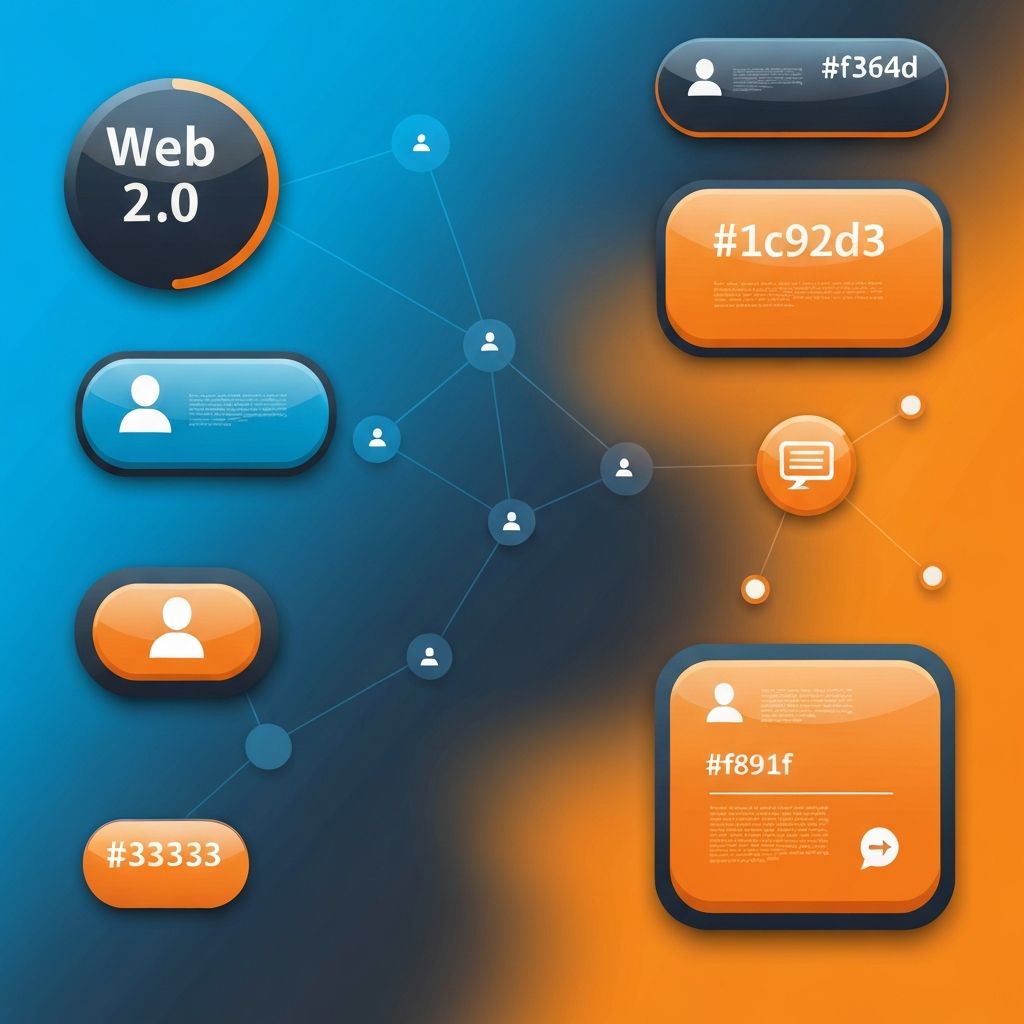
Web 2.0 brought distinctive visual elements that defined an era of web aesthetics. Rounded corners replaced the sharp edges of earlier designs, conveying friendliness and approachability. This subtle shift made interfaces feel more organic and welcoming, reducing the cold, technical impression of earlier websites.
Gradient backgrounds became signature elements, typically featuring soft color transitions that added depth without overwhelming content. Unlike the harsh gradients of the late 1990s, Web 2.0 gradients employed subtle shading that enhanced visual hierarchy while maintaining readability.
Large, bold typography emerged as a defining characteristic. Headlines grew substantially, commanding attention and establishing clear visual hierarchies. This typographic confidence reflected the medium's maturity and designers' growing understanding of screen-based reading patterns.
Glossy buttons with reflection effects became iconic Web 2.0 elements. These three-dimensional, candy-like interface components made actions obvious and inviting, encouraging user interaction through visual appeal. While later dismissed as dated, these elements served important usability functions during the transition from physical to digital interfaces.
Technical Innovations Enabling Web 2.0
AJAX (Asynchronous JavaScript and XML) technology revolutionized user experiences by enabling page updates without full reloads. This capability made web applications feel responsive and desktop-like, blurring boundaries between websites and software applications. Modern web application development builds directly on these foundations.
APIs (Application Programming Interfaces) enabled unprecedented platform interconnectivity. Services could share data and functionality, creating ecosystems where applications enhanced each other. Mashups combining multiple data sources demonstrated the creative potential of open platforms, inspiring today's API-first development approaches.
RSS feeds standardized content syndication, allowing users to aggregate updates from multiple sources. This technology empowered users to curate personalized information streams, a concept that evolved into today's social media feeds and content recommendation systems.
User Experience Priorities
Web 2.0 design prioritized simplicity and intuitiveness. Interfaces stripped away unnecessary complexity, presenting clean layouts that guided users naturally toward desired actions. This user-centered approach recognized that technology should adapt to human behavior, not the reverse.
Progressive disclosure became a key pattern, revealing complexity only when needed. Initial interfaces presented essential options while hiding advanced features until users demonstrated readiness. This approach balanced power user needs with newcomer accessibility, improving overall usability.
Feedback mechanisms proliferated, ensuring users understood system responses to their actions. Inline validation, loading indicators, and success confirmations reduced uncertainty and built confidence. These patterns remain fundamental to effective front-end web development today.
The Rise of Participatory Platforms
Blogs democratized publishing, enabling anyone to share perspectives with global audiences. Platforms like Blogger and WordPress lowered barriers to content creation, spawning millions of personal and professional publications. This democratization fundamentally changed media landscapes and established content marketing as a viable strategy.
Wikis demonstrated collaborative knowledge creation at scale. Wikipedia's success proved that communities could produce authoritative resources through distributed contribution and collective editing. This model inspired countless internal knowledge bases and collaborative platforms.
Social networks formalized online relationships, creating structured environments for connection and communication. These platforms became primary communication channels for billions, fundamentally altering social interaction patterns and creating new design challenges around privacy, attention, and well-being.
E-commerce Evolution in Web 2.0
User reviews and ratings transformed purchasing decisions. Amazon's customer review system demonstrated that peer opinions influenced buying behavior more than marketing messages. This insight shaped e-commerce design, prioritizing social proof elements that remain essential today.
Personalization algorithms began tailoring experiences to individual preferences. Recommendation engines analyzed behavior patterns to surface relevant products and content, improving user satisfaction while increasing engagement and conversion rates.
User-generated product content, from reviews to photos to questions, enriched product pages beyond manufacturer descriptions. This content provided authentic perspectives that helped buyers make informed decisions, improving satisfaction and reducing returns.
Design Patterns That Endured
Many Web 2.0 patterns transitioned into permanent best practices. Card-based layouts organizing content into scannable units originated in this era and now dominate mobile interfaces. These modular components enable flexible responsive designs that adapt gracefully across devices.
Infinite scroll emerged as an alternative to pagination, keeping users engaged by continuously loading content. While debates about its appropriateness continue, this pattern revolutionized content consumption experiences and remains prevalent in social and content platforms.
Tagging systems enabled user-driven organization, creating folksonomies that reflected actual user mental models rather than imposed taxonomies. This bottom-up approach to categorization improved findability and surfaced unexpected connections between content.
Lessons for Contemporary Design
Web 2.0's emphasis on user participation remains relevant for modern digital strategies. Enabling user contribution creates engagement, generates content, and builds community. Whether through reviews, comments, forums, or user-generated content features, participation mechanisms add value beyond static publishing.
The era's focus on simplicity provides ongoing guidance. Despite increased technical capabilities, effective design continues prioritizing clarity over complexity. Users appreciate interfaces that respect their time and intelligence, presenting necessary options without overwhelming choices.
At AAMAX.CO, we apply Web 2.0's foundational principles while leveraging modern technologies to create engaging, participatory digital experiences. Our approach honors proven patterns while innovating where contemporary capabilities enable improved solutions.
From Web 2.0 to Modern Frameworks
Today's development frameworks like React, Vue, and Angular evolved from Web 2.0's technical foundations. The component-based architectures, state management patterns, and reactive interfaces that define modern development trace lineage directly to AJAX innovations and single-page application experiments of the Web 2.0 era.
Our ReactJS web development services leverage these evolved capabilities to create sophisticated, performant applications that would have seemed magical to Web 2.0 pioneers. Similarly, our Next.js web development expertise enables server-rendered React applications that combine Web 2.0's dynamic interactivity with improved performance and SEO.
Conclusion
Web 2.0 design principles transformed the internet from a publishing platform into a participatory medium, establishing patterns and philosophies that continue guiding digital experience creation. Understanding this evolution provides valuable context for contemporary design decisions, helping teams build on proven foundations while embracing modern capabilities. The user-centered, participation-focused approach that defined Web 2.0 remains essential for creating engaging digital experiences that serve both user needs and business objectives.
Want to publish a guest post on aamax.co?
Place an order for a guest post or link insertion today.
Place an Order