

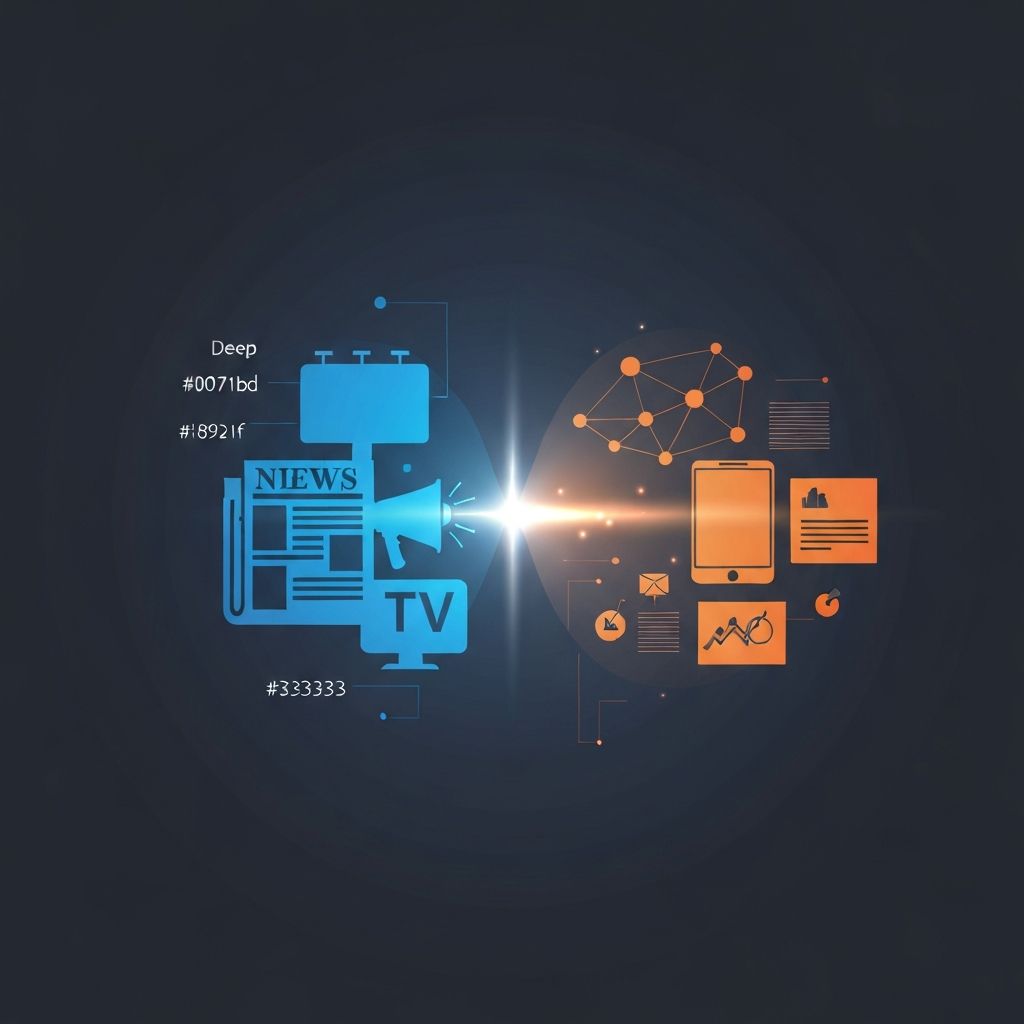
Traditional Marketing vs Digital
The Evolving Marketing Landscape
For decades, marketing meant billboards, newspaper ads, radio spots, and television commercials. Then came the internet, and everything changed. Today's marketers have a vast toolkit that blends traditional and digital channels. Understanding the strengths and weaknesses of each is essential to making smart investment decisions. At AAMAX.CO, we help businesses build integrated strategies that draw on the best of both worlds.
The debate is not really traditional versus digital. It is about which combination of channels best serves your business goals.
What Counts as Traditional Marketing?
Traditional marketing includes any channel that existed before the digital era. This typically means print advertising in newspapers and magazines, television and radio commercials, outdoor advertising like billboards and transit ads, direct mail, telemarketing, and in-person events. These channels still play important roles, especially for local businesses and brand awareness campaigns.
What Counts as Digital Marketing?
Digital marketing covers all online and digital channels. This includes search engine optimization, paid search advertising, social media marketing, email marketing, content marketing, affiliate marketing, influencer partnerships, and connected TV. The digital ecosystem expands constantly as new platforms emerge.
Strengths of Traditional Marketing
Traditional marketing has several enduring strengths. It can reach broad local audiences quickly, build brand awareness through repetition, and create tangible experiences through print or events. Television commercials in particular still command attention and convey trust at scale. For certain demographics and industries, traditional marketing remains highly effective.
It also tends to be less crowded in certain niches. While every business competes for digital ad space, fewer compete for local radio or community publications, making them more accessible for the right audiences.
Strengths of Digital Marketing
Digital marketing offers advantages that traditional channels simply cannot match. It is highly measurable, allowing marketers to track every click, conversion, and dollar of spend. It enables precise targeting based on demographics, behaviors, interests, and even intent. And it is flexible, allowing campaigns to be adjusted in real time based on performance data.
The cost-effectiveness of digital marketing is also significant. With Google ads and social media marketing, even small budgets can produce meaningful results when campaigns are well structured.
Weaknesses of Traditional Marketing
Despite its strengths, traditional marketing has clear limitations. It is often expensive relative to the audience reached. Measurement is difficult; it is hard to know exactly which billboard or commercial generated a sale. And targeting is broad, meaning much of the audience may not be a good fit for your offer.
Once a print ad runs or a commercial airs, it cannot be edited. Mistakes are costly and corrections take time.
Weaknesses of Digital Marketing
Digital marketing is not without challenges. The space is increasingly crowded, with rising ad costs and decreasing organic reach on many platforms. Algorithm changes can disrupt long-built strategies overnight. And consumer trust in digital ads is fragile, with banner blindness and ad fatigue affecting performance.
Digital also requires constant attention. Campaigns need monitoring, optimization, and updating to keep producing results. This is one reason many businesses partner with specialists to manage their digital efforts.
The Power of Integration
The best marketing strategies often blend traditional and digital channels. A television commercial can drive viewers to search for your brand on Google, where strong SEO captures the demand. A direct mail piece can include a QR code that links to a personalized landing page. A community event can be amplified through social media before, during, and after.
This kind of integration multiplies the impact of each channel. Each touchpoint reinforces the others, building familiarity and trust faster than any single channel could on its own.
Measuring the ROI of Each Channel
Measurement is one of the biggest differences between traditional and digital. Digital channels offer near-real-time data, while traditional channels often rely on proxies like brand lift studies or coupon codes. Smart marketers find ways to attribute results across channels, using methods like marketing mix modeling and surveys.
Whatever the mix, having a clear understanding of which channels produce results is essential to scaling investments wisely.
The Future Is Hybrid
While digital continues to grow as a share of total marketing spend, traditional channels are not going away. The most effective marketers will be those who understand both worlds and orchestrate them seamlessly. Emerging channels like connected TV and digital out-of-home blur the line further, combining the reach of traditional with the targeting of digital.
The rise of AI-driven search makes generative engine optimization another critical layer for forward-thinking brands.
Partner With AAMAX.CO for Integrated Marketing
Whether your strategy leans traditional, digital, or somewhere in between, we can help you build a plan that delivers. As a full-service digital marketing agency, we specialize in modern channels while helping clients integrate with broader marketing efforts. Contact us today and let our team build a strategy that brings the best of both worlds to your business.
Want to publish a guest post on aamax.co?
Place an order for a guest post or link insertion today.
Place an Order