

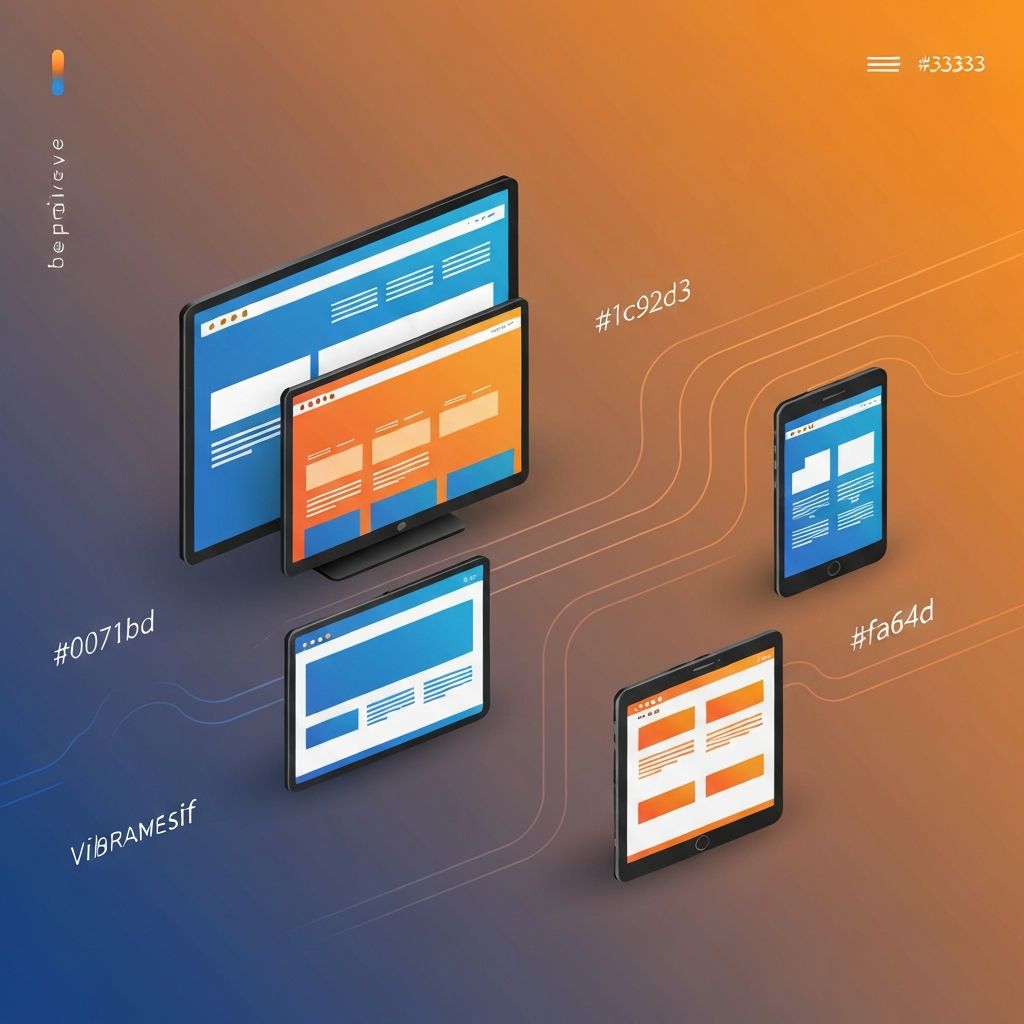
Responsive Web Design Service
Why Responsive Web Design Service Is Essential for Modern Businesses
In today's multi-device world, responsive web design service has become not just a nice-to-have feature but an absolute necessity for business success online. With users accessing websites from smartphones, tablets, laptops, desktops, and even smart TVs, your website must deliver a seamless experience regardless of screen size or device type. At AAMAX.CO, we specialize in creating responsive websites that adapt fluidly to any viewing environment, ensuring your business never misses an opportunity to connect with potential customers.
The shift toward mobile browsing has been dramatic. Mobile devices now account for over 60% of global web traffic, and this percentage continues to grow. Google has responded by implementing mobile-first indexing, meaning search engines primarily use the mobile version of your website for ranking and indexing. Without responsive design, your search visibility and user experience suffer significantly.
Understanding Responsive Web Design Principles
Responsive web design employs a combination of flexible grids, flexible images, and CSS media queries to create layouts that adapt to different screen sizes. Rather than creating separate websites for desktop and mobile users, responsive design uses a single codebase that intelligently adjusts based on the viewing device.
Flexible grid layouts use relative units like percentages rather than fixed pixel values. This allows page elements to resize proportionally as the viewport changes. A three-column layout on desktop might become a single column on mobile, with content stacking vertically for optimal readability.
Flexible images scale within their containing elements to prevent overflow and maintain aspect ratios. Modern responsive techniques also include serving appropriately sized images for different devices, reducing load times on mobile connections while maintaining quality on larger screens.
CSS media queries detect device characteristics like screen width, height, and orientation. Based on these conditions, different stylesheets or style rules apply, completely transforming the layout and presentation for optimal viewing on each device.
Benefits of Professional Responsive Web Design Service
Investing in professional responsive web design service delivers numerous benefits that impact your bottom line. Improved user experience tops the list—when users can easily navigate and interact with your site regardless of their device, they're more likely to engage with your content and convert into customers.
Enhanced SEO performance results from responsive design. Google explicitly recommends responsive design and rewards mobile-friendly websites with better search rankings. Having a single URL for all devices also consolidates your SEO efforts rather than splitting authority between desktop and mobile versions.
Lower maintenance costs come from managing a single website rather than multiple device-specific versions. Updates, content changes, and design modifications need only be made once, reducing both time and expense over the long term.
Increased conversion rates follow improved user experiences. Mobile users who encounter frustrating experiences abandon purchases and inquiries. Responsive design removes these friction points, capturing conversions that would otherwise be lost.
Mobile-First Design Approach
Our website design process embraces mobile-first methodology. This approach begins by designing for the smallest screen sizes first, then progressively enhancing the experience for larger devices. This ensures mobile users—who often face the greatest constraints—receive a fully optimized experience.
Mobile-first design forces prioritization of content and features. With limited screen real estate, designers must identify what's truly essential. This discipline often results in cleaner, more focused designs even on desktop where space is abundant.
Performance optimization is inherent to mobile-first thinking. Designing for mobile connections and processing power first means the foundation is lightweight and fast. Additional features and enhancements layer on top for capable devices without burdening mobile users.
Technical Implementation of Responsive Design
Creating truly responsive websites requires technical expertise across multiple disciplines. Our front-end web development team employs modern CSS techniques including Flexbox and Grid layouts that provide powerful, flexible positioning capabilities.
Responsive typography ensures text remains readable across devices. Using relative units like rem and em, along with viewport-based sizing, text scales appropriately while maintaining hierarchy and readability.
Touch-friendly interface elements account for the differences between mouse and finger interaction. Buttons and links sized appropriately for touch, adequate spacing between interactive elements, and gesture support enhance mobile usability.
Performance optimization techniques including lazy loading, image optimization, code minification, and caching strategies ensure fast load times even on slower mobile connections. Every millisecond matters for user experience and search rankings.
Responsive Design for Different Industries
Different industries have unique responsive design requirements. E-commerce sites must ensure product images, descriptions, and checkout processes work seamlessly on mobile devices where many purchase decisions occur. Complex filtering and comparison features require thoughtful mobile adaptations.
Service businesses need responsive designs that prominently display contact information and make it easy to request quotes or schedule appointments on any device. Click-to-call functionality and location-based features enhance mobile user experience.
Content-heavy websites like news outlets and blogs require responsive designs that maintain readability and navigation across devices. Article layouts, media embedding, and comment systems must all adapt appropriately.
Portfolio and creative websites must showcase visual work effectively on screens of all sizes. Image galleries, video content, and interactive elements require special attention to maintain impact while ensuring functionality.
Testing and Quality Assurance
Comprehensive testing across devices and browsers is essential for responsive web design. Our process includes testing on actual devices—not just browser simulators—to verify real-world performance. Different operating systems, browsers, and device capabilities can all affect how responsive designs render.
Cross-browser compatibility ensures consistent experiences whether users prefer Chrome, Safari, Firefox, Edge, or other browsers. Each browser interprets code slightly differently, requiring careful testing and occasional browser-specific adjustments.
Performance testing under various network conditions simulates real-world usage scenarios. Testing on throttled connections reveals issues that might not appear on fast office networks but significantly impact mobile users.
User testing provides qualitative feedback about the responsive experience. Observing actual users interact with your site on different devices reveals usability issues that technical testing might miss.
Responsive Design and Web Applications
Our web application development services extend responsive principles to complex interactive applications. Dashboards, data entry forms, and workflow tools all benefit from responsive design that allows users to access functionality regardless of their current device.
Progressive web applications (PWAs) take responsive design further by providing app-like experiences through the browser. These applications work offline, send push notifications, and can be installed on device home screens while maintaining full responsiveness.
Complex data visualizations and interactive elements require special responsive considerations. Charts and graphs must remain legible on small screens, sometimes requiring simplified mobile versions or alternative presentation methods.
Maintaining Responsive Websites
Responsive design isn't a one-time implementation—it requires ongoing attention. New devices with different screen sizes and capabilities regularly enter the market. Browser updates can affect how responsive features render. Content additions must be tested across devices to ensure they don't break responsive layouts.
Our website maintenance and support services include ongoing responsive testing and updates. Regular audits identify any responsiveness issues that may have developed, allowing quick remediation before they impact users.
Analytics monitoring reveals how users actually interact with your site across devices. Identifying high-traffic devices, noting any device-specific bounces or conversion issues, and tracking mobile versus desktop behavior informs ongoing optimization efforts.
Future-Proofing Through Responsive Design
Responsive web design service provides future-proofing for your digital presence. As new devices emerge with different screen sizes and capabilities, properly implemented responsive design adapts automatically. This protects your investment and ensures your website remains functional regardless of technological changes.
Emerging technologies like foldable phones and variable-size displays present new challenges that responsive design principles can address. Building on a solid responsive foundation makes adapting to these innovations manageable rather than requiring complete rebuilds.
We create responsive websites built for both today's devices and tomorrow's innovations. Our development approach using modern technologies like ReactJS ensures your responsive implementation is both current and adaptable to future requirements.
Want to publish a guest post on aamax.co?
Place an order for a guest post or link insertion today.
Place an Order