

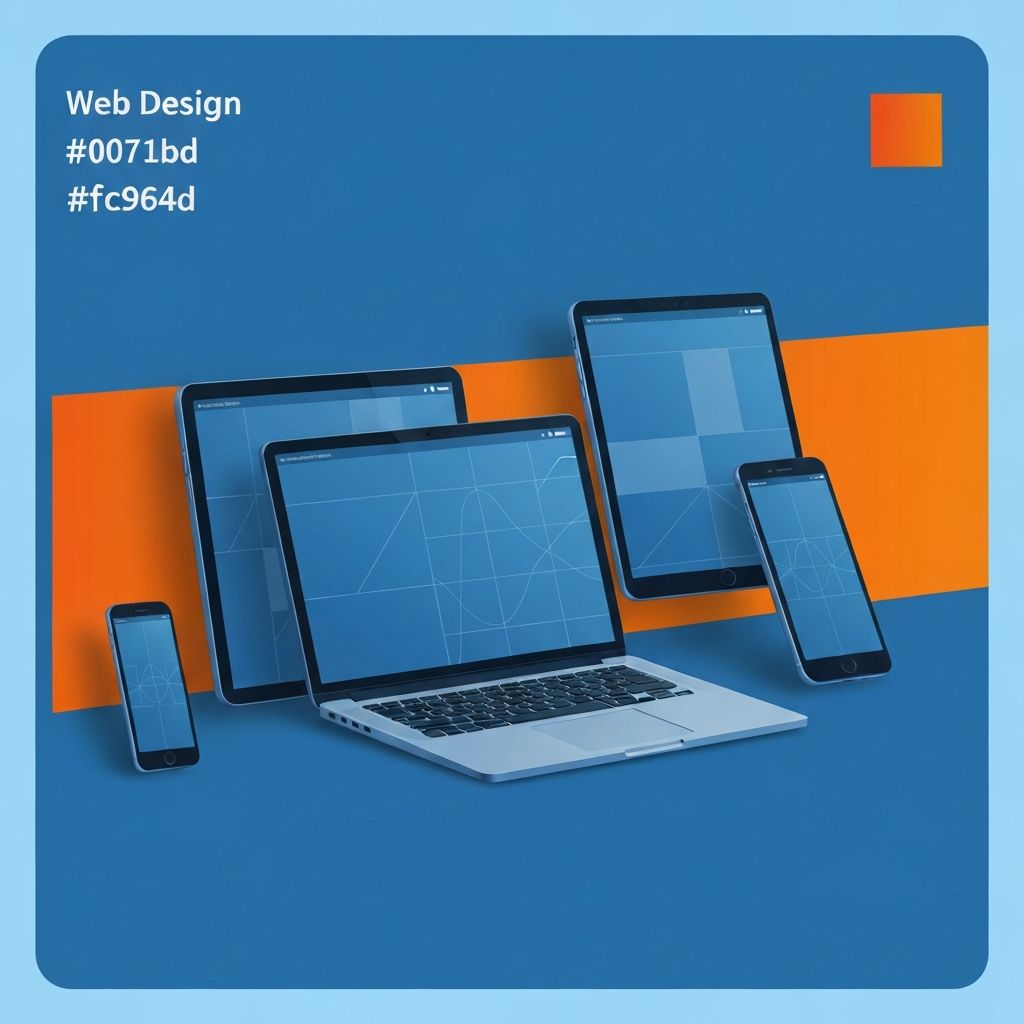
Responsive Web Design Companies
Understanding Responsive Web Design
In an era where people access websites from an unprecedented variety of devices, responsive web design has become the standard for modern web development. Responsive design ensures that websites adapt fluidly to different screen sizes, orientations, and platforms, providing optimal viewing experiences whether users visit from desktop computers, tablets, smartphones, or even smart TVs.
The concept of responsive web design was first articulated by Ethan Marcotte in 2010, and it has since evolved from a cutting-edge technique to an essential requirement. Today, Google prioritizes mobile-friendly websites in search rankings, making responsive design not just a user experience consideration but a critical SEO factor as well.
Responsive web design companies specialize in creating these adaptable websites, employing sophisticated techniques to ensure seamless experiences across all devices. Choosing the right partner for your responsive design project can significantly impact your online success.
Why Responsive Design Matters More Than Ever
The statistics tell a compelling story about why responsive design is non-negotiable in today's digital landscape. Mobile devices now account for approximately 60% of all web traffic globally, and this percentage continues to climb. More importantly, user expectations have shifted—people expect websites to work flawlessly on their devices, and they quickly abandon sites that don't.
Search engine optimization represents another crucial consideration. Google implemented mobile-first indexing, meaning the mobile version of your website is now the primary version Google uses for ranking purposes. A site that doesn't perform well on mobile devices will struggle to achieve strong search rankings, regardless of how good its desktop version might be.
Beyond SEO, responsive design directly impacts conversion rates. Studies consistently show that users are more likely to engage with, trust, and purchase from websites that provide smooth mobile experiences. Conversely, poor mobile experiences drive users to competitors with better-optimized sites.
What Sets Top Responsive Web Design Companies Apart
Not all web design companies approach responsive design with the same level of expertise or commitment. At AAMAX.CO, we've identified several characteristics that distinguish truly excellent responsive web design companies from mediocre ones.
Mobile-first thinking represents the most important differentiator. The best companies design for mobile devices first, then progressively enhance the experience for larger screens. This approach ensures mobile experiences receive primary attention rather than being afterthoughts adapted from desktop designs.
Performance optimization goes hand-in-hand with responsive design. Quality companies understand that mobile users often have slower connections and limited data plans. They optimize images, minimize code, and implement efficient loading strategies to ensure fast performance across all devices and connection speeds.
Thorough testing across real devices separates professional companies from amateurs. While emulators and simulators provide useful starting points, nothing replaces testing on actual smartphones, tablets, and various browsers to identify and resolve issues.
Our website design services embody these principles, delivering responsive solutions that perform exceptionally across all platforms.
Key Techniques Used by Responsive Design Professionals
Understanding the technical approaches that responsive web design companies employ helps you evaluate potential partners and appreciate the complexity of quality responsive development.
Fluid grids form the foundation of responsive layouts. Instead of fixed pixel widths, responsive designs use percentage-based widths that allow content containers to resize proportionally as screen dimensions change. This flexibility ensures layouts adapt smoothly rather than breaking at specific breakpoints.
Flexible images and media prevent content from overflowing containers or displaying improperly on smaller screens. Through CSS techniques and modern HTML attributes, images scale appropriately while maintaining quality and aspect ratios.
Media queries enable designers to apply different styles based on device characteristics such as screen width, height, resolution, and orientation. These CSS rules create the breakpoints where layouts shift to better accommodate different screen sizes.
Modern CSS features like Flexbox and Grid have revolutionized responsive layout creation, providing powerful tools for building complex, adaptive designs with cleaner, more maintainable code.
Evaluating Responsive Web Design Companies
Selecting the right responsive web design company requires careful evaluation across several dimensions. Here's how to assess potential partners effectively.
Portfolio review provides the most direct insight into a company's capabilities. Examine their previous projects on multiple devices—pull out your phone and tablet to see how their work actually performs. Look for smooth transitions, readable text without zooming, and intuitive navigation on smaller screens.
Ask about their development process. Quality companies follow structured approaches that include responsive requirements gathering, mobile-first design phases, comprehensive testing protocols, and performance optimization steps. Be wary of companies that treat responsiveness as an add-on rather than a fundamental design principle.
Inquire about their testing procedures. How do they ensure designs work across different devices, browsers, and operating systems? Do they test on actual devices or rely solely on emulators? What happens when issues are discovered after launch?
Check references and reviews from previous clients, particularly those with similar project requirements. Direct conversations with past clients reveal insights about communication, reliability, and results that portfolios alone cannot provide.
The Benefits of Partnering with Expert Responsive Design Companies
Engaging a professional responsive web design company offers numerous advantages over attempting responsive design in-house or working with generalist developers.
Expertise and efficiency top the list. Experienced responsive design specialists have encountered and solved countless challenges across diverse projects. They know the pitfalls to avoid, the techniques that work best, and the efficient approaches that deliver results without wasted effort.
Access to specialized tools and technologies enhances project outcomes. Professional companies invest in design tools, testing environments, and development frameworks that might not be cost-effective for individual organizations to maintain.
Staying current with evolving standards and best practices requires dedicated attention. Responsive design techniques continue to advance, and professional companies prioritize staying at the forefront of these developments.
Our team maintains expertise across all modern responsive design approaches, including our front-end web development specialists who ensure pixel-perfect implementations.
Common Responsive Design Challenges and Solutions
Even experienced responsive web design companies face challenges that require creative problem-solving. Understanding these common issues helps you appreciate the expertise required for quality responsive development.
Navigation presents one of the most persistent challenges. Desktop sites often feature expansive navigation menus that simply don't work on mobile screens. Solutions include hamburger menus, priority navigation patterns, and progressive disclosure techniques that maintain usability across screen sizes.
Image handling requires balancing quality, performance, and display requirements. Serving appropriately sized images for different devices through responsive image techniques prevents mobile users from downloading unnecessarily large files while ensuring desktop users see high-quality visuals.
Form optimization ensures data collection remains effective on mobile devices. Touch-friendly input fields, appropriate keyboard types for different inputs, and streamlined form layouts improve mobile conversion rates.
Content prioritization decisions determine what appears prominently on smaller screens. Not everything visible on desktop needs equal prominence on mobile. Strategic content hierarchy ensures the most important information remains accessible regardless of device.
Responsive Design vs. Adaptive Design vs. Separate Mobile Sites
When discussing responsive web design companies, it's helpful to understand how responsive design compares to alternative approaches for serving mobile users.
Responsive design uses a single codebase that adapts fluidly to all screen sizes. This approach simplifies maintenance, ensures consistent content across devices, and typically provides the best SEO outcomes since there's only one URL for each page.
Adaptive design creates distinct layouts for specific screen sizes, serving the most appropriate version based on detected device characteristics. While this can provide more control, it requires maintaining multiple versions and can miss edge cases.
Separate mobile sites (often on m.domain.com subdomains) serve entirely different content to mobile users. This approach has largely fallen out of favor due to maintenance burden, potential SEO complications, and the challenge of keeping content synchronized.
For most projects, responsive design represents the best approach, which is why leading website development companies focus on this methodology.
Questions to Ask Potential Responsive Design Partners
Prepare thoughtful questions when interviewing responsive web design companies to ensure you select the right partner for your project.
Ask about their responsive design philosophy. Do they design mobile-first? How do they approach breakpoints and layout decisions? What role does performance play in their responsive strategy?
Inquire about their process for handling responsive requirements. How do they gather information about target devices and user behaviors? How do they prioritize features and content across different screen sizes?
Request details about testing and quality assurance. What devices and browsers do they test on? How do they handle cross-browser compatibility issues? What's their process for addressing problems discovered post-launch?
Discuss ongoing support and maintenance. Responsive design isn't a one-time effort—as new devices emerge and standards evolve, websites may need updates. Understand what ongoing services the company provides.
The Cost of Responsive Web Design Services
Understanding pricing models helps you budget appropriately and evaluate proposals from responsive web design companies.
Project complexity significantly influences cost. Simple brochure sites require less responsive design effort than complex e-commerce platforms or web applications with extensive interactive features.
Custom design versus templates impacts pricing. Fully custom responsive designs cost more than adapting existing templates, but they provide unique experiences tailored to your brand and users.
Ongoing requirements affect total investment. Consider not just initial design and development costs but also hosting, maintenance, updates, and potential future enhancements.
Quality correlates with price, but the cheapest option rarely delivers the best value. A slightly higher investment in a quality responsive design company typically yields better results and lower long-term costs than bargain providers who cut corners.
Future Trends in Responsive Web Design
The responsive web design landscape continues to evolve, and forward-thinking companies stay ahead of emerging trends.
Variable fonts enable typography that adapts more intelligently to different screen sizes, improving readability and aesthetic consistency across devices.
Container queries, a relatively new CSS feature, allow components to respond to their container size rather than viewport size, enabling more modular and reusable responsive patterns.
Performance-focused responsive design increasingly considers not just layout adaptation but also how to deliver optimal experiences across varying network conditions and device capabilities.
Accessibility integration ensures responsive designs serve users with disabilities effectively across all devices, combining responsive and inclusive design principles.
Conclusion
Choosing among responsive web design companies represents a critical decision that impacts your online success. The right partner brings expertise, proven processes, and commitment to excellence that translate into websites performing beautifully across all devices.
As mobile usage continues to dominate, responsive design has transitioned from a competitive advantage to an absolute necessity. Businesses without mobile-friendly websites lose customers, search visibility, and credibility.
We combine technical expertise, creative excellence, and strategic thinking to deliver responsive web design solutions that drive results. Our team understands that responsive design is about more than adapting layouts—it's about providing exceptional user experiences that convert visitors into customers regardless of how they access your site. Contact us today to discuss your responsive web design project.
Want to publish a guest post on aamax.co?
Place an order for a guest post or link insertion today.
Place an Order