

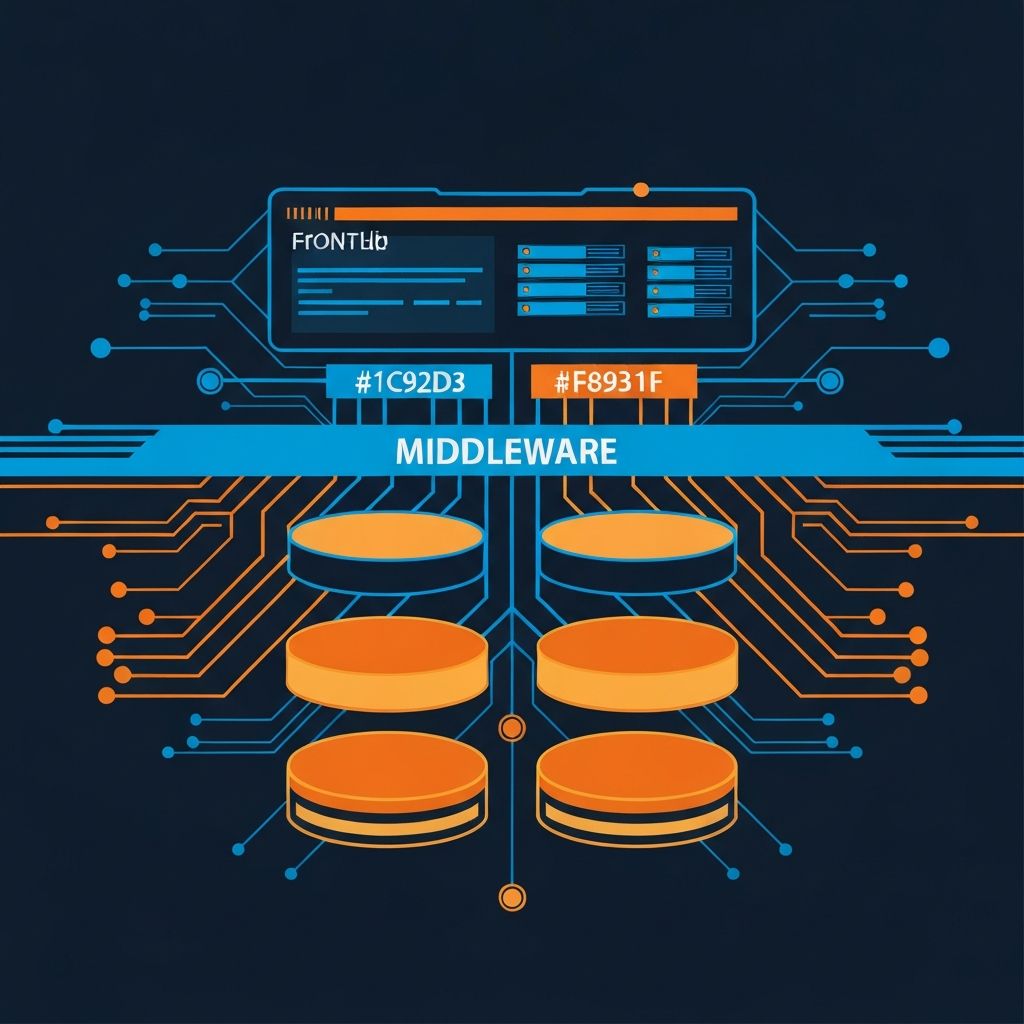
Modern Full Stack Web Design
What is Modern Full Stack Web Design?
Modern full stack web design integrates front-end user interfaces with back-end systems to create complete, functional web applications. At AAMAX.CO, our full stack approach enables us to deliver cohesive solutions where every component—from visual design to database architecture—works together seamlessly.
The term "full stack" refers to the complete technology stack required to build and run web applications. This includes client-side technologies that users interact with directly, server-side systems that process data and business logic, and databases that store information persistently. Modern full stack development embraces this holistic view while leveraging contemporary tools and practices.
The Modern Front-End Stack
JavaScript frameworks dominate modern front-end development. React, Vue, and Angular provide structured approaches to building interactive user interfaces. These frameworks enable component-based architectures that promote reusability and maintainability.
TypeScript has become increasingly essential, adding static typing to JavaScript for improved code quality and developer experience. Type checking catches errors during development, while enhanced IDE support improves productivity.
CSS has evolved dramatically with modern features and methodologies. CSS Grid and Flexbox enable sophisticated layouts, CSS custom properties support dynamic theming, and utility-first frameworks like Tailwind CSS accelerate development. Our front-end web development services leverage these modern tools.
Back-End Technologies in Modern Stack
Node.js has revolutionized back-end development by enabling JavaScript across the entire stack. This uniformity simplifies development, allows code sharing between client and server, and enables developers to work productively on both ends.
Python remains popular for back-end development, particularly where machine learning or data processing is involved. Frameworks like Django and FastAPI provide robust foundations for building APIs and web applications.
Go and Rust have gained traction for performance-critical applications. These languages offer excellent performance characteristics while providing safety features that prevent common programming errors.
Database Considerations
Relational databases like PostgreSQL remain foundational for applications requiring structured data and complex queries. ACID compliance, referential integrity, and mature tooling make SQL databases reliable choices for many applications.
NoSQL databases serve specific use cases effectively. Document databases like MongoDB excel with flexible schemas, key-value stores like Redis provide high-speed caching, and graph databases handle relationship-heavy data naturally.
Database-as-a-service offerings simplify operations. Services like Supabase, PlanetScale, and Firebase provide managed databases with additional features like real-time subscriptions and authentication integration.
API Design in Full Stack Development
REST remains widely used for API design. Its resource-oriented approach, HTTP method semantics, and widespread tooling support make RESTful APIs accessible and maintainable.
GraphQL offers flexibility for complex data requirements. Clients specify exactly what data they need, eliminating over-fetching and under-fetching issues common with REST APIs. Our MERN stack development services implement both REST and GraphQL based on project needs.
Real-time capabilities increasingly factor into API design. WebSockets, Server-Sent Events, and services like Pusher enable live updates that modern users expect.
The JavaScript Full Stack
MERN stack (MongoDB, Express, React, Node.js) provides a popular all-JavaScript solution. This stack enables rapid development with a unified language across all layers, extensive npm ecosystem support, and strong community backing.
Next.js has transformed React development by providing server-side rendering, static generation, API routes, and other features that blur traditional front-end/back-end boundaries. Our Next.js web development services leverage this powerful framework.
Full stack frameworks like Remix and Blitz offer opinionated approaches that handle common patterns automatically, allowing developers to focus on business logic rather than infrastructure.
Design Principles for Full Stack Applications
Separation of concerns remains fundamental. Even in unified JavaScript stacks, maintaining clear boundaries between presentation, business logic, and data access improves code quality and maintainability.
API-first design enables flexibility. By designing robust APIs before implementing clients, teams can support multiple front-ends (web, mobile, integrations) from shared back-end infrastructure.
Security-by-design integrates protection throughout the stack. Authentication, authorization, input validation, and output encoding must be considered at every layer, not added as afterthoughts.
DevOps and Deployment
Continuous integration and deployment automate the path from code to production. GitHub Actions, GitLab CI, and similar tools run tests, build applications, and deploy changes automatically when code is merged.
Containerization with Docker provides consistency across environments. Applications packaged in containers run identically in development, staging, and production, eliminating environment-specific issues.
Cloud platforms offer managed infrastructure for full stack applications. Vercel, Netlify, and AWS Amplify provide deployment, hosting, and scaling with minimal operational overhead.
State Management Strategies
Client-side state management has evolved beyond global stores. Modern approaches favor local component state, context for shared state, and server state libraries like React Query for remote data.
Server state differs from client state. Data fetched from APIs should be cached, synchronized, and revalidated differently than purely local UI state. Understanding this distinction improves application architecture.
Real-time state synchronization enables collaborative features. Applications where multiple users interact simultaneously require strategies for conflict resolution and eventual consistency.
Performance in Full Stack Applications
Server-side rendering improves initial load performance. Generating HTML on the server means users see content faster, and search engines can crawl content more effectively.
Edge computing brings computation closer to users. Running code at edge locations worldwide reduces latency for globally distributed audiences.
Database query optimization significantly impacts overall performance. Efficient queries, appropriate indexing, and caching strategies prevent database operations from becoming bottlenecks. Our back-end web development team implements optimized data access patterns.
Testing Full Stack Applications
Unit testing verifies individual functions and components work correctly in isolation. Both front-end components and back-end functions benefit from comprehensive unit test coverage.
Integration testing ensures components work together correctly. API endpoint testing, database interaction testing, and component integration testing catch issues that unit tests miss.
End-to-end testing validates complete user flows. Tools like Playwright and Cypress simulate user interactions across the full stack, verifying that integrated systems function correctly.
Headless CMS Integration
Content management systems have decoupled from presentation. Headless CMS platforms like Strapi, Contentful, and Sanity provide content APIs that front-ends consume, enabling flexibility in how content is displayed.
Jamstack architecture leverages headless CMS effectively. Static site generation combined with API-driven content delivers excellent performance while maintaining content management convenience. Our Strapi CMS website development services create powerful content-driven applications.
Content previews connect editorial and development workflows. Showing editors how content will appear before publication improves content quality and editorial confidence.
Building Full Stack Excellence
Modern full stack web design requires broad expertise across multiple disciplines. At AAMAX.CO, our teams include specialists in front-end development, back-end systems, database design, and DevOps who collaborate to deliver complete solutions.
We stay current with rapidly evolving full stack technologies while applying proven principles that ensure our clients' applications are scalable, maintainable, and performant. Whether you need a new application built from scratch or want to modernize existing systems, contact us to discuss how our full stack expertise can serve your needs.
Want to publish a guest post on aamax.co?
Place an order for a guest post or link insertion today.
Place an Order