

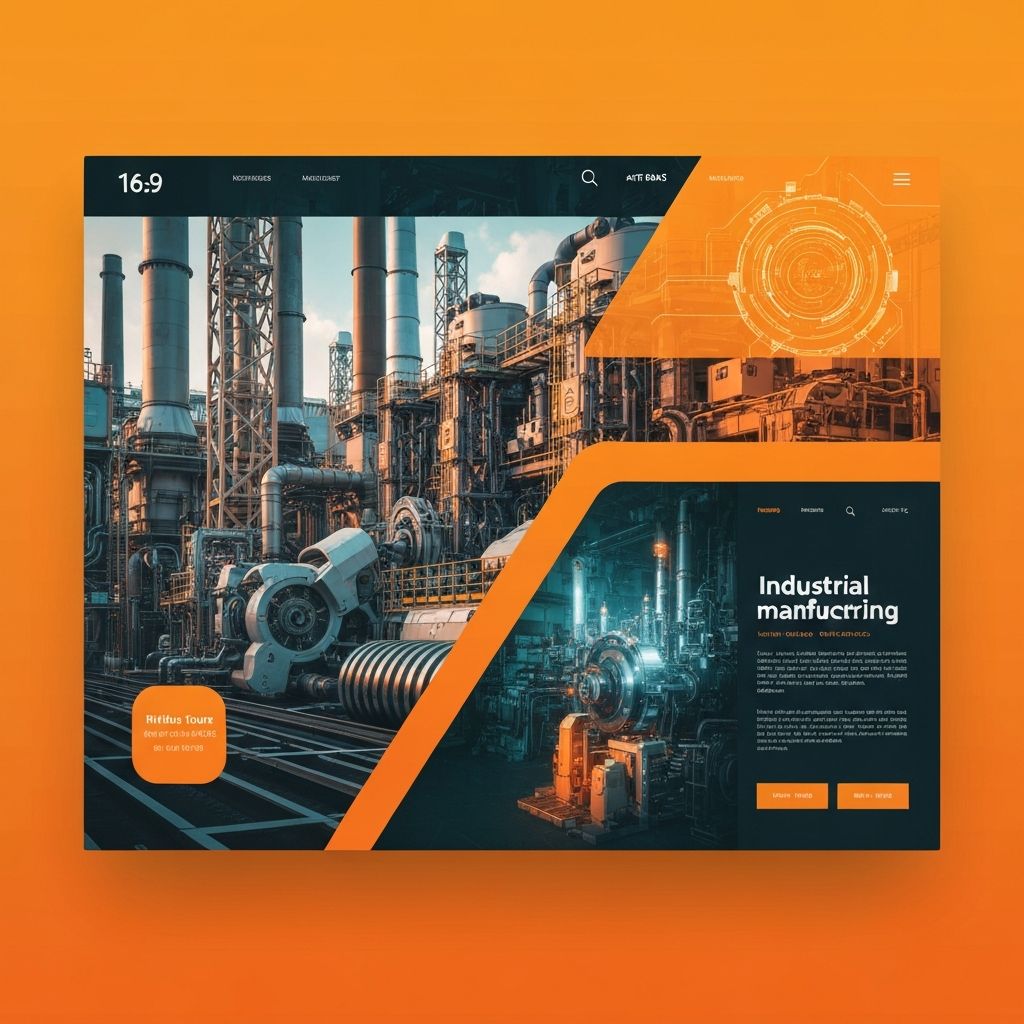
Industrial Web Design
The Distinct Challenge of Industrial Web Design
Industrial web design serves a specialized sector with unique requirements that differ fundamentally from consumer-focused websites. Manufacturing companies, equipment suppliers, and industrial service providers must communicate complex technical capabilities to knowledgeable buyers while also reaching non-technical decision-makers who control purchasing budgets. This dual audience demands thoughtful design strategies.
Industrial buying cycles are lengthy and involve multiple stakeholders. Engineers evaluate technical specifications, procurement managers compare costs and terms, and executives approve significant expenditures. Your website must provide appropriate information for each role while guiding all visitors toward conversion actions that advance sales processes.
The industrial sector has historically lagged in digital sophistication, creating opportunities for companies investing in quality web presence. Many competitors maintain outdated websites that fail to serve modern buyer expectations. Superior web design can differentiate your company and capture market share from digitally-neglected competitors.
Communicating Technical Complexity Clearly
Industrial products and services often involve considerable technical complexity. Specifications, capabilities, tolerances, and applications require explanation without overwhelming non-technical visitors or insulting expert knowledge. Balancing these needs challenges content strategy and information architecture.
Layered information architecture serves different knowledge levels effectively. Overview pages provide accessible summaries for general audiences, while detailed specification pages satisfy engineers requiring precise data. Clear navigation between these layers lets visitors choose their depth of exploration.
Technical documentation should be organized systematically and easily searchable. CAD files, specification sheets, safety data sheets, and installation guides need logical categorization and effective search functionality. Document management systems designed for technical content outperform generic approaches.
Visual communication clarifies complexity effectively. Diagrams, schematics, and infographics explain processes and relationships that text describes clumsily. Product photography showing scale, context, and detail supports understanding. Video demonstrations bring equipment capabilities to life.
Product Catalog and Specification Management
Industrial companies often sell hundreds or thousands of products with varying configurations. Managing this catalog complexity while maintaining usability challenges web design significantly. Robust product information management systems become essential infrastructure.
Product categorization should match how customers think, not internal organizational structures. Customer-centric taxonomy enables intuitive navigation to relevant products. Faceted filtering allows narrowing results by multiple attributes simultaneously – material, size, capacity, application, and other relevant specifications.
Configuration tools help customers identify correct product variants for their applications. Selection wizards, compatibility checkers, and specification filters guide decisions that might otherwise require sales consultation. These tools reduce support burden while improving customer experience.
Comparison functionality enables evaluating multiple products side-by-side. Customers frequently need to choose between options with different trade-offs. Comparison tables highlighting key specification differences support informed decisions.
Lead Generation for Long Sales Cycles
Industrial sales cycles often span months, involving multiple interactions before purchase decisions. Websites must capture leads early in these cycles and nurture relationships until buyers are ready to purchase. This long-term perspective shapes conversion strategy.
Quote request forms capture high-intent visitors ready to discuss specific requirements. These forms should gather enough information for meaningful initial responses while avoiding discouraging length. Technical specifications, application details, and quantity requirements inform quote preparation.
Catalog and specification downloads attract earlier-stage researchers. Gating these resources behind simple forms captures contact information from visitors not yet ready for sales conversations. Following up appropriately nurtures these leads toward eventual purchases.
Email newsletter signup serves visitors seeking ongoing information. Industry news, technical content, and product updates maintain relationships between active purchase cycles. When needs arise, subscribers think of you first.
Supporting Distributor and Partner Networks
Many industrial companies sell through distributor networks rather than directly. Websites must support these channel relationships while still capturing end-customer engagement. Balancing direct and channel interests requires careful strategy.
Distributor locators help end customers find authorized local sources. Search by location, product specialization, or service capability directs customers appropriately. Accurate, current distributor information requires ongoing maintenance processes.
Partner portals provide distributors with marketing materials, technical documentation, pricing, and inventory information. Secure access to these resources supports channel success. Portal functionality varies from simple document libraries to sophisticated ordering and communication systems.
Lead routing ensures inquiries reach appropriate parties. Direct sales teams, regional distributors, or specialized partners may handle different customer types. Intelligent routing based on geography, product interest, or company size optimizes response effectiveness.
Industry-Specific Content and Applications
Industrial products typically serve specific industry applications. Content addressing these applications demonstrates understanding of customer challenges and positions products as solutions. Industry-focused content also improves search visibility for application-specific queries.
Application pages describe how products solve problems in specific contexts. Mining applications differ from pharmaceutical applications differ from food processing applications – even for similar equipment. Tailored content resonates with each audience.
Case studies demonstrate proven performance in relevant applications. Industrial buyers want evidence of successful deployments in similar situations. Detailed case studies with measurable results provide this assurance.
Industry resource centers aggregate content relevant to specific sectors. White papers, webinars, and technical articles addressing industry challenges establish thought leadership. These resources attract and engage target audiences.
Compliance, Certifications, and Standards
Industrial products frequently must meet specific standards, certifications, or regulatory requirements. Communicating compliance effectively removes purchase barriers and filters unqualified inquiries. This information deserves prominent, organized presentation.
Certification badges and documentation demonstrate compliance visually. ISO certifications, industry-specific standards, and regulatory approvals signal quality and conformance. Links to full documentation provide verification for detailed review.
Compliance information organized by standard or regulation helps customers verify specific requirements. Buyers often need to confirm particular certifications – making this information easily findable prevents unnecessary inquiries.
Quality documentation including test reports, inspection records, and traceability information may be required for certain applications. Secure access to this documentation supports customer quality requirements while protecting sensitive information.
Technical SEO for Industrial Markets
Industrial search behavior differs from consumer patterns. Buyers search for specific part numbers, technical specifications, and application-focused queries. SEO strategy must address these patterns to capture relevant traffic.
Long-tail keyword targeting captures specific technical queries. While individual search volumes may be low, cumulative traffic from hundreds of specific queries often exceeds broad term potential. Content addressing specific applications, specifications, and problems captures this traffic.
Schema markup helps search engines understand technical content. Product schema, specification data, and organization information improve how search results display your content. Enhanced listings capture more clicks.
Technical content structure affects crawlability and indexing. Ensure search engines can access product databases, specification sheets, and documentation. Avoid trapping valuable content behind forms or in formats search engines cannot read.
Mobile Experience for Industrial Audiences
Industrial website visitors increasingly use mobile devices, particularly for field research, trade show follow-up, and on-site specification lookup. Mobile optimization ensures functionality across all usage contexts.
Specification lookup from factory floors or job sites requires mobile-accessible product information. Responsive design ensuring readability and usability on smaller screens serves these practical needs.
Contact functionality supports field personnel who encounter products and need supplier information. Click-to-call, email links, and location finding provide immediate connection options.
Document access on mobile devices allows retrieving specifications, manuals, and other resources wherever needed. PDF viewers, download functionality, and offline access capabilities extend utility.
International and Multilingual Considerations
Industrial companies frequently serve global markets with different languages, measurement systems, and regulatory environments. Websites supporting international business require thoughtful localization beyond simple translation.
Language selection should be obvious and sticky across sessions. Visitors shouldn't need to repeatedly select their preferred language. Automatic detection based on browser settings or IP location can default appropriately.
Unit conversion addresses the metric/imperial divide that complicates international industrial commerce. Dynamic conversion or parallel display of both systems serves different preferences.
Regional contact information, pricing currency, and regulatory documentation vary by market. Localized content addressing these variations provides relevant experiences for international visitors.
Transform Your Industrial Web Presence
Industrial companies deserve websites that effectively communicate complex capabilities to sophisticated buyers. Our website design services address the unique requirements of manufacturers, equipment suppliers, and industrial service providers.
We build industrial websites on scalable platforms supporting complex product catalogs and technical documentation. Our website development expertise spans from WordPress for content-focused sites to custom web applications for specialized functionality.
As a full-service digital marketing company, AAMAX.CO provides comprehensive support for industrial companies' digital needs. From strategic consulting through implementation and ongoing maintenance, we partner with industrial clients for long-term digital success. Contact us to discuss your industrial web design requirements.
Want to publish a guest post on aamax.co?
Place an order for a guest post or link insertion today.
Place an Order