

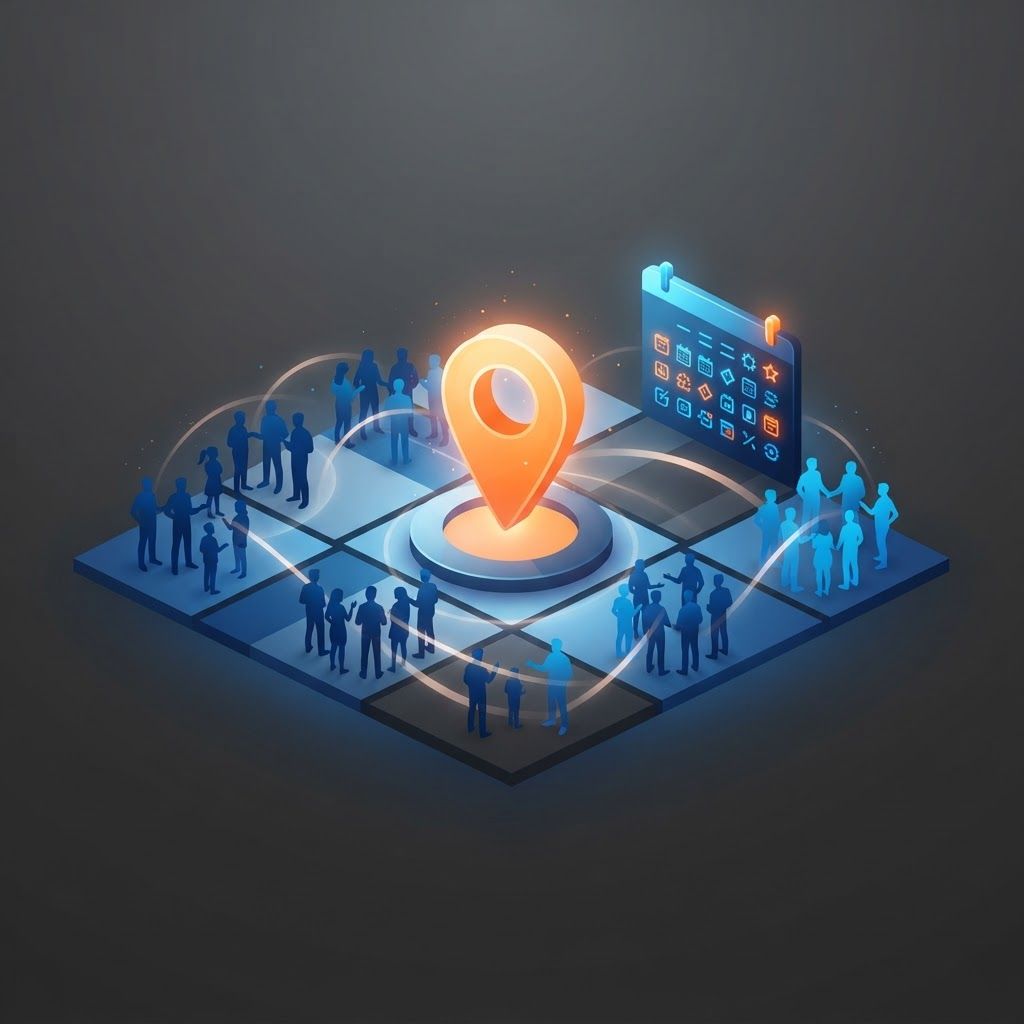
How to Leverage Community Events for Local SEO
The Local Signal Competitors Cannot Buy
Local search rankings are driven by relevance, distance, and prominence. The first two are largely fixed by what you sell and where you are located. Prominence is the variable you can actually build, and it reflects how well known and well regarded your business is in a specific place. Community events are the most direct route to prominence available to a small or mid-sized business, because they generate exactly the signals local algorithms look for: mentions in local media, links from local organizations, citations on event listings, photographs and social activity tied to your area, and reviews from people who met you in person.
What makes this tactic durable is that it cannot be outsourced or automated. A national competitor can outspend you on ads and outproduce you on content, but it cannot sponsor your town's youth league or run a free workshop at the neighborhood library. Local involvement is a defensible advantage, and with a little process, every event can be converted into lasting search visibility.
How AAMAX.CO Turns Local Involvement Into Rankings
At AAMAX.CO we help local and multi-location businesses build the systems that capture SEO value from real-world activity. As a full service digital marketing company delivering web development, digital marketing and SEO services, we identify which local events and organizations are likely to produce links and coverage, build the event and recap page templates that make that coverage rank, implement event structured data, manage the outreach that converts a sponsorship into an actual link, and run the review generation process that follows an event. We also connect it all to your Google Business Profile and local citation footprint so the signals reinforce each other. Hire AAMAX.CO when you want your community presence to show up in search results instead of disappearing after the weekend.
Choose Events With SEO Potential in Mind
Not all community involvement produces equal search value. Before committing budget or time, assess three things. Does the organizing body have a website that publishes sponsor or partner listings with links? Will local media, community newsletters, or neighborhood blogs likely cover the event? And is the audience plausibly made up of your customers?
The highest-value options usually include sponsoring an established organization such as a sports club, school program, or charity that maintains a sponsor page; hosting your own workshop or clinic that teaches something genuinely useful; participating in markets, fairs, and festivals that publish exhibitor lists; contributing expertise to local business associations and chambers; and organizing a volunteer or cleanup effort that local media reports on. Recurring commitments outperform one-off appearances because the mentions accumulate and the relationships deepen.
Build the Page Before the Event Happens
The most common mistake is participating in an event with nowhere for the resulting attention to land. Every event deserves a dedicated page on your own site, published before the event, containing the essentials: what it is, when and where, who it is for, why you are involved, and how to attend or get in touch. Add Event structured data so search engines can display date, location, and availability details.
That page becomes the destination for every link you request, every social post, and every mention. It also gives organizers something easy to link to, which materially raises the chance they actually do. Keep the URL stable, and after the event, update the same page into a recap rather than creating a new one, so accumulated links keep their value.
Capture Assets While You Are There
Treat the event as a content shoot. Photograph your team in action, the venue, the crowd, and any recognizable local landmarks, with permission where people are identifiable. Record short video clips and a few quotes from attendees or organizers. Note attendance figures, funds raised, or work completed, because specific numbers make later coverage and outreach far more compelling.
These assets serve several purposes. Original local photographs uploaded to your Google Business Profile strengthen local relevance. Images embedded in your recap page with descriptive alt text and local file names support image search. Quotes and figures give journalists something to publish. And the whole set becomes social content that drives traffic back to the event page.
Do the Outreach That Converts Attention Into Links
Links from local events almost never arrive automatically. You have to ask, politely and specifically. Start with the organizer: request that your business be listed as a sponsor or partner with a link to your event page, and offer a short description and logo to make it easy. Ask whether they publish a post-event recap and offer your photographs for it, with attribution.
Then approach local media and community publications with a genuine angle, not a promotional pitch. A local newspaper cares about the community outcome, so lead with that and include your photographs and figures. Contact other participants and partners about mutual mentions. If the event involved a school, charity, or association, check whether they publish thank-you posts, newsletters, or annual reports, all of which frequently include links.
Also claim the incidental citations. Event listing sites, community calendars, and neighborhood platforms create pages that mention your business, and those unlinked or linked citations reinforce local prominence. Keep your business name, address, and phone details consistent across every one of them.
Convert Attendees Into Reviews
Reviews are a direct local ranking factor and a conversion driver, and an event is the best possible moment to request them because goodwill is high and the interaction is fresh. Have a simple, compliant process: a short link or QR code, a friendly verbal request from staff, and a follow-up message the next day to people who gave you their details. Never incentivize reviews and never gate them by sentiment. Encourage reviewers to mention the event and the neighborhood naturally, because that language reinforces local relevance in your profile.
Publish the Recap and Keep the Cycle Running
Within a week, turn the event page into a substantial recap: what happened, what it achieved, photographs, quotes, and thanks to partners with links where appropriate. Share it with everyone involved, because that is often when the second wave of links arrives. Post the highlights to your Google Business Profile as an update.
Then measure. Track new referring domains attributable to the event, local pack rankings for your priority service and neighborhood terms, Google Business Profile views, calls and direction requests, review volume and velocity, and traffic to the event and recap pages. Compare that against the cost of participation. Most businesses find that a handful of recurring local commitments outperforms a much larger spend on generic link building.
Show Up, Then Document It Properly
Community events work for local SEO because they create authentic, place-specific signals that no competitor can replicate. The tactic only pays off, though, when you build the landing page in advance, capture real assets on the day, ask directly for links and reviews, and publish a recap worth referencing. Do that consistently across a few events a year and your local prominence compounds. If you want help turning your community presence into measurable search growth alongside broader digital marketing work, our team is ready to assist.
Want to publish a guest post on aamax.co?
Place an order for a guest post or link insertion today.
Place an Order