

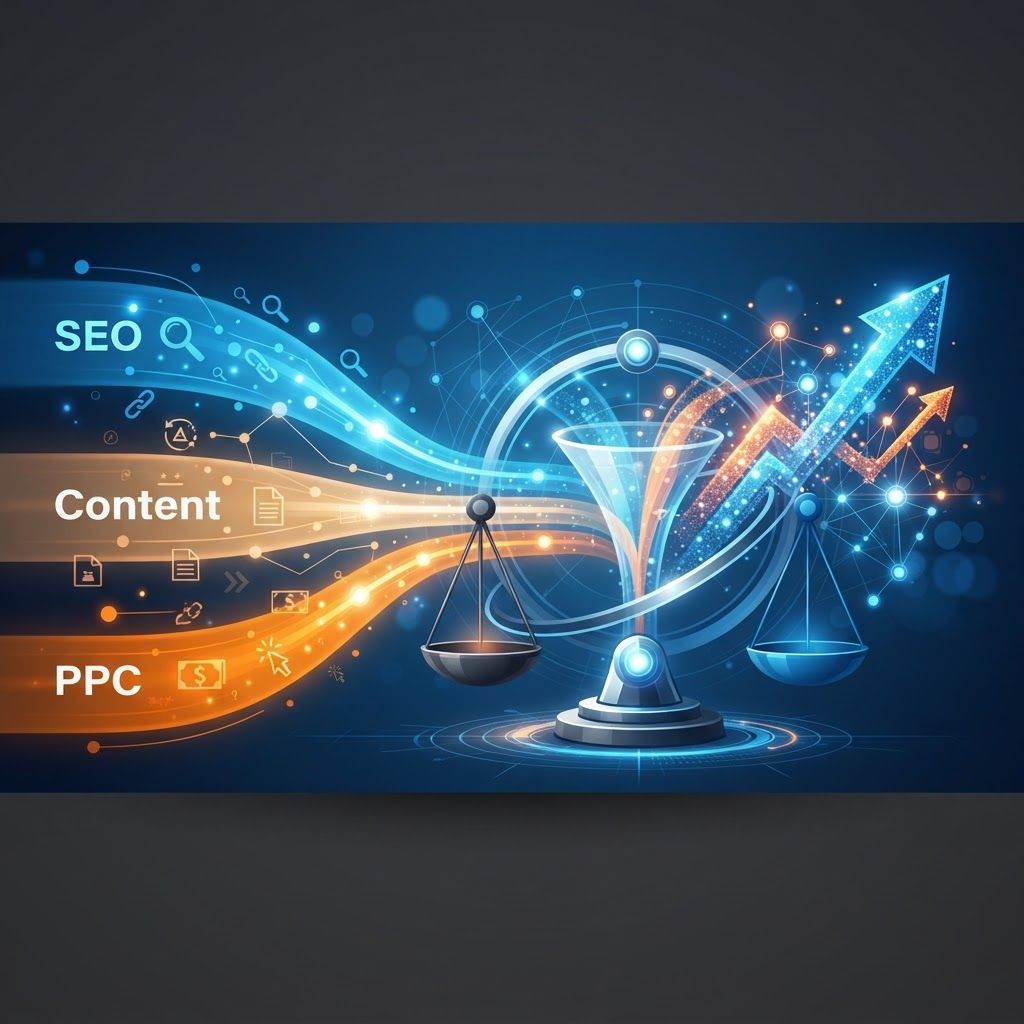
How to Balance SEO PPC and Content in B2B Strategy
Business-to-business marketing operates under different rules than consumer marketing. Sales cycles are longer, buying committees are larger, purchase values are higher, and decisions are driven by careful research rather than impulse. In this environment, no single channel can carry the full weight of demand generation. The most successful B2B strategies weave together search engine optimization, pay-per-click advertising, and content marketing into a coordinated system where each channel amplifies the others. The challenge for most organizations is not choosing between these tactics but balancing them wisely across a lengthy and complex buyer journey.
Let AAMAX.CO Orchestrate Your B2B Growth
At AAMAX.CO, we help B2B companies build integrated strategies where SEO, paid advertising, and content work as a unified engine rather than isolated efforts. We map your buyer journey, allocate budget where it delivers the strongest returns, and ensure every channel reinforces the others. Our search engine optimization expertise anchors your long-term organic visibility while complementing your paid and content investments. The result is a strategy that captures demand today and builds a durable pipeline for tomorrow.
Understanding the Role of Each Channel
Each channel serves a distinct purpose in the B2B funnel. SEO builds sustainable, compounding visibility that captures buyers actively researching solutions, often early in their journey when they are educating themselves. It is a long-term investment that grows more valuable over time as your authority accumulates. PPC, by contrast, delivers immediate visibility and precise targeting, making it ideal for capturing high-intent searches, promoting time-sensitive campaigns, and testing messaging quickly.
Content marketing is the connective element that fuels both. Educational articles, whitepapers, case studies, and guides attract organic traffic, provide landing destinations for paid campaigns, and nurture prospects through a long consideration phase. Rather than viewing these as competing line items, effective B2B marketers see them as interdependent parts of one system.
Allocating Budget Across the Journey
Balancing investment starts with understanding where your buyers spend their time and how they make decisions. Early-stage buyers researching a problem respond well to educational content and organic search visibility, so SEO and content deserve strong investment for capturing this top-of-funnel demand. Mid and late-stage buyers comparing specific solutions can be efficiently reached through targeted PPC campaigns that put your offer in front of them at the decisive moment.
A common and effective approach is to use PPC to generate immediate leads and revenue while simultaneously investing in SEO and content to reduce long-term dependence on paid channels. Over time, as organic visibility grows, you can often reduce paid spend on terms you now rank for organically and redirect that budget toward new opportunities. This creates a self-reinforcing cycle of efficiency.
Using Data to Inform Integration
The channels should share intelligence rather than operate in silos. PPC campaigns generate keyword and conversion data quickly, revealing which terms and messages drive qualified leads. This insight is invaluable for prioritizing your SEO and content efforts, showing you exactly which topics and keywords are worth pursuing organically. Conversely, high-performing organic content reveals themes that may deserve additional paid promotion to accelerate results.
By treating PPC as a real-time testing ground and SEO as a long-term compounding asset, you let each channel strengthen the strategy behind the others. This feedback loop ensures your budget flows toward what actually works rather than assumptions about what should work.
Creating Content That Serves Every Channel
Content is the resource that ties the entire strategy together, so it must be built to serve multiple purposes. A single in-depth guide can rank organically, serve as a landing page for paid campaigns, provide material for email nurturing, and establish the authority that drives conversions. Designing content with this versatility in mind maximizes the return on every piece you produce.
For B2B specifically, content must speak to multiple stakeholders within a buying committee, from technical evaluators to financial decision-makers. Mapping content to the different roles and stages in the buyer journey ensures your organic and paid efforts both have compelling destinations that move prospects forward.
Measuring Success Holistically
Because B2B sales cycles are long and involve many touchpoints, measuring success channel by channel in isolation can be misleading. A prospect might discover you through an organic article, return via a paid ad, and finally convert after reading a case study. Attributing that conversion to a single channel undervalues the others. Adopting a holistic measurement approach that accounts for the full journey gives you a truer picture of how your integrated strategy performs.
Framing these channels within your overall digital marketing strategy ensures that budget decisions reflect real business outcomes rather than channel-specific vanity metrics. When SEO, PPC, and content are measured together, their combined power becomes clear.
Balancing SEO, PPC, and content in B2B is less about dividing a budget and more about orchestrating a system. When each channel plays its natural role and shares insight with the others, you build a growth engine that captures immediate demand while steadily strengthening your long-term market position.
Want to publish a guest post on aamax.co?
Place an order for a guest post or link insertion today.
Place an Order