

How Is AI Going to Affect the Job Market
Predicting the future of work has always been difficult, but the rapid advance of artificial intelligence makes the exercise both more urgent and more uncertain. AI is poised to influence nearly every profession, not by eliminating work entirely, but by changing the mix of tasks people do, the skills that command a premium, and the speed at which industries evolve. Looking ahead, the job market will likely reward adaptability, technical fluency, and uniquely human capabilities. Understanding the forces at play helps individuals and organizations prepare for a landscape that will look meaningfully different in the years to come.
How We Help Organizations Future-Proof Their Teams
At AAMAX.CO, we help businesses prepare for this shift by modernizing their digital operations and marketing. As a full service digital marketing company working with clients worldwide, we automate routine work, build AI-aware strategies, and free teams to focus on higher-value activities. If you want to position your business for the next decade, our digital marketing expertise can help you adapt with confidence. Explore everything we offer at AAMAX.CO.
Acceleration of Automation
Over the coming years, automation will expand from routine manual tasks into more cognitive work. AI systems are increasingly capable of drafting documents, analyzing data, generating designs, and making recommendations. Roles built primarily on predictable, repeatable activities will see the greatest pressure. However, automation rarely eliminates an entire job at once; instead it removes specific tasks, gradually reshaping roles until they look quite different from how they began. The challenge for workers will be staying ahead of which tasks are being automated next.
The Rise of Human-AI Collaboration
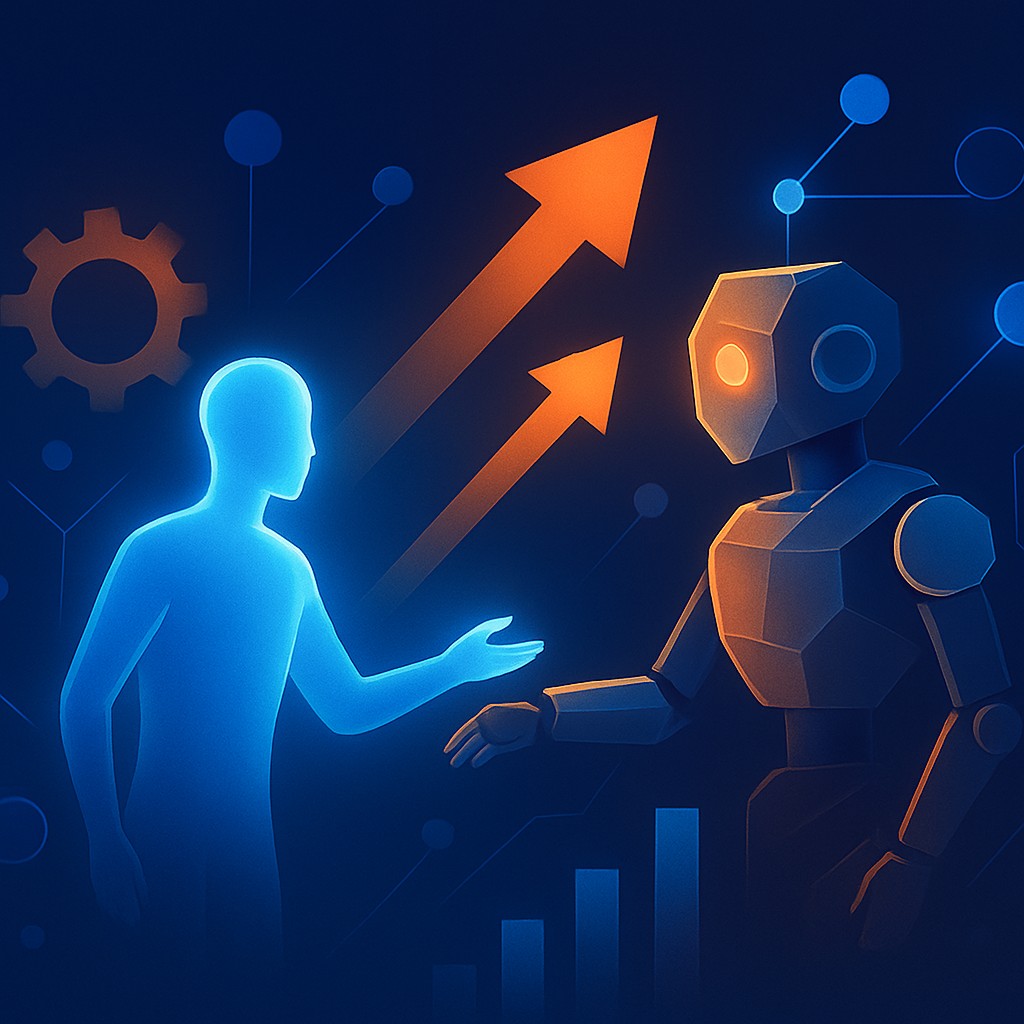
The dominant trend will likely be augmentation rather than wholesale replacement. Most professionals will work alongside AI systems that handle the heavy lifting of research, drafting, and analysis, while humans provide judgment, context, and accountability. This collaboration can make individuals dramatically more productive, but it also raises expectations. Employers will increasingly assume that workers know how to use AI tools effectively, making AI fluency a baseline professional competency much like spreadsheet skills became decades ago.
Creation of Entirely New Roles
History shows that technological revolutions create as well as destroy jobs, and AI will be no different. The future will bring demand for roles that barely exist today, from AI trainers and auditors to automation designers and human-machine experience specialists. Many of these jobs will sit at the intersection of technical knowledge and domain expertise, requiring people who can translate between what AI can do and what a business actually needs. These emerging roles will absorb a meaningful share of displaced workers who reskill.
Shifting Skill Demands
As the task mix changes, so will the skills that matter. Demand for data literacy, AI tool proficiency, and systems thinking will grow across industries. At the same time, durable human skills such as creativity, complex communication, ethical reasoning, and emotional intelligence will become more valuable precisely because they resist automation. The most resilient workers will combine deep expertise in a field with the flexibility to learn continuously and the soft skills that machines cannot replicate.
Uneven Effects Across Sectors and Regions
The impact of AI will not be distributed evenly. Knowledge-intensive industries will transform quickly, while sectors dependent on physical presence or human care will change more gradually. Regions with strong access to education, infrastructure, and capital will adapt faster than those without. This unevenness raises important questions about equity and access, and it means that public policy, corporate investment, and education systems will all shape how smoothly the transition unfolds.
Preparing Through Lifelong Learning
For individuals, the clearest strategy is to embrace continuous learning. Building familiarity with AI tools, developing complementary skills, and staying open to evolving role definitions all increase long-term resilience. Workers who treat their skills as a portfolio to be continually updated will navigate change far better than those who assume their current role will remain static. The goal is not to outrun automation but to position oneself where human contribution is most valued.
Entrepreneurship and the Gig Economy
One often overlooked effect of AI is how it lowers the barriers to starting and running a business. With AI handling marketing, design, customer service, and analysis, a single individual or small team can accomplish what once required a large staff. This democratization is likely to fuel a wave of entrepreneurship and independent work, as people use AI tools to launch ventures, freelance, and build personal brands. The gig and creator economies may expand as more individuals monetize specialized skills with AI support. While this offers exciting flexibility and opportunity, it also raises questions about income stability and benefits, underscoring the need for new structures that support a more fluid and independent workforce.
The Role of Employers and Society
The future of work will be shaped not only by technology but by how organizations and societies respond. Companies that invest in reskilling, communicate transparently, and redesign jobs to combine human and machine strengths will retain talent and build resilience. Broader support systems, including education reform and social safety nets, will help workers transition without being left behind. Handled thoughtfully, AI can raise productivity and create new opportunities, making the future of work one of reinvention rather than simple displacement.
Want to publish a guest post on aamax.co?
Place an order for a guest post or link insertion today.
Place an Order