

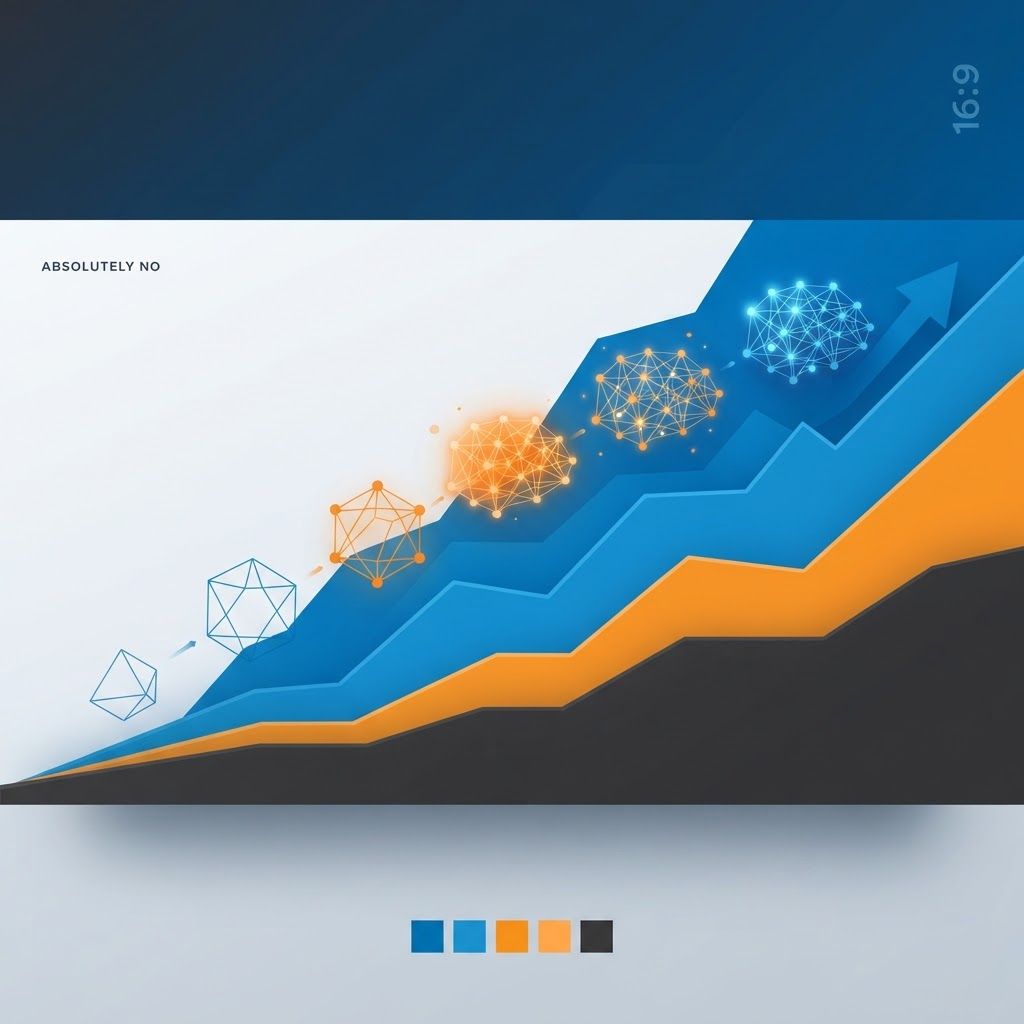
How Has the Field of SEO Evolved Over Time
From Keyword Tricks to Trusted Answers: The Long Arc of SEO
Search engine optimization is one of the few marketing disciplines that has been forced to reinvent itself roughly every three years. What worked in 2004 would get a site penalized in 2014, and what worked in 2014 barely registers in an era of AI-generated answers and zero-click results. Understanding how the field evolved is not a history lesson for its own sake; it is the fastest way to understand why today's best practices exist and which of them are likely to survive the next algorithm shift. Every era left behind a permanent lesson, and the practitioners who thrive are the ones who internalized those lessons instead of chasing tactics.
How AAMAX.CO Helps You Keep Pace With a Changing Search Landscape
At AAMAX.CO, we have watched the search landscape shift from directory submissions to entity-based ranking, and we build strategies designed to survive those shifts rather than exploit them. We are a full-service digital marketing company offering web development, digital marketing, and SEO services worldwide, which means we can address the technical, editorial, and promotional sides of search from a single team. When a core update lands, our clients do not scramble, because their visibility is built on genuine topical authority, clean architecture, and content that answers real questions. If your rankings have felt increasingly unpredictable, we can audit where your site sits relative to modern ranking signals and give you a roadmap that stays relevant as the field continues to evolve.
The Early Era: Directories, Meta Tags, and Keyword Density
In the late 1990s and early 2000s, search engines relied heavily on what a page said about itself. Meta keyword tags, exact-match repetition, and hidden text were enough to rank because crawlers had little else to work with. Link building meant submitting to web directories, and "optimization" often meant repeating a phrase until the copy became unreadable. This era ended because it produced a terrible user experience: the pages that ranked were the ones most aggressively engineered, not the ones most useful. The lasting lesson is that any signal a publisher fully controls will eventually be devalued.
The PageRank Revolution: Links as Votes
Google's breakthrough was treating hyperlinks as endorsements, which shifted optimization off the page and onto the wider web. Suddenly authority mattered, and an obscure page could outrank a well-optimized one simply because credible sites referenced it. Predictably, an entire industry emerged to manufacture those endorsements through paid links, article farms, reciprocal link schemes, and blog comment spam. Links remain a powerful signal today, but their evaluation is far more nuanced, weighing relevance, editorial context, and the trustworthiness of the linking domain rather than raw volume.
Panda, Penguin, and the End of Cheap Content
The early 2010s were a turning point. Panda targeted thin, duplicated, and low-value content, wiping out content farms that had built empires on volume. Penguin targeted manipulative link profiles, punishing over-optimized anchor text and paid link networks. Together they made quality a ranking prerequisite rather than a nice-to-have. Marketers who had treated SEO as a technical loophole discovered that they now needed editorial standards, subject-matter expertise, and real relationships. This is the era in which SEO began merging with content strategy and public relations, a merger that has never reversed.
Semantic Search and the Shift to Intent
With Hummingbird and later RankBrain, search engines stopped matching strings and started interpreting meaning. Synonyms, related entities, and conversational phrasing all became understandable, which meant a single well-built page could rank for hundreds of long-tail variations without repeating any of them verbatim. Keyword research evolved into intent research: the question was no longer "what phrase do they type" but "what problem are they trying to solve, and at what stage." Topic clusters, internal linking, and comprehensive coverage replaced one-page-per-keyword thinking, and content briefs began focusing on questions to answer rather than phrases to insert.
Mobile, Speed, and the Technical Renaissance
As mobile traffic overtook desktop, technical performance became a competitive differentiator. Mobile-first indexing meant the mobile rendering of a page became the version that mattered, and Core Web Vitals formalized what users had always felt: slow, unstable, unresponsive pages lose visitors. This period reunited SEO with engineering. Rendering strategy, image delivery, JavaScript hydration, caching, structured data, and crawl budget became mainstream SEO concerns. It is also why choosing the right development stack is now an SEO decision, not just a technical preference, and why optimization work that ignores the codebase tends to plateau quickly.
The AI and Zero-Click Era
The current phase is the most disruptive since PageRank. AI-generated summaries, rich result panels, and conversational assistants increasingly answer questions directly in the results page, which compresses click-through rates on informational queries even when rankings hold steady. At the same time, large language models surface brands based on how consistently and clearly those brands are described across the web. Optimization now includes being quotable, structured, and citable, an emerging practice often described as generative engine optimization. Success metrics are shifting from raw sessions to qualified visits, branded search growth, assisted conversions, and share of voice within AI answers.
What Has Stayed Constant Through Every Era
Despite forty algorithm generations, a few fundamentals have never been devalued. Crawlable, fast, well-structured sites outperform inaccessible ones. Content written by people who genuinely understand the subject outperforms content assembled from competitor summaries. Genuine editorial citations outperform manufactured ones. Clear information architecture helps both users and crawlers. And patience beats intensity, because compounding authority is what makes rankings durable. Every collapse in the history of SEO came from over-investing in a signal that could be manipulated while under-investing in the substance that signal was meant to measure.
How to Build an SEO Program That Survives the Next Shift
The practical takeaway is to build a program with three layers. The foundation is technical health: indexation, performance, structured data, and a crawlable architecture that scales with your content. The middle layer is topical authority: clusters of genuinely useful content that cover a subject from every angle and interlink logically. The top layer is off-site credibility: mentions, citations, reviews, and coverage that establish your brand as a recognized entity. Fold in disciplined measurement so you can distinguish an algorithm update from a tracking error, and align SEO with your broader digital marketing activity so paid, social, and email efforts reinforce the same authority signals.
Preparing for the Next Chapter
The next few years will likely bring more AI-mediated discovery, more multimodal search across voice and image, and even greater emphasis on brand recognition as a trust proxy. Sites treating SEO as a checklist will struggle, while those treating it as an ongoing product and content discipline will keep compounding. If you want help translating this history into a concrete plan, our team can assess your current position and build a strategy grounded in what has always worked and adapted to what is coming next.
Want to publish a guest post on aamax.co?
Place an order for a guest post or link insertion today.
Place an Order