

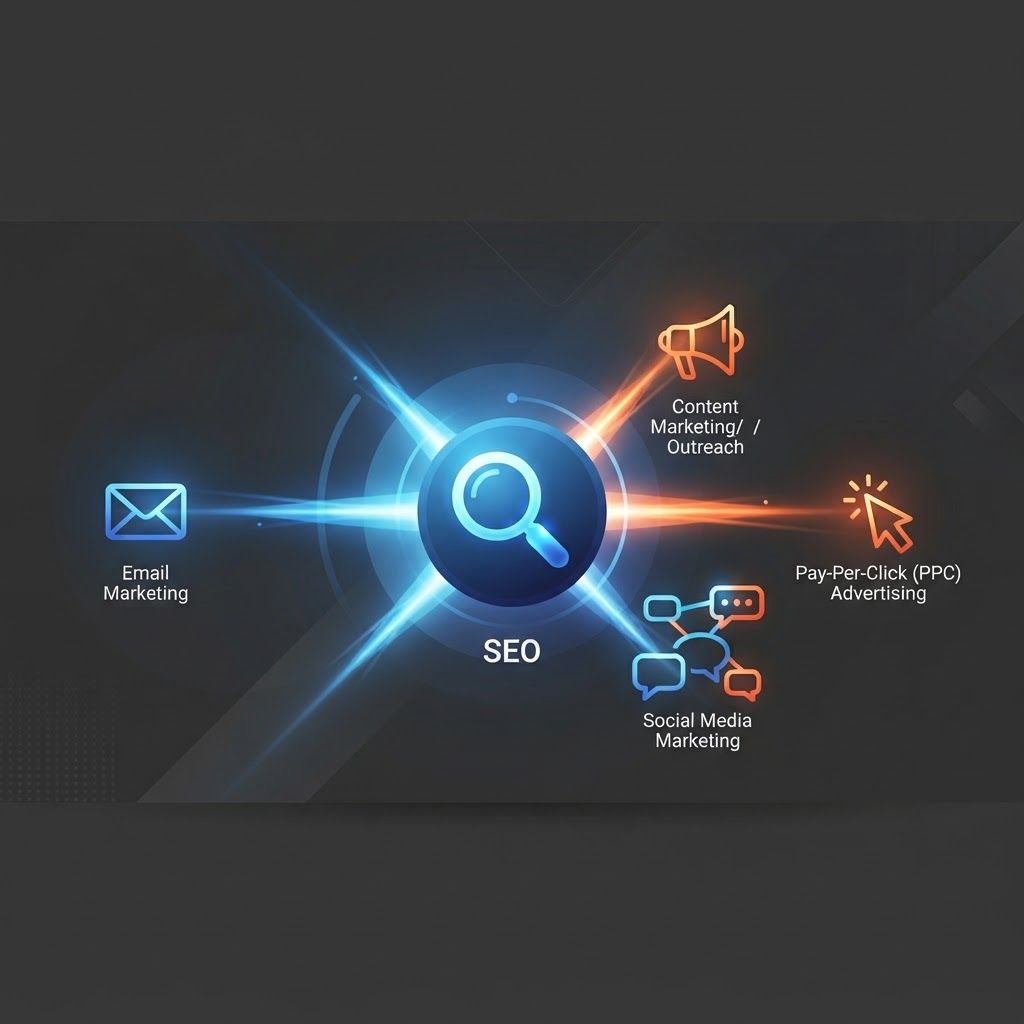
How Does SEO Differ From Other Digital Marketing Strategies
Digital marketing is an umbrella term covering dozens of tactics, from search ads and influencer partnerships to email automation and retargeting. Search engine optimization sits inside that umbrella, yet it behaves unlike almost everything else beneath it. SEO does not buy attention, interrupt audiences, or rely on a platform's advertising inventory. Instead, it earns visibility by making your website the most relevant, authoritative answer to what people are already searching for. That single difference shapes everything about how SEO works, how long it takes, and how it should be measured.
How AAMAX.CO Approaches SEO Within Your Digital Strategy
At AAMAX.CO, we are a full-service digital marketing company providing web development, digital marketing, and search engine optimization to clients around the world. Because we manage multiple channels under one roof, we understand precisely where SEO differs from paid media, social, and email, and how to make those channels reinforce one another. Our SEO team focuses on sustainable organic growth through technical excellence, high-quality content, and authority building, while coordinating with our broader marketing specialists so your strategy stays unified. If you want SEO that fits seamlessly into a complete digital program, hire us to lead the way.
Earned Visibility Versus Purchased Visibility
The clearest distinction between SEO and most digital marketing strategies lies in how visibility is obtained. Pay-per-click advertising, social media ads, display networks, and sponsored content all involve paying a platform to show your message. SEO earns its placement by satisfying search engine algorithms that reward relevance, quality, and trust. You cannot pay Google to rank your page organically. This means SEO success depends on the actual merit of your website, which is both a challenge and a significant advantage, since competitors cannot simply outbid you.
Intent-Driven Targeting
Most digital channels target people based on demographics, interests, or behaviors. Social media platforms let you reach users by age, location, and hobbies. Display advertising follows people around the web based on browsing history. SEO targets intent. When someone types a query into a search engine, they are telling you exactly what they want at that moment. Optimizing for those queries places your business in front of people who are actively seeking what you offer, rather than hoping to catch someone's attention while they scroll through unrelated content.
The Timeline and Momentum Difference
Paid campaigns are switches. Turn them on and traffic starts; turn them off and it stops. Email campaigns deliver results within hours of sending. SEO is a flywheel that takes effort to get moving but becomes easier to sustain over time. Early months involve technical fixes, content creation, and link building with little visible payoff. Then rankings begin to climb, traffic grows, and each new success makes the next one easier. This slower start discourages some businesses, but the momentum SEO builds is precisely what makes it so valuable in the long run.
Content Plays a Different Role
Content marketing and SEO overlap heavily, yet their goals differ. Content marketing aims to engage, educate, and nurture an audience wherever they are, whether on social media, in a newsletter, or on your blog. SEO content has the specific job of ranking for target queries and satisfying searcher intent. Good SEO content still needs to be genuinely useful, but it is structured around keyword research, search intent analysis, and on-page optimization in ways that general content marketing often is not. The best programs merge the two, creating content that ranks well and resonates with readers.
Technical Foundations Matter More
Few digital marketing strategies depend on your website's technical health the way SEO does. A social media campaign can succeed even if your site loads slowly, but slow pages, crawl errors, broken internal links, and poor mobile usability will actively suppress your organic rankings. SEO requires ongoing collaboration between marketers and developers, touching site architecture, structured data, page speed, and indexing. This technical dimension sets SEO apart and explains why agencies with in-house web development capability often deliver stronger results.
Measurement and Attribution
Paid channels offer immediate, granular reporting: spend, clicks, conversions, and cost per acquisition are all visible in real time. SEO measurement is broader and longer term. You track keyword rankings, organic sessions, click-through rates, and conversions, but the relationship between a technical fix made in March and a revenue increase in August is less direct. Successful SEO reporting focuses on trends over months and quarters rather than day-to-day fluctuations, and it accounts for the assisted conversions organic traffic contributes across other channels.
How SEO Complements the Rest of Your Strategy
Rather than competing with other digital marketing strategies, SEO strengthens them. Keyword research reveals the language your customers use, which improves ad copy and social messaging. Content built for organic search can be repurposed for email and social distribution. Paid search data can identify high-converting keywords worth pursuing organically. A coordinated digital marketing program treats SEO as the foundation that lowers costs and raises performance everywhere else. Understanding how SEO differs is the first step toward using it well, and our team is here to help you integrate it into a strategy that delivers lasting growth.
Want to publish a guest post on aamax.co?
Place an order for a guest post or link insertion today.
Place an Order