

How Does Generative AI Impact Job Markets
Generative AI is one of the most disruptive technologies of our time, and its effect on job markets is profound and complex. Rather than simply replacing workers, it is reshaping what work looks like, automating some tasks while creating demand for new skills and roles. Understanding these shifts helps individuals and businesses prepare for a rapidly changing employment landscape. This article explores how generative AI impacts job markets and how to adapt.
How We Can Help at AAMAX.CO
At AAMAX.CO, we help businesses worldwide navigate the AI transition with confidence. As a full-service digital company, we use AI to make teams more productive while keeping people at the center. From AI-enhanced digital marketing to custom tools, we show organizations how to adopt AI in ways that augment talent rather than replace it. If you want to harness generative AI for growth, we can help you do it responsibly.
Automation of Routine Tasks
Generative AI excels at tasks involving text, images, code, and data, drafting documents, writing code, summarizing information, and generating designs. Roles heavy in repetitive, routine work face the most immediate change, as AI handles portions of these tasks faster and cheaper. However, automation usually targets specific tasks rather than entire jobs, meaning roles evolve more often than they vanish.
Creation of New Roles
Every major technology wave creates jobs as well as displacing them. Generative AI is spawning roles such as prompt engineers, AI trainers, AI ethics specialists, and AI integration managers. Demand is also rising for professionals who can combine domain expertise with AI fluency. The net effect on employment depends heavily on how quickly the economy creates and fills these new positions.
Augmentation Over Replacement
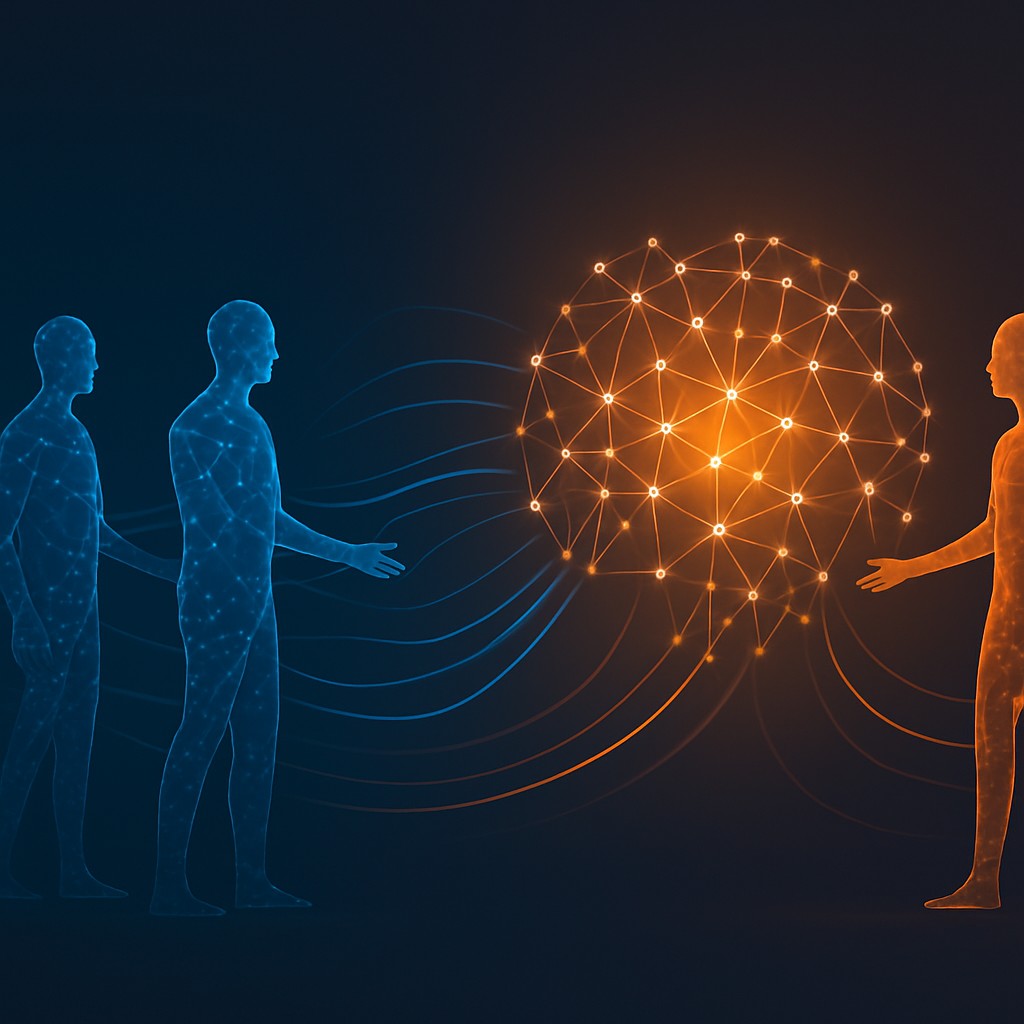
For most knowledge workers, AI acts as a co-pilot rather than a replacement. It handles the first draft, the tedious analysis, or the repetitive task, freeing humans for judgment, creativity, and relationships. Workers who learn to collaborate with AI often become significantly more productive, raising the value of human-plus-AI teams.
The Shifting Skills Landscape
As AI handles more routine work, employers increasingly value skills that AI cannot easily replicate: critical thinking, creativity, emotional intelligence, complex problem-solving, and ethical judgment. Technical literacy with AI tools is becoming a baseline expectation across many fields. Continuous learning is now essential to staying relevant.
Impact Across Industries
The effects vary by sector. Creative fields, customer service, software development, marketing, and administrative work are experiencing significant change. Meanwhile, jobs requiring physical presence, hands-on skills, or deep human interaction are less directly affected. Understanding your industry's exposure helps you plan proactively.
Challenges and Inequality
The transition is not painless. There are real risks of job displacement, widening skill gaps, and uneven impacts across regions and demographics. Addressing these challenges requires investment in reskilling, supportive policy, and responsible adoption by employers. Ignoring them could deepen inequality even as productivity rises.
How Workers and Businesses Can Adapt
The best response is proactive adaptation: workers should build AI skills and double down on uniquely human strengths, while businesses should retrain teams and redesign workflows around human-AI collaboration. At AAMAX.CO, we help organizations adopt generative AI thoughtfully, boosting productivity while empowering their people to thrive in a changing job market.
Want to publish a guest post on aamax.co?
Place an order for a guest post or link insertion today.
Place an Order