

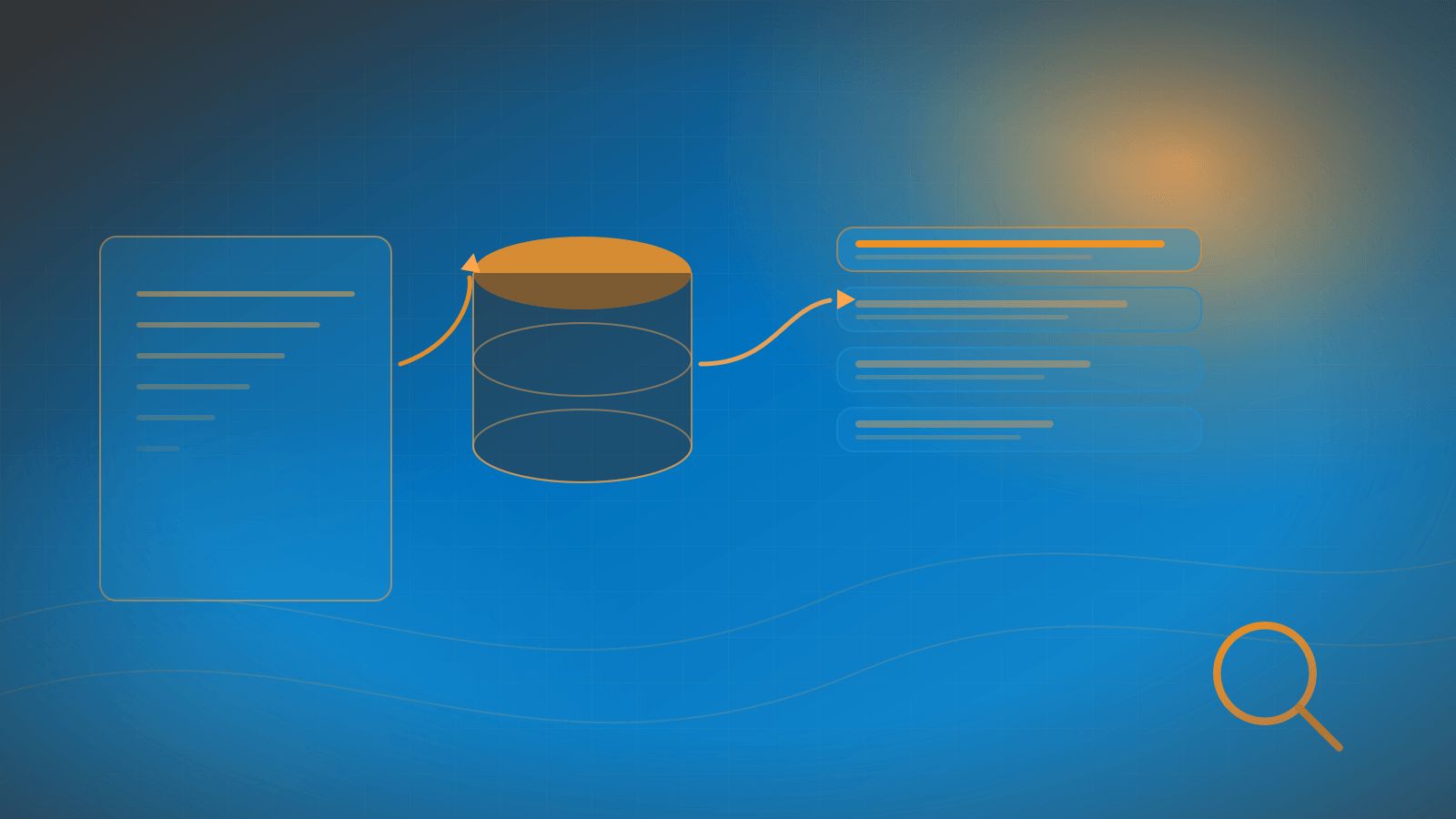
How Blog Post Connect to Google SEO
Introduction: From Publish Button to Search Result
Publishing a blog post feels like a single action, but from a search engine's perspective it triggers a chain of independent processes. The URL has to be discovered. It has to be crawled successfully. It has to be judged worth indexing. It has to be matched to queries. It has to compete against everything already ranking. And once it appears, it has to satisfy the people who click it, because search engines learn from that behaviour. Every one of those stages can be the bottleneck, which is why two posts of similar quality can perform completely differently. Understanding the chain lets you diagnose problems instead of guessing.
How We Turn Blogs Into Traffic Engines
Publishing consistently is not a strategy, and many businesses discover that after a hundred posts have produced almost nothing. At AAMAX.CO we build blogs that are organised around real buyer questions, technically clean, internally linked to commercial pages, and continuously improved based on performance data. Our SEO services connect editorial planning to indexing health, on page optimisation, authority building, and conversion so your content produces pipeline rather than a growing archive. AAMAX.CO is a full service digital marketing company offering web development, digital marketing, and search optimisation worldwide, and when you hire AAMAX.CO you get both the strategy and the hands on implementation from one accountable team.
Stage One: Discovery
Search engines cannot rank a URL they have never seen. Discovery happens through internal links, XML sitemaps, external links, and change notification protocols. The fastest and most controllable of these is internal linking. A new post linked from a category hub, from related articles, and ideally from a page that already receives crawl attention gets found quickly.
Orphaned posts, reachable only through a sitemap or a paginated archive fifteen pages deep, get found slowly and treated as low priority. Before you worry about anything else, make sure every new post has at least two or three contextual internal links pointing to it from relevant existing pages.
Stage Two: Crawling
Once discovered, the URL must be fetched successfully. Crawling fails or degrades for mundane technical reasons: server errors under load, aggressive rate limiting, robots rules blocking the path or blocking the CSS and JavaScript needed to render the page, redirect chains that waste crawl attempts, or extremely slow response times.
Crawl efficiency also matters on larger sites. If your domain generates thousands of low value URLs through tag archives, internal search results, faceted filters, and pagination, crawlers spend their attention on noise. Pruning those URLs from indexing and from your sitemap directs crawl budget toward content that matters.
Stage Three: Indexing
Being crawled does not guarantee being indexed. Search engines evaluate whether a page adds anything worth storing. Thin posts, near duplicates of existing content, pages with conflicting canonical signals, and pages carrying noindex directives get excluded.
The most common self inflicted indexing problem in blogs is topical overlap. When five posts all address slightly different phrasings of the same question, engines struggle to decide which one deserves to represent the topic, and often none of them ranks well. Consolidating those five into one authoritative resource, then redirecting the rest, typically produces an immediate improvement.
Stage Four: Relevance Matching
Indexed pages are matched to queries based on meaning, not just word overlap. Modern search systems interpret intent, entities, and context. A post about reducing warehouse picking errors can rank for queries that never use those exact words, provided the content genuinely covers the concepts, related terminology, and specifics a searcher expects.
Practically this means writing comprehensively about a real topic rather than repeating a keyword. Cover the subtopics people actually need. Define terms. Address edge cases. Include the specific details that only someone with experience would know. Use clear headings that reflect the questions being answered, and make the first sentence under each heading a direct answer.
Stage Five: Competition and Authority
Relevance gets you considered. Authority often decides the ranking. Authority accumulates from external references, brand recognition, topical depth across your whole site, and internal link structure that signals which of your pages are most important.
A single blog post rarely wins a competitive query alone. Topic clusters win. When you publish a substantive hub page on a subject and surround it with supporting articles that link back to it, you build a body of evidence that your site is a genuine resource on that topic. Isolated posts on unrelated subjects, by contrast, never accumulate that weight.
Stage Six: Satisfaction and Iteration
After your post appears in results, its performance depends on whether people click it and whether they get what they wanted. Titles and meta descriptions determine click through. Page speed, layout stability, mobile usability, readability, and content depth determine whether visitors stay and engage or return to search immediately.
This is where measurement closes the loop. Search Console shows queries where you rank just outside the click earning positions, which are your fastest improvement opportunities. It shows pages with high impressions and low click through, which usually need better titles rather than more content. Analytics shows which posts attract visitors who then convert and which attract traffic with no commercial value.
What Actually Moves the Needle
In practice, most blogs underperform for a small set of repeatable reasons. They publish without a topical plan, so nothing accumulates authority. They neglect internal linking, so posts sit isolated and commercial pages receive no support. They never update or consolidate, so old thin posts compete with newer better ones. They optimise for keywords instead of answering questions, so they lose to content with genuine depth. And they measure sessions instead of outcomes, so nobody notices that the traffic is not the right traffic.
Fixing those five things reliably outperforms any clever tactic. Plan clusters, link deliberately, maintain aggressively, write with real expertise, and measure commercial results.
Looking Beyond Traditional Rankings
The connection between a blog post and search visibility is also broadening. AI powered answer engines read your content, extract passages, and cite sources inside generated responses, often without producing a click. Posts that are clearly structured, factually specific, and attributable to real expertise are far more likely to be cited, which is why modern content planning increasingly incorporates GEO services alongside classic optimisation. Integrating your blog with email, social, and paid promotion through coordinated digital marketing accelerates the whole cycle, because early engagement and external references speed up discovery and authority development.
Conclusion
A blog post connects to search rankings through a chain of discovery, crawling, indexing, relevance matching, competitive authority, and user satisfaction. Strengthen every link in that chain and your content compounds. Neglect any one of them and the rest of your effort is wasted. If you want a team that manages the whole chain and holds itself accountable to pipeline rather than pageviews, we are ready to help you build a blog that earns its place in search.
Want to publish a guest post on aamax.co?
Place an order for a guest post or link insertion today.
Place an Order