

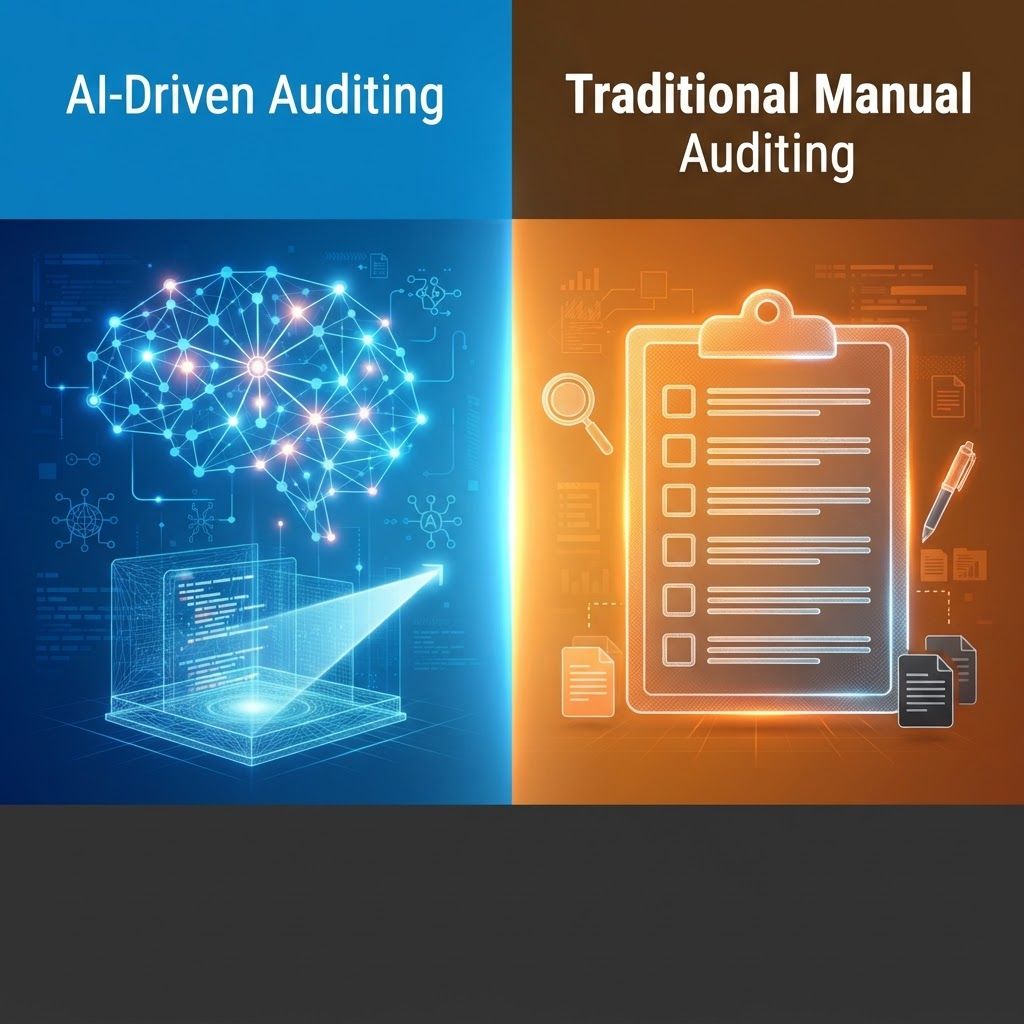
How AI Audits Differ From Traditional SEO Audits
The word audit has quietly split into two meanings. A traditional SEO audit is a systematic technical and content review of a website, aimed at finding the issues that prevent it from ranking. An AI audit, as the term is now commonly used, can mean either an audit conducted with substantial help from AI tooling, or an assessment of how visible a brand is inside AI-driven answer engines. Both differ meaningfully from the classic model, and confusing them leads to disappointment. Understanding the distinction helps you commission the right work and interpret the findings sensibly.
How AAMAX.CO Can Help You Audit for Both Search and AI Visibility
At AAMAX.CO, we run audits that cover classic technical and content foundations alongside emerging AI visibility factors, because both now determine how discoverable a brand is. As a full service digital marketing company providing web development, digital marketing and search engine optimization worldwide, we use automation and AI tooling to accelerate data collection and pattern detection, then apply experienced human judgment to prioritization and interpretation. We deliver findings as a sequenced, business-prioritized roadmap rather than a list of hundreds of undifferentiated warnings. If you want an audit that reflects how discovery actually works today, hire AAMAX.CO for SEO services and we will assess both traditional rankings and generative visibility together.
What a Traditional SEO Audit Covers
The classic audit is a structured inspection with a well-established checklist. A crawler maps the site to identify broken links, redirect chains, duplicate titles and descriptions, missing headings, orphaned pages and thin content. Indexation is compared against expectations to find pages that should be indexed and are not, and pages that are indexed and should not be. Performance metrics are collected, structured data is validated, internal linking depth is measured, and content is reviewed against target queries and competitor standards.
The output is a prioritized issue list with technical explanations and recommended fixes. The strength of this model is completeness on known problems. Its weakness is that it evaluates a site against a fixed rulebook and can miss strategic questions, such as whether the content strategy targets the right demand at all.
What Changes When AI Assists the Audit
AI-assisted auditing changes the method rather than the questions. Where a human analyst could realistically review a sample of pages, language models can process content at scale, summarizing thousands of pages, clustering them by topic, identifying semantic overlap that causes cannibalization, and flagging pages whose content does not match the intent behind the queries they rank for.
This is a genuine advance in three areas. First, coverage: analysis extends across the whole site instead of a sample. Second, semantic understanding: AI can recognize that two pages address the same underlying question despite using entirely different wording, something keyword-matching tools miss. Third, speed: log file patterns, internal link structures and content gaps that took days to unpick can be surfaced in hours.
What AI does not change is the need for judgment. Models produce confident-sounding recommendations that are sometimes generic, occasionally wrong, and frequently unprioritized. They lack knowledge of your commercial margins, development capacity, brand constraints and competitive history. An audit that forwards AI output without human filtering typically overwhelms the client with volume and understates the two or three changes that would actually matter.
The Second Meaning: Auditing AI Visibility
The other kind of AI audit asks a newer question entirely: when users ask an AI assistant or answer engine about your category, are you present, and how are you described? This is not a technical inspection of your site but an assessment of your representation inside generative systems.
The method is different. Analysts run structured sets of prompts reflecting real customer questions across multiple assistants, record which brands and sources are cited, note the accuracy of any description of your business, and identify which third-party sources the models rely on. Frequently the sources shaping AI answers are review sites, industry publications, forums and comparison articles rather than the brand's own website, which produces recommendations quite unlike a traditional audit.
Different Findings, Different Fixes
Because the questions differ, so do the outputs. A traditional audit might conclude that faceted navigation is bloating the index, that Largest Contentful Paint on product templates is too slow, and that four blog posts are competing for one query. Fixes are technical and editorial, implemented on your own site.
An AI visibility audit might conclude that your brand is absent from the comparison articles the models cite, that outdated pricing information is being repeated in answers, that your entity information is inconsistent across the web, or that competitors are cited because they publish clearly structured, factual, easily extractable content. Fixes involve digital PR, entity consistency, structured data, review presence and content formatted for extraction as much as on-site optimization.
Where the Two Overlap
The overlap is larger than it first appears. Generative systems still rely on crawlable, well-structured, credible content. Clear headings, factual precision, schema markup, fast delivery and strong topical authority help both classic rankings and AI citation. A site with poor technical foundations rarely performs well in either surface. This is why we recommend treating GEO services as an extension of a solid SEO programme rather than a replacement for it, coordinated with the rest of your digital marketing activity.
How to Combine Them Effectively
The practical model is a single audit with two lenses. Use automation and AI to gather and cluster data across the entire site, which gives breadth no manual process can match. Apply human analysis to interpret findings, resolve contradictions, weigh commercial value and sequence the work. Then add a generative visibility assessment using consistent prompt sets, tracked over time so changes can be observed rather than guessed at.
Verification is non-negotiable. Every AI-generated finding should be checked against primary data such as crawl results, server logs and search console reports before it reaches a recommendation. Models hallucinate confidently, and an unverified audit finding can send a development team on an expensive detour.
Final Thoughts
AI audits differ from traditional SEO audits in method, scope and output. AI-assisted auditing expands coverage and adds semantic insight while still depending on human prioritization. AI visibility auditing asks an entirely different question about representation inside answer engines and produces recommendations centred on authority, entity consistency and third-party presence. Neither replaces the classic technical audit, which remains the foundation both depend on. The strongest approach combines all three: automated breadth, human judgment, and deliberate attention to how your brand appears wherever people now search.
Want to publish a guest post on aamax.co?
Place an order for a guest post or link insertion today.
Place an Order