

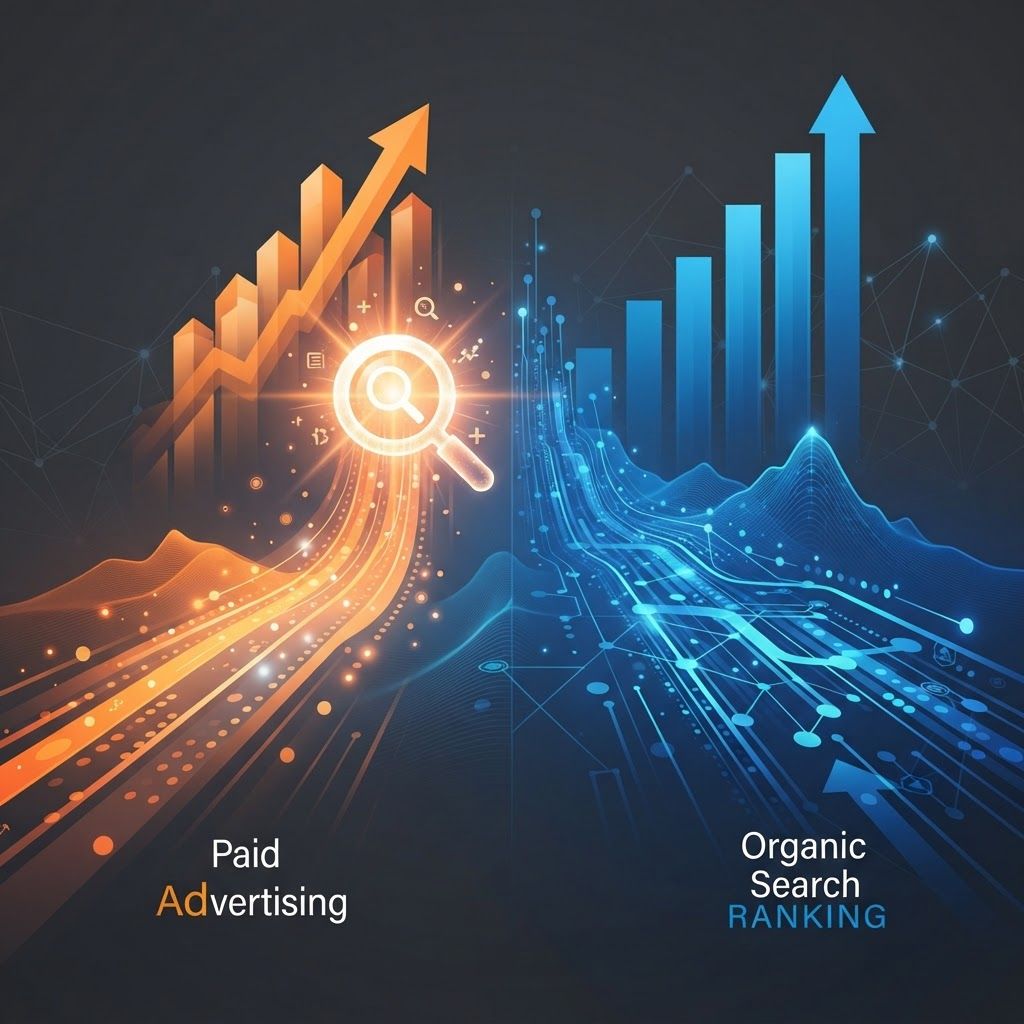
Do Google Ads Have an Effect on SEO Ranking
One of the most persistent questions in digital marketing is whether running Google Ads has any direct effect on organic SEO rankings. Business owners often assume that if they spend enough on paid advertising, Google will reward them with higher organic positions. Others fear that pausing their ad spend might cause their organic rankings to drop. Both beliefs stem from a misunderstanding of how Google separates its paid and organic systems, and clearing up that confusion is essential for building an effective strategy.
The Direct Answer From Google
Google has stated clearly and repeatedly that running Google Ads does not directly improve your organic search rankings. The organic algorithm and the paid advertising auction are two entirely separate systems. Paying for ads does not buy you a better position in the organic results, and stopping your ads does not penalize your organic rankings. This separation exists to protect the integrity of search results, ensuring that organic listings reflect relevance and quality rather than advertising budgets.
If paying for ads could directly boost organic rankings, the credibility of search results would collapse, and users would lose trust in the results they see. Google understands this, which is why the wall between paid and organic remains firmly in place.
How AAMAX.CO Aligns Paid and Organic
At AAMAX.CO, we believe the smartest marketers stop treating paid and organic as rivals and start treating them as partners. As a full service digital marketing company offering web development, digital marketing, and SEO services worldwide, we design integrated campaigns where advertising and search optimization reinforce each other. Ads give us fast data about which keywords convert, and that insight shapes a stronger organic content plan. If you want a team that can run both engines in harmony, you can hire AAMAX.CO to build a strategy that maximizes every dollar. Our search engine optimization experts work hand in hand with our paid media specialists so you capture demand across the entire results page.
The Indirect Benefits That Do Exist
While Google Ads do not directly influence the algorithm, they can create indirect effects that support your SEO efforts. When your ads drive relevant visitors to your site, some of those visitors engage deeply, share your content, and even link to it from their own websites. Those earned links and social signals are genuine ranking factors. In this way, advertising can jump start visibility for new content that has not yet earned organic traction.
Ads also increase brand awareness. When more people recognize and search for your brand directly, those branded searches and higher engagement rates can send positive signals over time. A user who discovers you through an ad today may search for you organically next week, and that growing brand demand strengthens your overall presence in search.
Faster Keyword Data for Smarter SEO
One of the most valuable indirect benefits of Google Ads is the speed at which they reveal keyword performance. Organic SEO can take months to show which terms convert, but a paid campaign delivers conversion data almost immediately. By analyzing which keywords generate leads and sales through ads, you can prioritize the same terms in your organic content strategy with confidence.
This feedback loop reduces guesswork. Instead of investing months of content effort into keywords that may not convert, you use paid data to validate demand first. The result is a more efficient organic strategy grounded in real performance rather than assumptions.
Dominating the Search Results Page
Another advantage of running both paid and organic together is the ability to occupy more space on the results page. When your ad appears at the top and your organic listing ranks well below it, you take up more visual real estate and increase the likelihood of a click. Studies consistently show that appearing in both paid and organic positions can lift total clicks beyond what either channel achieves alone.
This combined presence also reinforces trust. Seeing a brand in both the sponsored and organic results signals authority and stability, which can improve click through rates for both listings. The synergy is real even though the underlying ranking systems remain separate.
Common Misconceptions to Avoid
It is important to avoid falling for myths that can waste your budget. Spending more on ads will not push your organic listing higher, and there is no secret threshold of ad spend that unlocks better organic positions. Likewise, pausing a campaign will not trigger an organic penalty. Any organic changes that happen to coincide with ad changes are almost always the result of algorithm updates, content changes, or competitor activity rather than your advertising decisions.
Understanding this frees you to make budget decisions based on real return on investment rather than fear. You can scale ads up or down based on profitability while your organic strategy continues to grow on its own timeline.
Building a Unified Strategy
The most successful businesses recognize that paid and organic search serve complementary roles. Ads deliver immediate visibility and rich data, while SEO builds durable, compounding authority that pays off for years. Together they cover the full customer journey, from the first click to repeat visits. A coordinated approach that shares insights between the two channels consistently outperforms running them in isolation.
So do Google Ads have an effect on SEO ranking? Not directly, but the indirect benefits of traffic, brand awareness, earned links, and keyword intelligence can meaningfully strengthen your organic performance. When you combine disciplined digital marketing with a strong organic foundation, you build a resilient presence that captures demand no matter where your customers are looking. The key is to stop viewing them as competitors and start using each to amplify the other.
Want to publish a guest post on aamax.co?
Place an order for a guest post or link insertion today.
Place an Order