

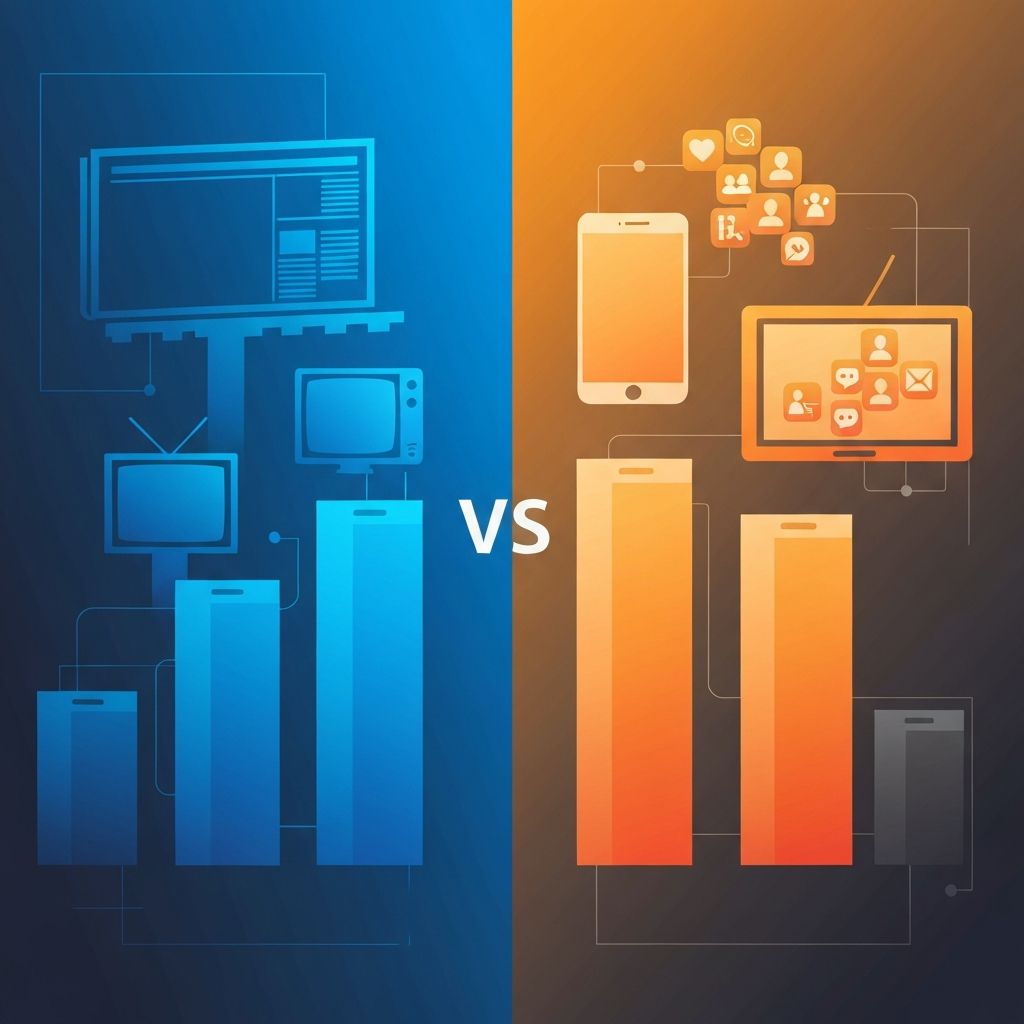
Digital Versus Traditional Marketing
Setting the Stage: Two Distinct Worlds
Digital versus traditional marketing is one of the most discussed topics in modern business strategy. Traditional marketing includes channels such as print ads, television commercials, radio spots, billboards, and direct mail. Digital marketing covers websites, search, social media, email, paid online ads, and increasingly AI-driven channels. At AAMAX.CO, we work with clients who often ask which approach will deliver the best return. The honest answer is that the right mix depends on your audience, product, and goals, but understanding the strengths of each is essential.
For decades, traditional marketing dominated because there were no real alternatives. Today, that has changed completely. Online channels offer precision, measurement, and scale that were unimaginable a generation ago. Yet traditional channels still create memorable moments, build mass awareness, and reach audiences that may be harder to engage online.
Cost and Budget Flexibility
One of the biggest practical differences between the two approaches is cost structure. Traditional advertising often requires significant upfront investment. A television campaign or a national magazine spread can consume an entire small business marketing budget before a single response is measured. Once committed, traditional spend is largely fixed and difficult to adjust mid-flight.
Digital channels offer far more flexibility. Brands can start small, test creative, and scale up only when performance proves out. Digital marketing budgets can be reallocated weekly or even daily based on what is working. This makes online advertising particularly attractive for startups, growing companies, and businesses with seasonal demand. Even with modest budgets, smart digital strategies can outperform far larger traditional campaigns.
Reach and Targeting
Traditional marketing excels at broad reach. A Super Bowl commercial can reach over a hundred million viewers in a single airing, and a strategically placed billboard can become a fixture in a community for months. The trade-off is that you reach everyone, not just the people who fit your customer profile.
Digital marketing flips this equation. Through audience segmentation, brands can show ads to specific job titles, life stages, interests, and behaviors. Platforms such as Meta, LinkedIn, and Google ads allow for incredibly precise targeting. This precision often results in higher conversion rates and lower cost per acquisition. For brands selling specialized products to narrow audiences, digital is usually the more efficient path.
Measurement and Accountability
Perhaps the largest contrast between the two approaches is measurement. Traditional marketing has historically relied on proxy metrics such as reach, frequency, and brand recall surveys. While these provide useful context, they rarely connect directly to sales without additional modeling.
Digital marketing offers end-to-end measurement. You can track every impression, click, page view, and conversion. Attribution models help marketers understand which channels and touchpoints contribute to revenue. This transparency holds teams accountable and enables continuous improvement. It also makes it easier to justify budgets to leadership and demonstrate the value of marketing investments.
Brand Building and Long-Term Equity
While digital channels are excellent for performance marketing, traditional media still plays a powerful role in building brand equity. There is something about a billboard during a daily commute, a sponsorship at a community event, or a beautifully produced commercial that creates emotional resonance. These moments contribute to a brand’s long-term trust and recognition in ways that are harder to replicate through banner ads alone.
That said, modern social media marketing and video content have begun to rival traditional channels in their ability to build brand equity at scale. Creators, influencers, and immersive storytelling formats give brands new ways to forge emotional connections without the cost of broadcast television.
Speed of Iteration
Speed is another defining advantage of digital. A traditional campaign typically requires weeks or months of production, distribution, and approval cycles. Once launched, it cannot easily be revised. Digital campaigns can be designed, launched, optimized, and refreshed within days.
This rapid iteration allows marketers to test multiple messages, creative formats, and offers to find what works best. Through structured experimentation, brands accumulate learnings that compound over time. The pace of learning is one of the biggest reasons digital has become the default channel for most modern growth teams.
The Power of an Integrated Strategy
The most successful brands rarely choose one approach exclusively. Instead, they integrate digital and traditional marketing into a cohesive strategy. For example, a national TV campaign can be amplified with retargeting on social media. A direct mail piece can drive recipients to a personalized landing page. A radio ad can promote a hashtag that fuels user-generated content online.
When these channels reinforce each other, the combined impact is greater than the sum of the parts. Customers see consistent messaging across multiple touchpoints, which builds trust and accelerates decision-making. The challenge is ensuring that creative, tracking, and team coordination support this kind of multi-channel orchestration.
Choosing the Right Approach for Your Business
So how should you decide where to invest? Start by clarifying your goals. If you need predictable lead generation and measurable returns, digital should be the foundation. If you are launching a new brand or trying to dominate a local market, a blend of traditional and digital can accelerate awareness. Consider your customer journey, your competitors’ strategies, and the maturity of your internal team.
Our digital marketing consultancy team can help you assess your current mix, identify gaps, and build a plan that balances short-term performance with long-term brand growth. Whether your audience is local or global, we design strategies that respect your budget while pushing your business forward.
Final Thoughts
Digital versus traditional marketing is not a battle with a single winner. It is a question of how each channel fits into your broader strategy. The brands that win in today’s landscape are those that respect the strengths of each, measure rigorously, and stay flexible as customer behaviors evolve. With the right partner and a clear plan, you can build a marketing engine that works for the way customers actually buy today.
Want to publish a guest post on aamax.co?
Place an order for a guest post or link insertion today.
Place an Order