

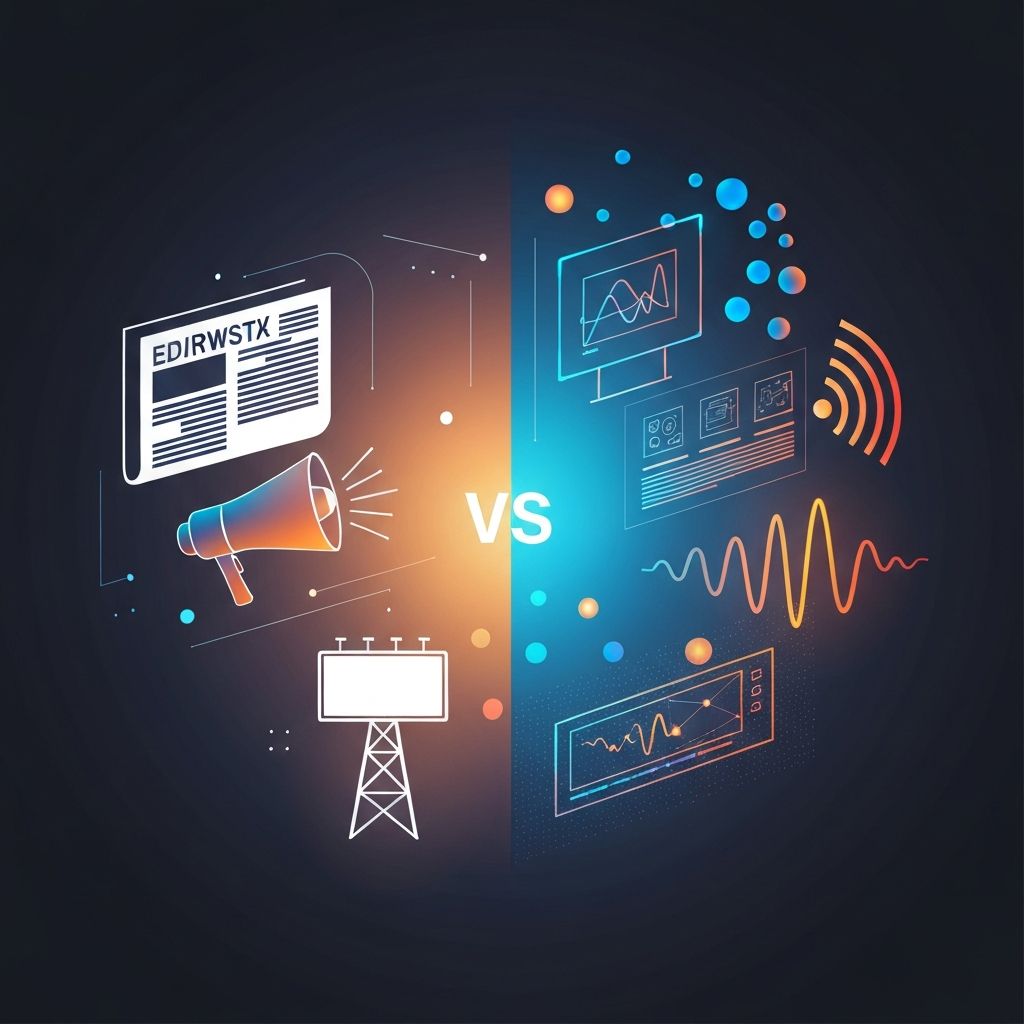
Digital Marketing vs Traditional Marketing
Defining Digital and Traditional Marketing
Marketing has not changed in purpose, only in delivery. Traditional marketing includes print ads, billboards, radio, TV, direct mail, and other offline tactics that have shaped the industry for decades. Digital marketing covers everything online: search engines, social media, email, paid ads, content, video, and more. The real question is not which is better in some abstract sense, but which mix delivers the best return for your goals. At AAMAX.CO, we help brands choose the right blend so every dollar works hard.
Both approaches still have a place in 2026, but the balance has shifted dramatically toward digital, and for good reason.
Reach and Targeting
Traditional marketing offers broad reach, especially for mass-market consumer brands. A national TV ad can put your message in front of millions in a single broadcast. The downside is that reach often comes with significant waste; you pay to be seen by people who will never become customers.
Digital marketing reverses this dynamic. You can target by location, age, income, behavior, interests, job title, search intent, and dozens of other variables. This precision allows even small businesses to compete with national brands by focusing on the exact audience most likely to buy.
Cost and ROI
Traditional ads typically require large up-front commitments and offer limited measurement. A radio spot or billboard might generate awareness, but tying that awareness to actual revenue is difficult. ROI calculations rely heavily on assumptions and broad attribution models.
Digital marketing offers granular measurement. You can track every click, conversion, and dollar of revenue back to its source. That makes it easier to scale what works, cut what does not, and continuously improve performance. Channels like SEO and email are especially efficient because they often have low marginal costs once the systems are in place.
Speed and Flexibility
Traditional campaigns take weeks or months to plan, produce, and launch. Once a billboard or printed ad is live, changes are expensive and slow. If a competitor reacts or the market shifts, you may be stuck with messaging that is no longer ideal.
Digital campaigns can launch in days. Headlines, creatives, audiences, and offers can be adjusted in hours, not weeks. This flexibility is invaluable in fast-moving markets and during high-stakes promotions.
Trust and Brand Perception
Traditional media still carries a certain prestige. Being featured on TV, in a major newspaper, or on a well-known billboard can build perceived credibility. Some industries, particularly luxury and high-end B2B, still benefit from this halo effect.
Digital, however, has its own trust mechanisms. Strong reviews, organic search rankings achieved through SEO services, and a polished social presence all build credibility online. Many buyers now trust a top organic result more than a paid TV ad.
Best Use Cases for Traditional Marketing
Traditional marketing still shines in specific situations:
- Local awareness: Billboards near major roads can reinforce a local brand.
- Mass-market launches: National TV can quickly drive awareness for new consumer products.
- High-trust industries: Print and broadcast still convey authority for some legal, financial, and luxury brands.
- Demographics with low digital engagement: Some older or rural audiences still respond strongly to direct mail.
For most other situations, digital channels are now the smarter starting point.
Best Use Cases for Digital Marketing
Digital marketing dominates when:
- You need measurable ROI and tight cost control
- You are targeting a specific niche or geography
- You want to scale predictable lead generation
- You sell online or through high-consideration consultations
- You need to compete against larger, better-funded competitors
Channels like search ads, content marketing, email, and social media marketing let small teams punch far above their weight.
Combining Both for Maximum Impact
The smartest brands rarely choose one over the other. They use traditional channels for broad awareness and digital to capture and convert demand. A TV ad drives a search, the search lands on a well-optimized page, and a remarketing campaign closes the deal weeks later. Each channel reinforces the others.
If you do invest in traditional, instrument it for digital tracking. Use unique URLs, vanity phone numbers, and dedicated landing pages so you can measure performance even when the original touchpoint was offline.
Common Mistakes Brands Make
The most common mistake we see is underinvesting in digital while overinvesting in vanity-driven traditional spend. Logos on stadiums and full-page magazine ads might feel impressive, but they rarely show up in revenue. The opposite mistake is treating digital as a one-time project instead of an ongoing system that compounds over time.
Another frequent issue is misaligned messaging. Traditional and digital should tell the same story, optimized for each channel. Disconnected campaigns confuse buyers and waste budget.
How AAMAX.CO Builds Modern Marketing Programs
We are a full-service digital marketing company offering web development, digital marketing, and SEO services worldwide. We help brands evaluate the right mix of channels, prioritize digital where it produces the best ROI, and integrate traditional efforts with measurable digital systems. Hire AAMAX.CO to design a marketing strategy built for how buyers actually behave today.
The debate is not really digital versus traditional. It is intentional versus accidental marketing. With the right plan, both worlds can work together to drive real, measurable growth.
Want to publish a guest post on aamax.co?
Place an order for a guest post or link insertion today.
Place an Order