

Digital Marketing Reporting
The Strategic Importance of Marketing Reporting
Digital marketing generates an overwhelming amount of data. Impressions, clicks, conversions, bounce rates, engagement metrics, and dozens of other indicators flow in from every channel and platform. Without effective reporting, this data becomes noise. With effective reporting, it becomes the foundation for confident decision-making and continuous improvement.
At AAMAX.CO, we believe reporting is one of the most underrated disciplines in digital marketing. The agencies and in-house teams that report best aren't just transparent, they actually drive better results because they identify what's working faster and double down on success.
The Difference Between Data and Insight
A report full of charts and numbers isn't necessarily a good report. Raw data answers the question "what happened?" Good reporting answers "so what?" and "now what?" The best marketing reports surface insights, explain implications, and recommend actions. They turn data into decisions.
This requires storytelling skill, not just analytical capability. The best reports lead with the punchline, support with evidence, and conclude with clear next steps. They respect the reader's time and prioritize what matters over what's merely measurable.
Defining the Right KPIs
Not every metric deserves attention. The right KPIs depend on your business model, marketing goals, and stage of growth. A pre-revenue startup focused on awareness has different KPIs than a mature business optimizing for ROI. Vanity metrics like impressions and reach feel impressive but rarely correlate with revenue.
Strong KPI frameworks tie marketing activities to business outcomes through a chain of intermediate measures. Top-of-funnel metrics include traffic, reach, and brand search volume. Middle-of-funnel metrics include leads, MQLs, and engagement rates. Bottom-of-funnel metrics include conversions, customer acquisition cost, and lifetime value.
Channel-Specific Reporting
Each marketing channel has its own native metrics and reporting requirements. SEO services reporting includes ranking positions, organic traffic trends, click-through rates from search, conversion rates by landing page, and backlink profile growth. Paid search reporting focuses on cost-per-click, conversion rate, cost-per-acquisition, return on ad spend, and impression share.
Social media reporting emphasizes engagement rate, follower growth quality, click-through rate, and direct conversions from social channels. Email marketing tracks open rates, click rates, deliverability, and revenue per email. Each channel requires its own dashboard and benchmarks for context.
Multi-Touch Attribution
Modern customer journeys span multiple touchpoints across many channels. A buyer might discover you through a blog post, return via a paid ad, sign up after seeing a social post, and finally convert after an email campaign. Single-touch attribution credits only the last interaction, dramatically distorting the true performance of upper-funnel activities.
Multi-touch attribution models distribute conversion credit across the full customer journey. Common models include linear, time-decay, position-based, and data-driven attribution. The right model depends on your sales cycle, channel mix, and data maturity. Implementing proper attribution is one of the highest-leverage analytics investments most businesses can make.
Dashboard Design and Visualization
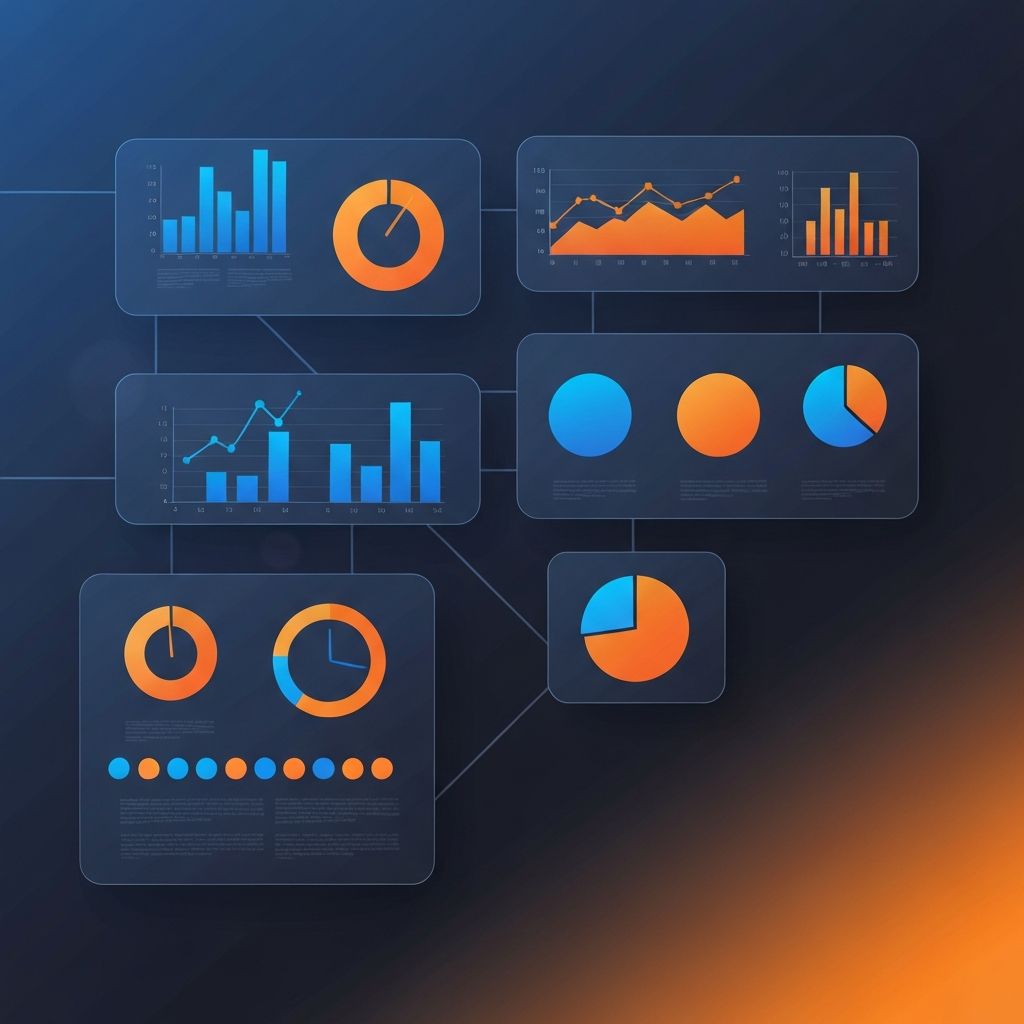
Reports should be visual, scannable, and structured. Heavy text walls and dense spreadsheets get ignored. Modern reporting tools like Looker Studio, Tableau, and Power BI create dynamic dashboards that update in real time and let stakeholders explore data interactively.
Good dashboard design follows information hierarchy: the most important numbers up top, supporting context below, and detailed breakdowns at the bottom. Color coding for performance status, trend indicators showing direction, and benchmarks for context all improve comprehension.
Reporting Cadence and Audiences
Different audiences need different reports at different cadences. Executives want quarterly business reviews focused on revenue impact and strategic insights. Marketing managers need monthly channel deep-dives. Specialists need weekly or even daily operational dashboards for active campaign management.
Sending one all-purpose report to everyone serves no one well. Tailoring reports to audience needs and decision rights makes reporting actually useful rather than just performative.
Tools and Tech Stack
Modern marketing reporting requires a thoughtful tech stack. Web analytics platforms like Google Analytics 4 capture site behavior. Ad platforms provide campaign data. CRM systems track leads and revenue. Marketing automation tools track engagement and lifecycle stage. Reporting tools aggregate everything into unified dashboards.
The challenge is data integration. Disconnected tools produce conflicting numbers, frustrating stakeholders and undermining confidence in marketing data. Investing in proper data pipelines, ETL tools, and a single source of truth pays dividends in clarity and trust.
Reporting on Paid Media
Google ads and other paid platforms generate massive amounts of campaign data. Effective paid media reporting goes beyond platform native reports to combine ad performance with downstream conversion and revenue data from your CRM. This is the only way to truly measure ROI rather than just cost-per-click or platform-reported conversions.
Common Reporting Pitfalls
Bad reporting habits sabotage marketing teams. Reporting only on positive metrics, ignoring trend changes, comparing inconsistent time periods, presenting data without context, and burying bad news all erode credibility. Honest, transparent reporting that highlights both wins and losses builds trust and accelerates learning.
Reporting in the AI Era
AI is changing reporting. Automated insight generation, anomaly detection, and natural language query interfaces are making data exploration more accessible. Digital marketing consultancy increasingly involves helping organizations adopt these AI-powered analytics capabilities effectively while avoiding overreliance on automated outputs that lack human judgment.
Hire AAMAX.CO for World-Class Marketing Reporting
Reporting is where good marketing becomes great marketing. Hire AAMAX.CO for digital marketing services that include rigorous reporting and analytics from day one. We build custom dashboards, implement attribution models, and deliver insightful reports that turn data into decisions. Our clients don't just see what happened, they understand why it happened and what to do next. Marketing without measurement is guesswork. Partner with us to bring discipline and clarity to your marketing performance.
Want to publish a guest post on aamax.co?
Place an order for a guest post or link insertion today.
Place an Order