

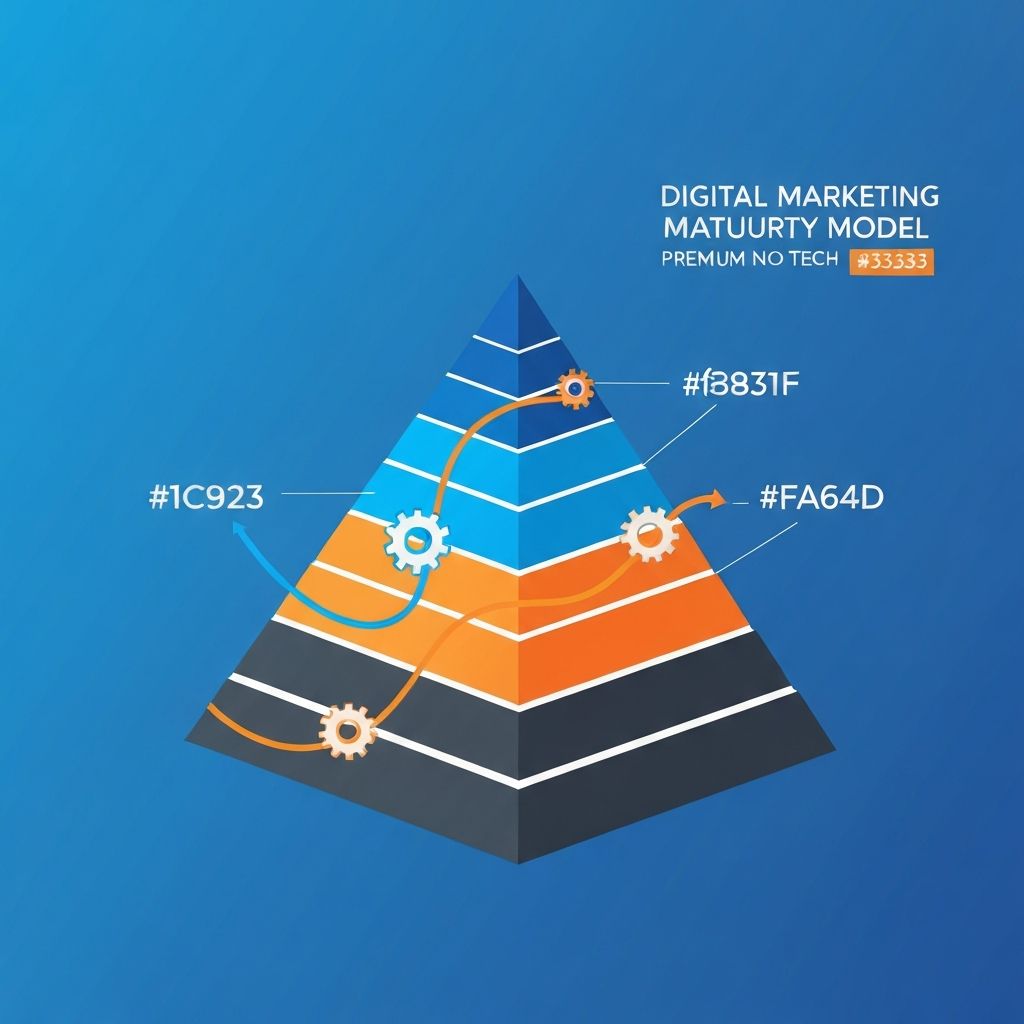
Digital Marketing Maturity Model
What Is a Digital Marketing Maturity Model?
A digital marketing maturity model is a structured framework that describes how marketing capabilities evolve over time, from basic and reactive to advanced, integrated, and data-driven. It gives leaders a clear way to evaluate where their organization currently sits, identify gaps, and plan a realistic roadmap toward higher performance. Instead of jumping between random tactics, a maturity model creates a sequenced approach to building people, processes, technology, and data into a true growth engine. For brands serious about scaling, our digital marketing team uses maturity thinking to design long-term strategies.
Stage 1: Nascent
At the nascent stage, marketing is mostly ad hoc. The brand may have a basic website, a few social media profiles, and occasional advertising. There is little measurement, weak strategy, and limited integration between channels. Decisions are made on intuition rather than data. Growth is unpredictable. The priority here is foundational work: clear positioning, a fast and modern website, basic analytics, and consistent branding.
Stage 2: Emerging
In the emerging stage, organizations begin to formalize digital activities. They run regular campaigns, invest in search engine optimization, and start measuring results with tools like GA4 and CRM data. There is more structure but still many silos between teams and channels. The next step is to align marketing with sales, define KPIs that matter, and start using data to inform decisions instead of just reporting them.
Stage 3: Connected
At the connected stage, channels and data start to work together. Email, paid media, social, content, and SEO share insights and audiences. Marketing automation begins to play a role. Customer journeys are mapped, and content is created to support each stage. Brands at this stage often see noticeable improvements in conversion rates and retention. The challenge is to deepen personalization and expand experimentation.
Stage 4: Optimized
Optimized organizations run a true performance culture. Every campaign is testable, every channel is accountable, and creative is continuously refined based on data. Advanced segmentation, lifecycle marketing, and integrated Google ads with CRM signals are common. AI tools help with content production, bidding, and analytics. Marketing is no longer a cost center, it is an investment with predictable returns.
Stage 5: Transformative
At the highest stage, digital marketing becomes a strategic driver of the entire business. Customer data informs product development, pricing, and operations. Marketing, sales, and service work as a single revenue team. Predictive models, AI agents, and advanced personalization power experiences across every touchpoint. Brands at this level use sophisticated social media marketing and omnichannel orchestration to create memorable, consistent journeys.
How to Move Up the Model
Progressing through the maturity model requires honest assessment, leadership commitment, and a roadmap that fits your industry and resources. It usually involves upgrading technology, reskilling teams, hiring specialists, and building stronger measurement frameworks. Trying to skip stages rarely works because each stage builds capabilities the next one depends on.
Hire AAMAX.CO as Your Growth Partner
If you want a partner who understands every stage of the digital marketing maturity model, AAMAX.CO is ready to help. As a full-service digital marketing company offering web development, digital marketing, and SEO services worldwide, we meet you where you are and guide you to where you want to go. Hire us to build a clear, structured, and measurable path to digital marketing excellence.
Want to publish a guest post on aamax.co?
Place an order for a guest post or link insertion today.
Place an Order