

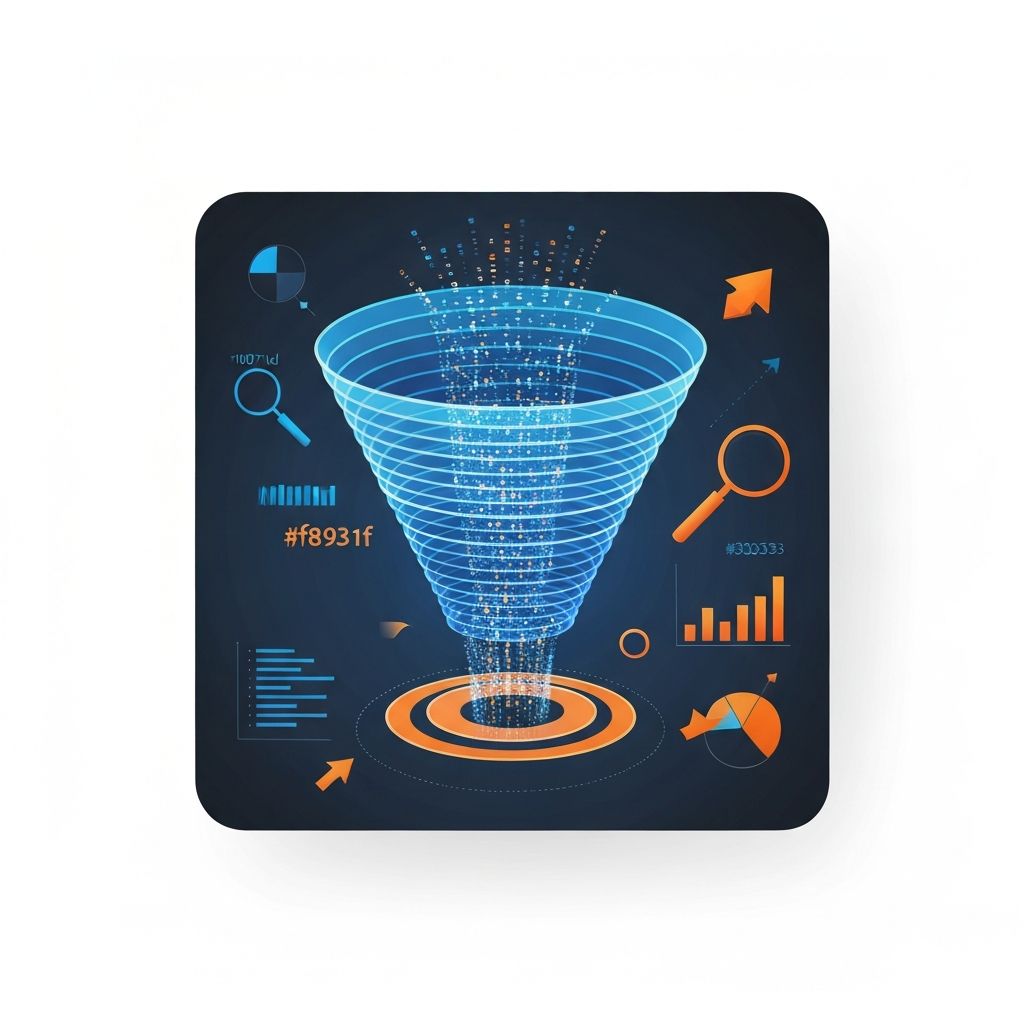
Digital Marketing Funnel
What Is a Digital Marketing Funnel?
A digital marketing funnel is a structured way of thinking about how strangers become aware of your brand, evaluate what you offer, decide to purchase, and ultimately become loyal customers and advocates. While buying journeys today are far from linear, the funnel remains an indispensable mental model because it forces marketers to think about every stage, the questions buyers ask at each step, and the assets needed to move them forward. Without this framework, marketing tends to default to scattered tactics rather than a coherent system.
At AAMAX.CO, we help businesses build full-funnel marketing engines where every campaign, asset, and channel has a defined role. The result is a measurable, repeatable system that scales as your business grows.
Top of Funnel: Awareness and Discovery
The top of the funnel is where prospects first encounter your brand. They may not yet know they have a problem, or they may be in the very earliest stages of exploring solutions. Tactics here focus on broad reach, education, and brand-building. Long-form blog posts, short-form video, podcasts, organic social content, influencer collaborations, and display advertising all serve well at this stage. The objective is not to push for a sale but to plant your brand firmly in the prospect's awareness so that when they are ready to consider solutions, you are top of mind.
Strong SEO services are the backbone of top-of-funnel performance because they capture massive amounts of free, intent-rich traffic over time. Each piece of high-quality content can rank for years, compounding in value while paid channels stop the moment budget pauses.
Middle of Funnel: Consideration and Evaluation
Once prospects know about you, they enter the middle of the funnel where they actively evaluate your offer against alternatives. They read case studies, compare features, watch demo videos, request information, and check reviews. Content at this stage should answer specific questions, address objections, and showcase real proof. Comparison guides, webinars, calculators, gated white papers, and email nurture sequences are particularly effective.
Mid-funnel social media marketing also plays a powerful role through retargeted videos, testimonial content, and live Q and A sessions that allow potential buyers to validate their choice in a low-pressure environment.
Bottom of Funnel: Decision and Conversion
The bottom of the funnel is where prospects decide whether to buy. Conversion optimization, persuasive offers, frictionless checkout flows, and clear calls to action become the priority. Highly targeted Google ads capturing branded and high-intent search queries are extremely cost-efficient at this stage because the prospect is already deep in evaluation. Sales enablement assets such as personalized proposals, demo videos, and discovery calls also live at this stage.
Even small improvements at the bottom of the funnel, such as a clearer headline, a stronger guarantee, or a streamlined form, can produce outsized revenue gains because all the upstream investment has already been made to bring the prospect this far.
Post-Purchase: Retention, Loyalty, and Advocacy
The funnel does not end at the sale. Retention and advocacy are where the most profitable growth happens. Onboarding sequences, loyalty programs, customer success outreach, referral incentives, and review collection campaigns turn one-time buyers into repeat customers and brand champions. A loyal customer not only generates more revenue over time but also brings in new customers at a fraction of the typical acquisition cost.
Designing a Funnel That Reflects Real Buyer Behavior
Modern buyers move back and forth between stages, sometimes skipping steps and sometimes lingering for months. The best funnels are built with this messiness in mind. They include multiple entry points, parallel content paths for different personas, and triggered messaging that adapts based on user behavior. Marketing automation, CRM data, and intent signals make this kind of dynamic funnel possible at scale.
Measuring Funnel Performance
To improve a funnel you must measure it. Key metrics include traffic by stage, conversion rate from one stage to the next, cost per acquisition, average order value, customer lifetime value, and payback period. Identifying the weakest stage of the funnel and concentrating optimization efforts there is almost always more profitable than trying to improve everything at once.
Common Funnel Mistakes to Avoid
Many businesses overinvest in top-of-funnel awareness without building strong consideration and conversion infrastructure, resulting in expensive traffic that never converts. Others build aggressive bottom-of-funnel campaigns without enough awareness, hitting a ceiling because not enough new prospects enter the system. Treating each stage as part of an integrated whole, rather than isolated tactics, is the key to compounding results.
Hire AAMAX.CO to Build Your Funnel
If you want a complete, measurable funnel that turns strangers into loyal customers, we can help. Our team designs and operates full-funnel digital marketing systems for businesses across industries, combining strategy, creative, paid media, content, automation, and analytics into a unified engine. Whether you need hands-on execution or expert digital marketing consultancy to guide your internal team, we are ready to help. Contact us today to start building a funnel that grows revenue predictably.
Want to publish a guest post on aamax.co?
Place an order for a guest post or link insertion today.
Place an Order