

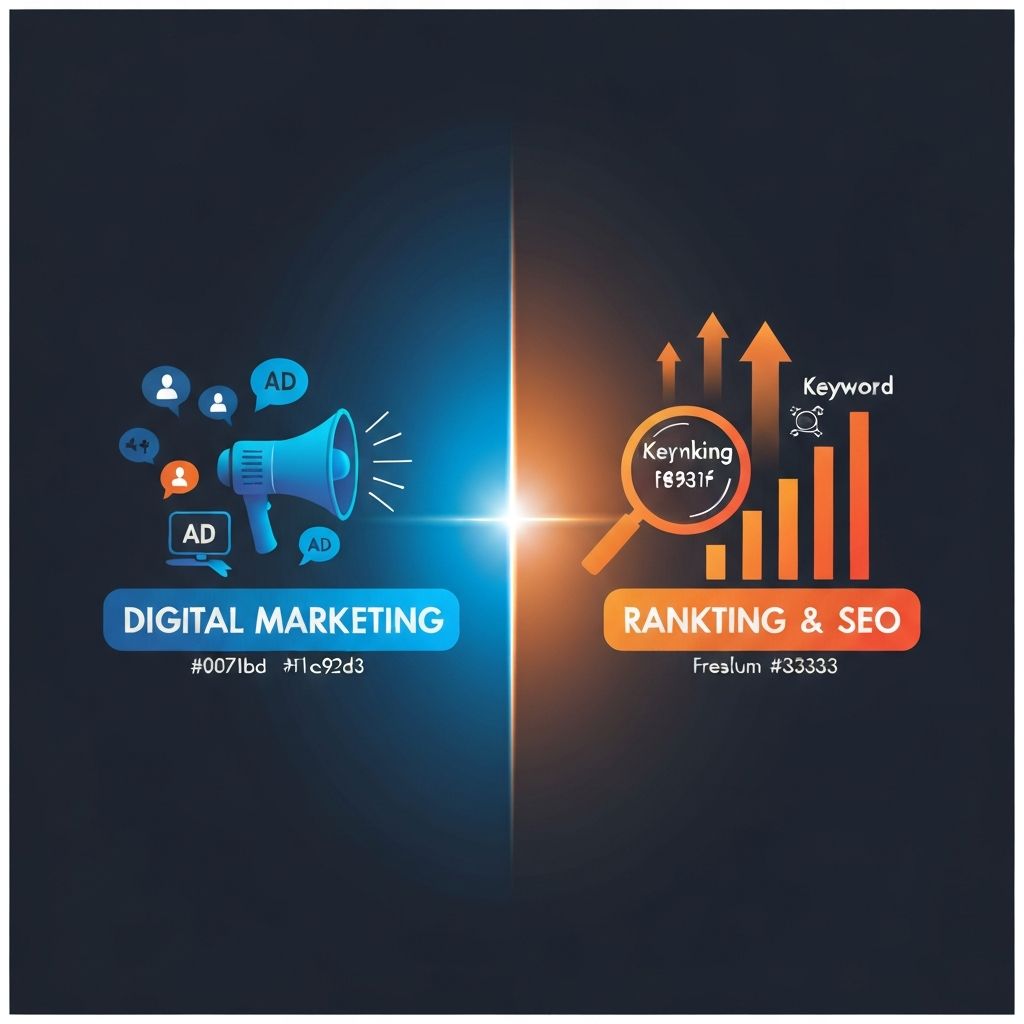
Difference Between Digital Marketing and SEO
Clearing Up a Common Confusion
Many business owners use the terms digital marketing and SEO interchangeably. While the two are related, they are not the same. Misunderstanding the difference can lead to misallocated budgets, unrealistic expectations, and missed growth opportunities. Knowing exactly what each term means and how they fit together is essential for any modern business.
At AAMAX.CO, we work with companies that want clarity, not confusion. This guide breaks down the differences, the overlaps, and how the two disciplines work together to drive measurable results.
What Is Digital Marketing
Digital marketing is the umbrella term for all marketing efforts that take place online. It covers many channels and tactics, including search engine optimization, paid search advertising, social media marketing, email marketing, content marketing, influencer marketing, video marketing, affiliate marketing, and more. If a marketing activity reaches people through a digital device, it falls under digital marketing.
The purpose of digital marketing is to attract, engage, and convert customers across the entire buyer journey. It includes everything from raising awareness with cold audiences to nurturing existing customers and encouraging repeat purchases.
What Is SEO
Search engine optimization is one specific discipline inside digital marketing. Its purpose is to improve the visibility of a website in search engines like Google and Bing for queries relevant to the business. Strong SEO services focus on technical health, on-page optimization, content quality, user experience, and authority signals like backlinks.
Done well, SEO produces ongoing traffic without paying for every click. It compounds over time, since each new piece of content or backlink adds to the site's overall strength. SEO is one of the most cost-effective long-term channels in any marketing program.
The Key Differences in Plain Terms
The simplest way to think about it is this: SEO is a subset of digital marketing. Every SEO activity is digital marketing, but not every digital marketing activity is SEO. Email campaigns, social ads, video marketing, and influencer programs all fall under digital marketing without being SEO at all.
SEO focuses specifically on organic search traffic. Digital marketing covers organic and paid traffic across many platforms. SEO depends on long-term content, technical, and authority work. Digital marketing can also include short-term tactics like flash sales, paid promotions, and seasonal ad campaigns. Understanding this scope helps businesses set realistic goals and budgets for each.
Time Horizons Differ
SEO is a long-term investment. New websites or new content can take months to rank, and competitive industries can require years of consistent effort. The payoff is durable, since rankings often hold for long periods and traffic continues even when the budget pauses.
Paid channels and other parts of digital marketing produce faster results. Google Ads, Meta ads, and influencer campaigns can drive traffic and sales within days. The trade-off is that results stop when the spending stops. The strongest marketing programs combine the speed of paid channels with the durability of SEO.
Costs Work Differently
SEO costs are usually steady monthly investments in content, links, and technical work. Once a page ranks, additional traffic is essentially free. Paid digital marketing requires ongoing budget for every impression, click, or conversion. The cost per lead in paid channels can also rise quickly during competitive periods.
For most businesses, the right answer is to invest in both. SEO builds long-term equity, while paid digital marketing supports launches, promotions, and rapid testing. Treating them as either-or choices leads to slower growth and less stability.
Metrics Differ Too
SEO metrics focus on rankings, organic traffic, click-through rates from search, indexed pages, backlinks, and organic conversions. Other digital marketing metrics include cost per click, cost per acquisition, return on ad spend, engagement rates, email open rates, and follower growth.
While the metrics differ, the ultimate goals usually overlap: more qualified traffic, more leads, more sales, and better customer retention. Smart teams build dashboards that show how each channel contributes to the overall business outcome, not just its own metrics in isolation.
How They Work Together
SEO and other digital marketing channels reinforce each other. Strong content built for SEO can be repurposed into social posts, email newsletters, and ad creative. Paid campaigns can drive traffic to content that earns backlinks, which then improves SEO. Email lists built through digital marketing nurture customers who become long-term sources of organic traffic and referrals.
Likewise, social media marketing amplifies SEO content by reaching new audiences, and SEO supports social by capturing the long-tail searches that follow viral moments. The two disciplines should be planned together, not in separate silos.
The Role of Generative Engine Optimization
A newer discipline, GEO services, sits at the intersection of SEO and digital marketing. It focuses on making brands visible in AI-driven search experiences, such as chatbots and AI summaries. GEO uses many SEO techniques but adapts them for new formats. As AI search grows, businesses that ignore GEO will find themselves invisible in a meaningful share of customer journeys.
Common Pitfalls
One pitfall is investing only in paid channels and ignoring SEO. This leaves the business dependent on constant spending. Another pitfall is investing only in SEO and ignoring the speed of paid channels, which slows growth and leaves opportunities on the table. A third pitfall is treating each channel as completely separate, with different teams that never share insights.
The strongest businesses align all channels under a single strategy. They share data, share creative, and share learnings. SEO informs paid, paid informs content, and content informs social. This integrated approach produces compounding results over time.
How AAMAX.CO Helps You Combine Both
We are a full service digital marketing company offering web development, digital marketing, and SEO services worldwide. We build strategies that combine the durability of SEO with the speed of paid and social channels, so you grow steadily and predictably. Whether you need long-term organic growth, a fast lead pipeline, or both, our digital marketing consultancy team can design the right plan for your business.
Final Thoughts
Digital marketing and SEO are not opposites. They are partners. SEO is one powerful channel inside the broader world of digital marketing. Treat them as complementary rather than competing, invest in both with clear goals, and you will build a marketing engine that delivers both today and for years to come.
Want to publish a guest post on aamax.co?
Place an order for a guest post or link insertion today.
Place an Order