

Crew Logistics Management: Streamlining Airport Ground Operations
A wide-body lands twelve minutes late. On the ramp, one baggage handler is still working another aircraft. The assigned marshaller is on an unplanned break. A 45-minute turnaround stretches past 90 minutes. This happens at airports every single day, and weather rarely gets the blame. The real issue is people, and knowing exactly where they are at any given moment. Crew logistics management exists to close that visibility hole. It covers how ground staff gets scheduled, tracked, and redeployed the moment plans change. This blog walks through what actually works, backed by real numbers and practical examples. If your ground operations still run on spreadsheets and phone calls, read on.
What Is Crew Logistics Management in Aviation?
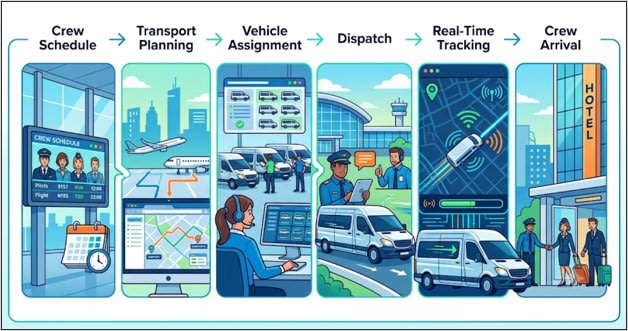
Crew logistics management covers how airports plan, schedule, deploy, and track ground personnel. That includes ramp agents, baggage handlers, marshallers, fuel technicians, and cabin cleaning teams. Coverage spans every flight, every duty period, and every terminal. One distinction matters early on. This isn't the same discipline as pilot or cabin crew rostering. That work falls under airline crew scheduling, which focuses on flight deck compliance and rest rules. Ground crew logistics stays on the tarmac and in the terminal, where the work looks completely different.
A handful of components define a mature system:
- Duty period and roster planning across peak and off-peak banks
- Real-time task assignment as flights arrive, depart, or get delayed
- Skill and certification matching, so the right person handles the right job
- Communication and dispatch between ramp, ops control, and gate staff
- Fatigue and compliance tracking to stay within labor regulations
Why does this matter more now than five years ago? Airports are running denser schedules on thinner staffing margins. Passenger volumes are climbing. Turnaround windows keep shrinking. Add a workforce that still hasn't fully recovered since 2019, and crew logistics management stops being optional. It becomes a survival skill.
Why Do Ground Operations Delays Keep Happening?
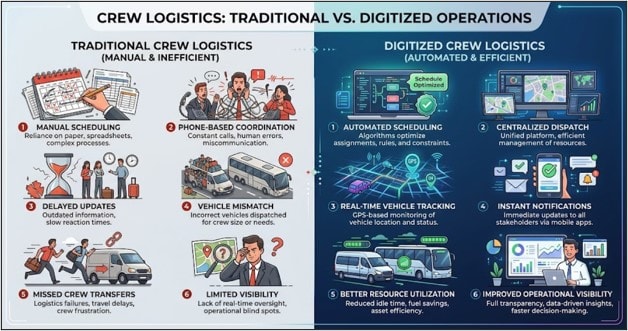
Ask any ramp supervisor why a turnaround ran long. Rarely is there one single cause. More often it's several small failures stacked together. A duty period was thin from the start. A roster got built in a spreadsheet nobody double-checked. A reassignment never reached the right phone. Oxford Economics estimates aviation has lost roughly 2.3 million jobs since 2019. Staffing in many regions still hasn't recovered. A related IATA survey found something telling. Sixty percent of ground handling professionals said they didn't have enough qualified staff to run operations smoothly. These numbers explain a lot about why turnarounds slip.
The recurring culprits form a short, familiar list:
- Understaffed duty periods during peak arrival and departure banks
- Little to no real-time visibility into where crew members actually are
- Manual, spreadsheet-driven rosters prone to double-booking and errors
- Certification mismatches, where an assigned worker isn't cleared for the task
- Communication breakdowns between ramp teams, ops control, and gate agents
None of these causes are exotic. They're everyday friction points. Each one has a fairly direct fix once you know where to look.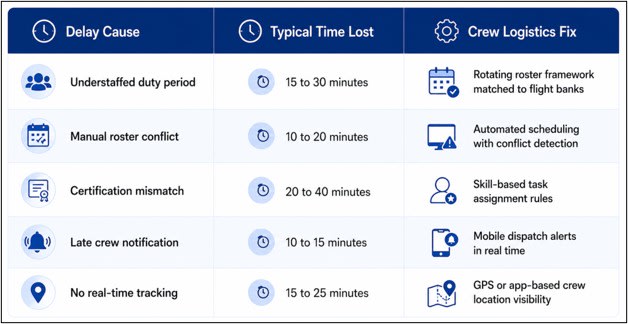
How Can Airports Standardize Crew Scheduling?
Standardization sounds bureaucratic. In practice, it's the opposite. Done well, it frees teams from guesswork. Supervisors get to focus on real exceptions instead of fighting fires all day.
Building a Rotating Duty Framework
A rotating framework staggers duty start times and breaks. Coverage then matches flight bank density instead of assuming every hour needs equal staffing. Good frameworks usually include the following.
- Overlap windows during known peak arrival and departure banks
- Staggered break rotations so the ramp is never thin all at once
- A backup or float pool for last-minute absences
- Fatigue limits built directly into the roster logic, not left to memory
One regional airport cut turnaround variance by roughly a third. It replaced ad hoc duty assignments with a fixed rotating block structure. Not glamorous work, but it works.
Setting Skill-Based Assignment Rules
The second piece is certification-driven assignment. Supervisors shouldn't have to rely on memory to know who's qualified for what. Relevant credentials usually include GSE licensing, dangerous goods handling, de-icing certification, and marshalling qualifications. When airline crew scheduling software enforces these rules automatically, mismatches become far rarer.
What Role Does Real-Time Tracking Play?
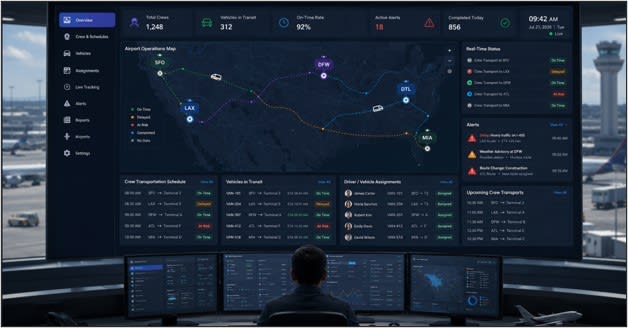
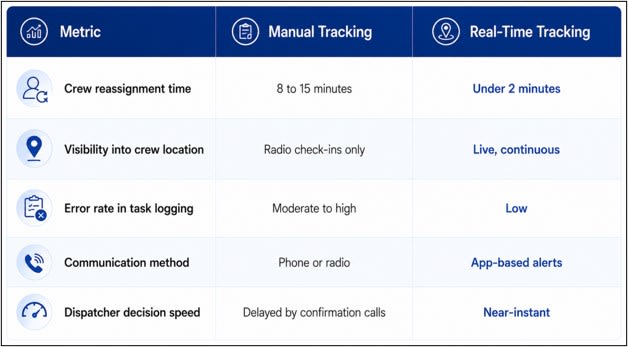
Real-time vehicle tracking gives dispatchers a live picture of where every crew member stands. It works through GPS, RFID beacons, or a simple mobile app. The value shows up fastest during disruptions. A flight gets delayed on approach, or diverted to another gate. Dispatchers with live visibility can reassign staff within minutes. Without it, that same reassignment means a dozen phone calls and hoping someone picks up.
One regional carrier trimmed its average turnaround from 68 minutes to near 50. It adopted app-based crew tracking to get there. A cargo hub nearby cut misrouted baggage handler assignments by about a quarter in its first season. Small wins, but they compound fast at scale.
The bigger change is cultural, not technical. Ramp teams get used to being seen. Supervisors stop piecing together locations from radio chatter. Together, that cuts the number of where-is-so-and-so calls during a busy bank.
The technology stack behind this usually includes the following pieces:
- Mobile apps for crew check-in and task acknowledgment
- Geofencing around gates, ramps, and staging areas
- IoT beacons for equipment and personnel proximity
- Digital dispatch boards visible to ops control in real time
How Does Crew Logistics Software Reduce Costs?
The operational story has a financial side too. According to Airlines for America, operating an aircraft costs about $100.76 per minute on average. The crew component alone accounts for roughly $35.23 of that. Multiply a stalled turnaround across even a handful of daily flights, and the math turns uncomfortable fast. Ground damage adds another layer of cost. IATA-referenced projections put industry-wide ground damage costs above $8 billion by 2030. Much of it ties back to rushed or mismatched crew handling equipment.
Crew logistics management software chips away at these costs from several directions.
- Reduced overtime and last-minute staffing premiums
- Fewer ground damage incidents from rushed or mismatched assignments
- Lower compensation and rebooking costs tied to delay cascades
- Better utilization of ground support equipment and gate assets
Airlines and ground handlers investing in crew transportation management tools generally see savings show up fast. Often within a season or two. Delay-related costs compound across a busy schedule, so early fixes pay off quickly.
What Metrics Should You Track for Crew Efficiency?
The old saying still holds up. What gets measured gets improved, and ground operations are no exception. Building even a modest KPI dashboard gives leadership something firmer than gut feeling. Most operations teams find a handful of core numbers tell most of the story. Everything else is detail.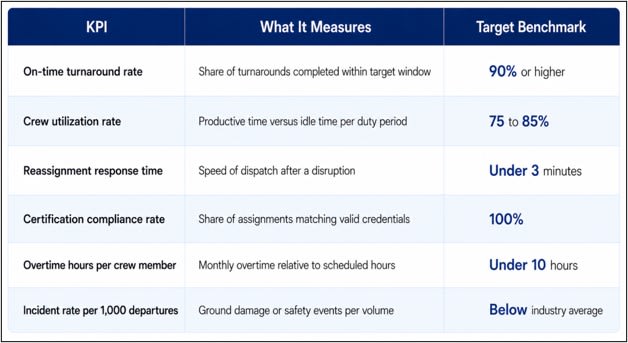
None of these numbers mean much in isolation, though. The real value shows up when you track them together, month over month. Start watching which lever moves the others. A dip in certification compliance is an early warning sign. It often shows up as a spike in reassignment time a week or two later. Catching that pattern early beats any single benchmark.
What to Look for in a Logistics Platform
Choosing the right system matters as much as adopting one. A handful of features separate genuinely useful platforms from spreadsheets with a nicer interface. Try a platform against one busy bank before rolling it out airport-wide. That small test reveals problems no sales demo ever will.
- Real-time crew tracking and dispatch capability
- Automated skill and certification matching
- Integration with airport operational databases and airline systems
- Mobile-first access built for staff working outdoors, on the move
- Analytics and KPI dashboards for ops leadership
- Scalability across multiple stations, terminals, or airports
- Support for broader crew mobility management, covering how staff move between terminals and duty points, sometimes paired with airport shuttle management software on larger campuses
Platforms built around solid flight crew logistics principles share one trait. They treat coordination as a live, ongoing process. Not a static plan printed at the start of the day.
Conclusion
Ground operations run on people. Those people need to be in the right place, at the right time, without fail. That is the real work behind crew logistics management. It means moving away from reactive scrambling toward coordination that's planned and data-led. No system will eliminate every delay. Standardized rosters, live visibility, and clear KPIs will shrink the ones caused by preventable staffing shortfalls. That adds up fast across a busy schedule. Airline crew management will keep leaning into automation and predictive rostering. Expect that trend to accelerate through 2026 and beyond. The airports that treat crew logistics as core infrastructure, not overhead, are the ones pulling ahead.
Frequently Asked Questions
Q. What is the difference between crew logistics and crew scheduling?
Ans. Crew scheduling is one piece of a bigger picture. It covers duty assignments and rosters, nothing more. Crew logistics management is the broader discipline. It wraps in real-time deployment, tracking, communication, and compliance too. Scheduling is the plan. Logistics is everything that keeps that plan working once the day starts.
Q. How much can airports save by digitizing ground crew management?
Ans. Savings vary by airport size and traffic volume, but the pattern holds. Fewer overtime hours, fewer ground damage claims, and tighter turnarounds all chip away at cost. Many operators see meaningful drops in unplanned staffing spend within the first year of adopting dispatch tools. Results still depend on how consistently the system gets used.
Q. What certifications are required for airport ground crew?
Ans. Requirements vary by role and region. Common ones include ground support equipment licensing, dangerous goods handling certification, and de-icing qualifications for cold-weather stations. Some roles also call for marshalling or wingwalker training. Airports typically renew these on a fixed cycle. Tracking expiry dates is one of the more tedious manual tasks that logistics software tends to automate.
Q. Can small or regional airports benefit from crew logistics software?
Ans. Yes, and often more visibly than at larger hubs. Smaller teams have less slack to absorb a bad duty period or a missed handoff. Even modest gains in visibility and scheduling accuracy tend to show up fast in on-time performance. Scalable platforms let regional operations start small and grow as traffic increases.
Q. How does weather disruption affect crew logistics planning?
Ans. Weather adds unpredictability that good planning has to absorb, not avoid. De-icing crews need to be positioned and cleared for duty before a cold front arrives, not after. Contingency staffing pools, built into the roster in advance, help teams respond without scrambling.
Want to publish a guest post on aamax.co?
Place an order for a guest post or link insertion today.
Place an Order