

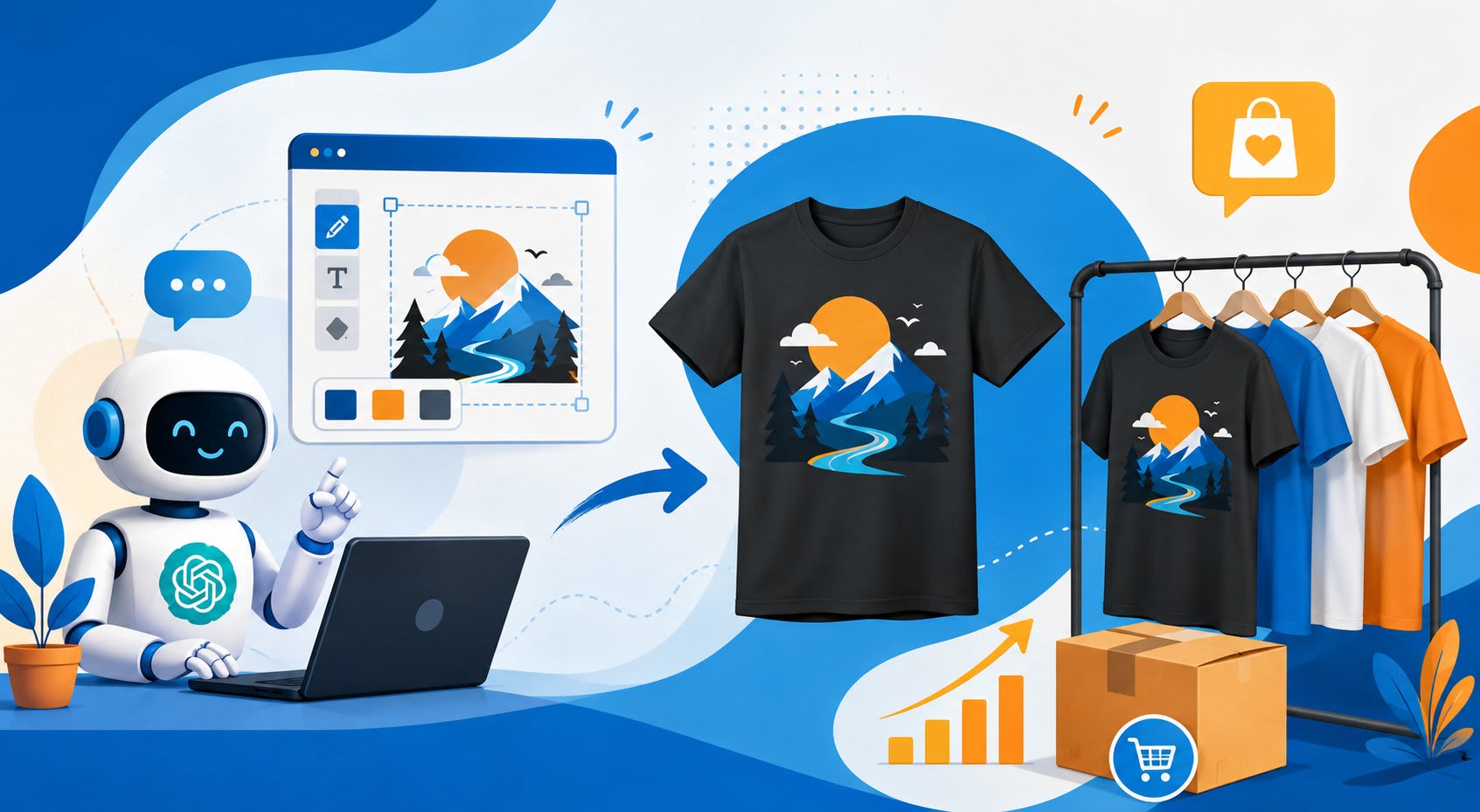
Can ChatGPT Actually Design T-Shirts You Can Sell?
Print on demand has turned almost anyone with an idea into a potential store owner. No inventory, no upfront printing costs, just upload a design and let the orders roll in.
So it was only a matter of time before sellers started asking the obvious question. Can ChatGPT handle the design part too?
The short version is yes, but with a few important catches. ChatGPT can spark ideas and even generate artwork, yet "print-ready" is a higher bar than "looks good on screen."
Here is what the tool can really do, where it falls short, and how to bridge the gap.
Key Takeaways
- ChatGPT is excellent for brainstorming t-shirt concepts, slogans and design directions in seconds.
- Its built-in image generator can now create artwork and even transparent backgrounds, which is a big step up.
- Raw ChatGPT images are usually too low in resolution to print at full shirt size without extra work.
- Getting a true print-ready file often means upscaling, cleaning up and exporting at 300 DPI.
- The design is only half the job, since marketing is what actually sells the shirt.
First, the Print on Demand Boom
It helps to understand why this question matters so much right now. Print on demand has exploded, and the market is projected to be worth roughly $59 billion by 2032.
That growth has pulled in a flood of new sellers, all looking for an edge. Anything that speeds up design and lowers costs gets attention fast.
AI tools sit right in the middle of that hunt. They promise to shrink the gap between "I have an idea" and "I have a product."
What ChatGPT Can Actually Do for T-Shirt Design
Start with the thing ChatGPT does best, which is language. Ask it for trending niches, punchy slogans or themes for a specific audience and it delivers in seconds.
That alone is useful. A blank canvas is intimidating, and ChatGPT is a tireless brainstorming partner that never runs dry.
Since the move to GPT-4o, the tool also generates images directly inside the chat. It handles text on designs far better than older versions and can even produce transparent backgrounds, which designers have wanted for ages.
Helpful walkthroughs on using ChatGPT for print-on-demand designs show how a simple written prompt can become a logo or graphic you build a whole product line around through Printify. It is a genuinely fast way to get from concept to first draft.
Where "Print-Ready" Gets Tricky
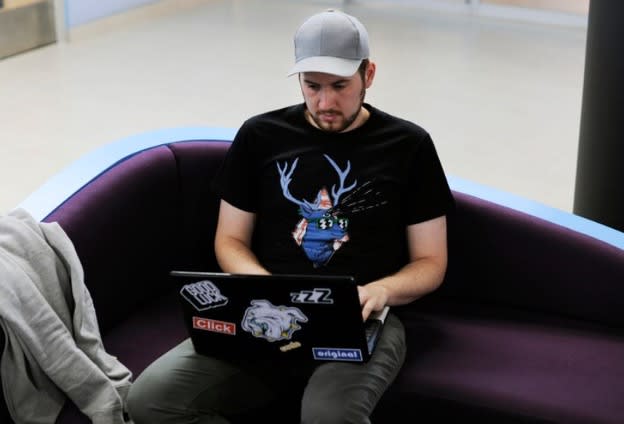
Here is the catch that trips up a lot of new sellers. An image that looks crisp on your phone is not automatically ready for a printer.
Print quality is measured in DPI, or dots per inch, and most print shops want artwork at 300 DPI.
A standard t-shirt front print often needs to be around 4500 by 5400 pixels to hit that mark.
ChatGPT's images come out at fixed sizes that top out well below that. Blow one up to full shirt size and the edges tend to go soft and blurry.
Color is another factor. Screens use RGB while many printing methods lean toward CMYK, so what glows on a monitor can look duller on fabric.
None of this means the artwork is unusable. It just means a raw download is a starting point, not the finished file. Most print on demand platforms publish a template with the exact dimensions they want, which takes a lot of the guesswork out.
How to Get From Concept to Print-Ready
The good news is that the gap is easy to close with a few extra steps. Think of ChatGPT as the designer and yourself as the one who preps the file.
Start with a detailed prompt. Spell out the style, the mood, the colors and ask directly for a clean design on a transparent background.
Once you have something you like, run it through an upscaler such as Topaz Gigapixel or Let's Enhance. These tools enlarge the image toward print size while keeping the lines sharp.
Then zoom in and inspect. AI art can hide odd details like warped text or extra fingers, so a careful review saves you from printing a flawed run.
Finally, export as a high-resolution PNG with that transparent background intact. At this point you have something a print on demand service can actually work with.
The Part People Forget After the Design
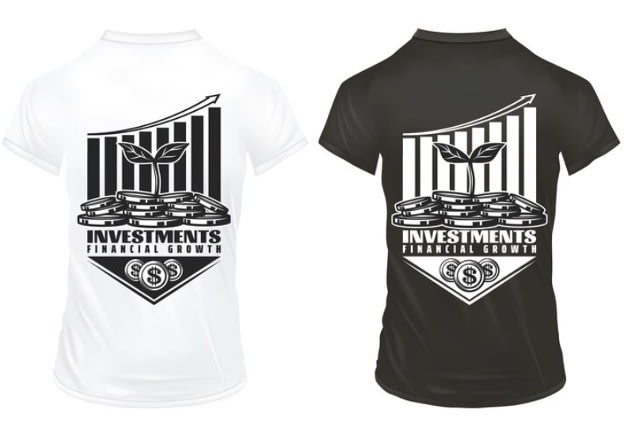
Here is the truth no design tool will tell you. A great shirt that nobody sees does not sell.
Once your artwork is ready, attention shifts to listings, pricing and getting in front of the right buyers. This is where a lot of talented designers stall.
Staying on top of current digital marketing trends helps your products surface where shoppers actually spend their time. Strong visuals and smart promotion work together, not separately.
ChatGPT can pitch in here too, drafting product descriptions, ad copy and keyword ideas. The design may grab the eye, but the words help close the sale.
Finishing Thoughts
So can ChatGPT create print-ready t-shirt designs? It can take you most of the way, and faster than ever before.
What it cannot do yet is hand you a flawless, press-ready file with zero effort. The resolution gap and the occasional strange detail still need a human touch.
Treat ChatGPT as a brilliant creative assistant rather than a one-click factory. Pair its speed with a little file prep and you have a workflow that genuinely competes.
For solo sellers and small brands, that combination is hard to beat. The barrier to launching a clothing line has never been lower.
FAQ
Can ChatGPT generate a t-shirt design on its own?
Yes. With GPT-4o, ChatGPT can produce artwork and concepts directly in the chat, including designs with transparent backgrounds. You will usually need to prep the file before printing.
Are ChatGPT images high enough resolution to print?
Not straight out of the box. The default sizes are built for screens, so most designs need upscaling to reach the 300 DPI that printers expect at full shirt size.
Do I need the paid version of ChatGPT?
Image generation is available across free and paid plans, though free users face tighter limits. Anyone making a lot of designs tends to find the paid tier more practical.
What file format should I use for print on demand?
A high-resolution PNG with a transparent background is the safe choice for most print on demand platforms. Always check your provider's specific requirements first.
Is AI artwork safe to sell?
Generally yes, but you are responsible for making sure a design does not copy existing trademarks or copyrighted work. A quick originality check protects your store.
Want to publish a guest post on aamax.co?
Place an order for a guest post or link insertion today.
Place an Order