

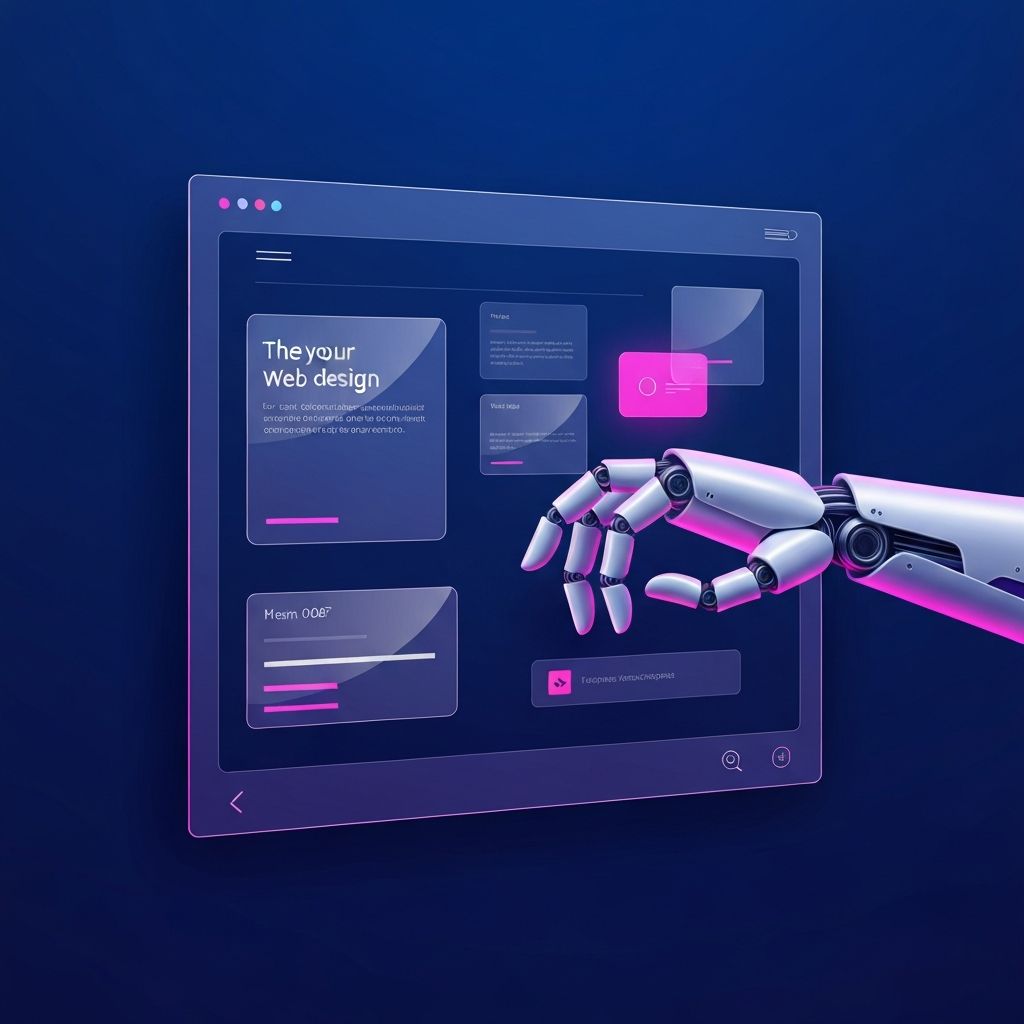
AI in Web Design
The Transformative Power of AI in Web Design
Artificial intelligence has emerged as one of the most significant forces reshaping web design, fundamentally changing how websites are conceived, created, and optimized. From automating repetitive tasks to enabling previously impossible personalization, AI technologies are enhancing every aspect of the web design process. At AAMAX.CO, we're at the forefront of integrating AI capabilities into our design and development workflows to deliver superior results for our clients.
Understanding AI's role in modern web design isn't about replacing human creativity—it's about augmenting it. The most effective implementations of AI in web design leverage machine learning and intelligent automation to handle technical complexities while freeing designers to focus on strategic and creative decisions that require human insight.
Automated Layout Generation and Design Systems
AI-powered layout generation tools have evolved from curiosities to practical solutions that accelerate the design process significantly. These systems can analyze content, understand design principles, and propose layout options that would take human designers hours to explore manually. The technology doesn't replace designer judgment but provides a starting point for refinement.
Design systems enhanced by AI can ensure consistency while adapting to new contexts. When a new page template is needed, AI can generate options that align with established brand guidelines, maintaining visual cohesion while exploring creative possibilities. This capability is particularly valuable for large websites requiring numerous page types.
Our website design services integrate these AI capabilities thoughtfully, using automated generation as a tool that enhances rather than replaces the human design process.
Intelligent Content and Copy Optimization
AI has transformed content creation and optimization for web design. From generating initial copy drafts to optimizing existing content for search engines and user engagement, these tools help ensure that websites communicate effectively. Natural language processing enables AI to understand context and produce human-quality text.
A/B testing at scale becomes possible with AI that can generate and test multiple headline variations, calls to action, and content approaches simultaneously. Rather than testing two options over weeks, AI-powered tools can evaluate dozens of variations and identify winners quickly, continuously improving website performance.
Content personalization represents one of AI's most powerful applications in web design. By analyzing user behavior and characteristics, AI can dynamically adjust content presentation to individual visitors, showing the most relevant messages, products, or information based on contextual signals.
Enhanced User Experience Through AI
User experience design benefits enormously from AI's ability to analyze user behavior patterns and predict preferences. Heat mapping, session recording, and user flow analysis powered by AI can identify usability issues and opportunities that might otherwise go unnoticed. These insights inform design decisions with empirical data.
Chatbots and conversational interfaces have become essential elements of modern websites, and AI makes them increasingly sophisticated. Beyond simple FAQ responses, AI-powered chat can understand nuanced queries, maintain context across conversations, and provide genuinely helpful assistance that enhances user experience.
Accessibility improvements are another area where AI contributes significantly. Automated accessibility testing can identify issues more comprehensively than manual review, while AI-powered tools can generate alt text, improve color contrast, and enhance navigation for users with various abilities.
Image and Visual Asset Creation
AI image generation has already transformed how websites source visual content, but the technology's impact extends further into design workflows. Beyond creating images from scratch, AI can resize, reformat, and optimize existing images intelligently, automatically adjusting composition when aspect ratios change rather than simply cropping.
Background removal, image enhancement, and style transfer that once required skilled photo editing can now be accomplished instantly with AI tools. This democratization of image manipulation capabilities enables faster iteration and reduces production bottlenecks.
Visual search and image recognition powered by AI create new website functionality possibilities. E-commerce sites can offer "find similar products" based on uploaded images, while content sites can suggest related articles based on visual similarity. Our web application development services leverage these capabilities for innovative solutions.
Code Generation and Development Acceleration
AI coding assistants have matured into genuinely useful tools for web development. From suggesting code completions to generating entire components from descriptions, these tools accelerate development while reducing errors. The technology works best as a collaborator, with developers guiding and reviewing AI output.
Converting designs to code—historically a time-consuming translation process—can now be partially automated. AI tools can analyze design files and generate corresponding HTML, CSS, and even JavaScript, providing a foundation that developers refine rather than building from scratch.
Bug detection and code optimization benefit from AI's ability to analyze patterns across vast codebases. These tools can identify potential issues, suggest improvements, and even predict where problems might occur based on code structure and complexity.
Personalization at Scale
The holy grail of web design—delivering personalized experiences to every visitor—becomes achievable through AI. Rather than creating one website that attempts to serve everyone adequately, AI enables dynamic adaptation that presents different experiences to different users based on their characteristics, behaviors, and preferences.
This personalization can affect every element of a website, from the images and headlines displayed to the navigation structure and content recommendations. Users receive experiences tailored to their interests without requiring explicit configuration, as AI infers preferences from behavioral signals.
E-commerce personalization powered by AI goes beyond simple "customers also bought" recommendations. Sophisticated systems consider timing, browsing patterns, price sensitivity, and numerous other factors to present products with the highest conversion potential for each individual visitor.
Predictive Analytics and Conversion Optimization
AI enables predictive capabilities that transform how websites are optimized. Rather than waiting for problems to manifest in declining metrics, predictive models can identify potential issues before they impact users. This proactive approach prevents problems rather than merely reacting to them.
Conversion rate optimization becomes more sophisticated with AI that can model user journeys and identify friction points. Machine learning algorithms can analyze thousands of micro-interactions to understand what distinguishes converting visitors from those who leave, revealing optimization opportunities invisible to traditional analytics.
Our website development projects incorporate these predictive capabilities, building websites designed for continuous improvement based on AI-driven insights.
The Human-AI Collaboration Model
The most effective applications of AI in web design maintain human oversight and creative direction. AI excels at processing data, generating variations, and handling repetitive tasks, but human judgment remains essential for strategic decisions, brand expression, and understanding business context that AI cannot fully grasp.
Designers and developers who embrace AI as a tool rather than a threat find their capabilities expanded significantly. Tasks that once consumed hours can be accomplished in minutes, freeing creative professionals to focus on work that requires human insight, empathy, and creativity.
Training and adaptation are necessary as AI capabilities evolve. Staying current with AI tools and techniques has become essential for web design professionals who want to remain competitive. The learning curve is real but manageable, and the productivity gains justify the investment.
Ethical Considerations and Responsible AI Use
Implementing AI in web design requires attention to ethical considerations. Personalization that feels helpful can become invasive if it reveals that too much is known about visitors. Transparency about AI use helps maintain trust, while privacy-respecting implementations ensure compliance with regulations.
Bias in AI systems can affect web design outcomes in unexpected ways. If training data reflects historical biases, AI tools may perpetuate or amplify those biases in their outputs. Awareness of this issue and active mitigation efforts are essential for responsible AI implementation.
Our web development consulting services help clients navigate these considerations, implementing AI capabilities responsibly while maximizing their benefits.
Preparing for an AI-Enhanced Future
AI's role in web design will only expand as technology advances. Businesses that embrace these capabilities now will be better positioned to leverage future developments. Building AI considerations into your web strategy today creates a foundation for continued evolution.
We're committed to staying at the forefront of AI integration in web design, continually evaluating new tools and techniques for their potential to deliver value to our clients. The future of web design is a collaboration between human creativity and artificial intelligence—and we're excited to be part of that future.
Ready to explore how AI can enhance your web design projects? Contact us to discuss the possibilities and discover how intelligent automation can deliver better results more efficiently.
Want to publish a guest post on aamax.co?
Place an order for a guest post or link insertion today.
Place an Order