
8 Best AI Brand Monitoring Tools in 2026
SE Visible by SE Ranking is the best AI brand monitoring tool for brand teams in 2026, because every sentiment reading opens into the AI answer and the sources behind it. Brand24 is best for teams pairing media monitoring with AI answers, Profound for enterprise brands needing security reviews and agents, Peec AI for checking AI claims against your own fact list, Otterly.AI for a quick daily read on a fixed prompt list, and Semrush AI Visibility Toolkit for brand narrative reports inside an existing Semrush account. The full comparison is below.
An AI answer about your brand is published copy nobody on your team approved, and most companies aren't reading it. Just 16 percent of brands systematically track AI search performance. Its tone, the rivals it names, and its claims can reach a buyer before your pages do.
The test for the eight AI brand monitoring tools below: how fast each takes you from a sentiment number to the sentence and source behind it.
How the 8 AI brand monitoring tools compare
The table lines up eight AI brand visibility tools on what a brand team checks first: the job each fits, the AI engines it covers, and where pricing starts. Rank matches the card order; each card explains how the tool reads tone.
Rank | Tool | Best for | Engines | Starting price |
1 | SE Visible | Tone reports across markets | ChatGPT, Gemini, AI Mode, AI Overviews | Plans on visible.seranking.com |
2 | Brand24 | Comms teams reading press and AI | ChatGPT, Gemini, Claude, Perplexity, +2 | Chatbeat from $99/mo |
3 | Profound | Security-reviewed rollouts | ChatGPT, Gemini, AIO (trial) | Free trial; Enterprise custom |
4 | Peec AI | Attribute and objection tracking | Choose 3 | $95/mo |
5 | Otterly.AI | Sentiment plus GEO audits | 3 of 7 (self-serve) | $29/mo |
6 | Semrush AI Visibility Toolkit | Weekly share-of-voice reads | ChatGPT, AI Mode (tracking) | $99/mo |
7 | Scrunch | Tone beside AI bot traffic | 4 on Core | $250/mo |
8 | Evertune | Sampled perception reads | Up to 5 on Starter | $60/mo |
What should an AI brand monitoring tool show a brand team?
An AI brand monitoring tool should show a brand team the exact sentence each engine wrote about the brand, its tone, the rivals named beside it, and the sources behind it, per market and over time, so framing shifts show up early.
- Can you open the full reply? Every tone figure should lead to the unedited answer.
- Is tone broken down? Sentiment by topic or attribute shows what to fix.
- Who corrects the source? Each cited page needs context to assign the fix.
- Can you separate how buyers ask? Branded, unbranded, comparison, and objection prompts are read apart.
- Does coverage match your buyers? Their engines and markets, with history so brand monitoring for AI results shows a trend.
I read each vendor's pages and scored the eight against these questions.
Why does the way a buyer asks change how AI describes a brand?
AI engines answer the question in front of them, so a skeptical prompt draws a skeptical description. In SE Visible's study of 900 ChatGPT responses, negative prompts moved brand sentiment roughly twice as far from the neutral baseline as positive prompts did. In head-to-head comparisons, the brand cast in the negative role lost 20-180 Net Sentiment points.
So the prompt list is a sampling decision: "best" prompts flatter the brand. Track the comparison and objection prompts buyers type, and read tone per prompt type.
How the machine describes us: one way for a recommendation, another for what goes wrong. Good LLM brand monitoring reports both.
Who should own what AI says about the brand?
The brand team should own it, because buyers read an AI answer as fact, and among AI-aware consumers, 27% already use AI for product research, and 43% are open to doing so. Content, PR and product marketing execute the fixes, each at the source an engine draws on.
Log misconceptions like guideline breaches: owner, cause, fix, recheck. Then add AI answers to the brand-health read, so AI brand visibility gets the same review as published copy.
The 8 best AI brand monitoring tools in 2026
SE Visible ranks first for reading tone through the answer and its sources; the other seven AI brand monitoring tools follow by how close they get you to the sentence behind a score and to the page an engine quoted.
1. SE Visible: best AI brand monitoring tool
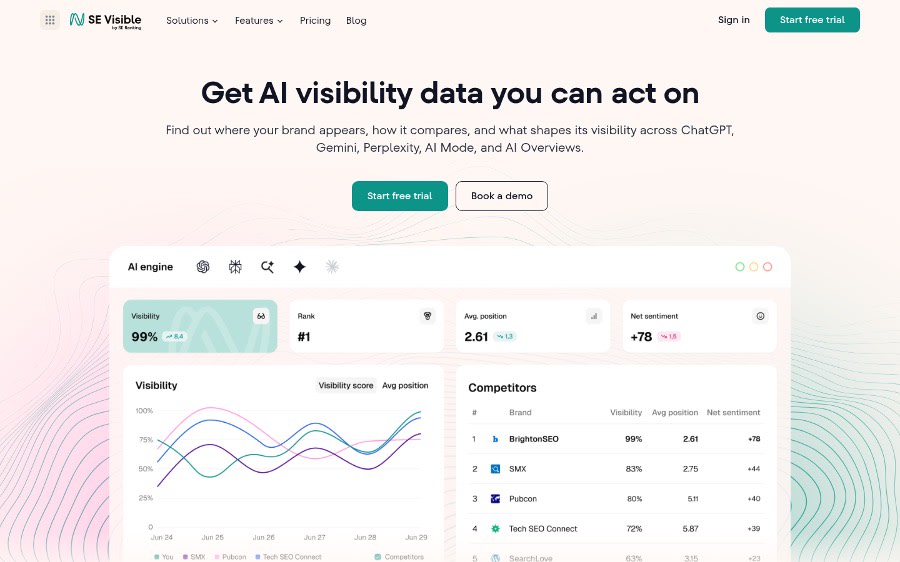
Net sentiment on comparison prompts, where a buyer weighs you against your two closest rivals, is the first number a brand team should read. SE Visible by SE Ranking is an AI visibility platform that scores that tone from -100 to +100 per topic, beside every tracked competitor. Answers from ChatGPT, Gemini, Google AI Mode, and Google AI Overviews arrive daily by default. Click a dip to read the answers as written, with engine, market, and date.
Best for: brand leaders reporting AI descriptions across markets.
Standout: When tone slips on a comparison prompt, the cited sources behind that answer show each domain's traffic, Domain Trust, and backlinks. Filter URLs by "Is my brand mentioned?" and sort by Gap score: the fix may be your own page, a publication PR should brief, or a positioning problem. Agents (Beta) file each gap as a content task or a mention to earn.
Pros:
- Separates branded, non-branded, and funnel-stage prompts
- Puts the unedited answer in front of leadership
- Feeds tone data to Looker Studio, MCP, and the API on every plan
Cons:
- AI visibility only; rank tracking, keyword research, and site audits sit in SE Ranking
- Claude and Copilot aren't tracked yet; both are planned as the platform grows
Pricing: Plans are listed on visible.seranking.com; API access is on every plan, and a free trial is available.
Tone verdict: To trace a tone shift and decide who acts, start here: the answer, its sources, and the likely fix sit together; the judgment stays yours. It's built by people who have worked in search for over a decade.
2. Brand24
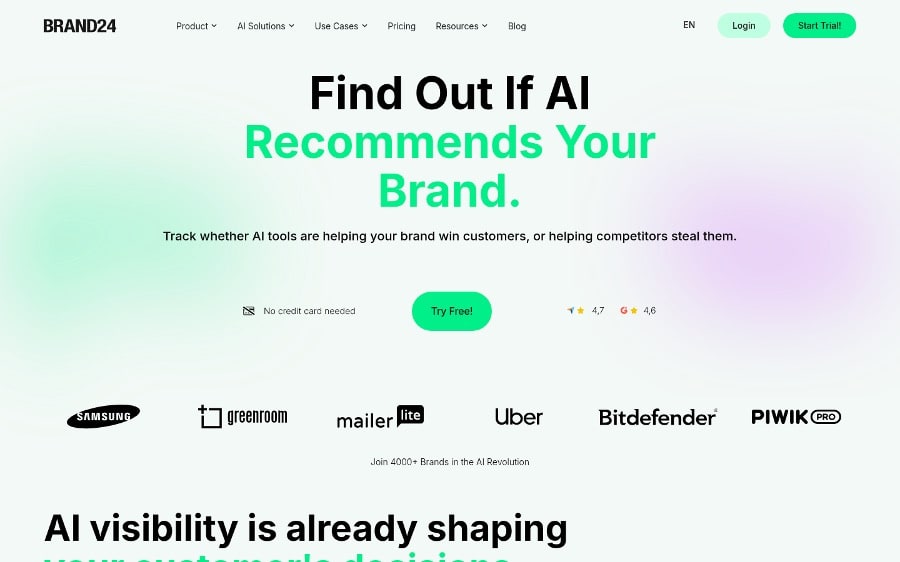
Brand24 pairs media monitoring with Chatbeat, a sister product that scores how AI models describe a brand.
Best for: communications leads who brief leadership on press, social, and AI tone.
Standout: Chatbeat rolls presence, position, sentiment, and citations into one Brand Score, splits share of voice by model, and lists the sources each answer drew on. Brand24 itself remains a familiar brand monitoring tool for news, podcasts, forums, and reviews.
Pros:
- Reads ChatGPT, Gemini, Perplexity, Claude, DeepSeek, and Grok
- Benchmarks the Brand Score against named competitors
- Suggests prompts and GEO recommendations
Cons:
- AI answers need Chatbeat, a second product
- A blended score needs its drivers opened to explain shifts
Pricing: Chatbeat from $99/mo (30 prompts); Brand24 plans from $199/mo billed annually.
Tone verdict: Brand24 shows whether AI framing of your brand matches your coverage elsewhere. It stops at the score: tracing a sentiment drop to one sentence means opening drivers and sources yourself.
3. Profound
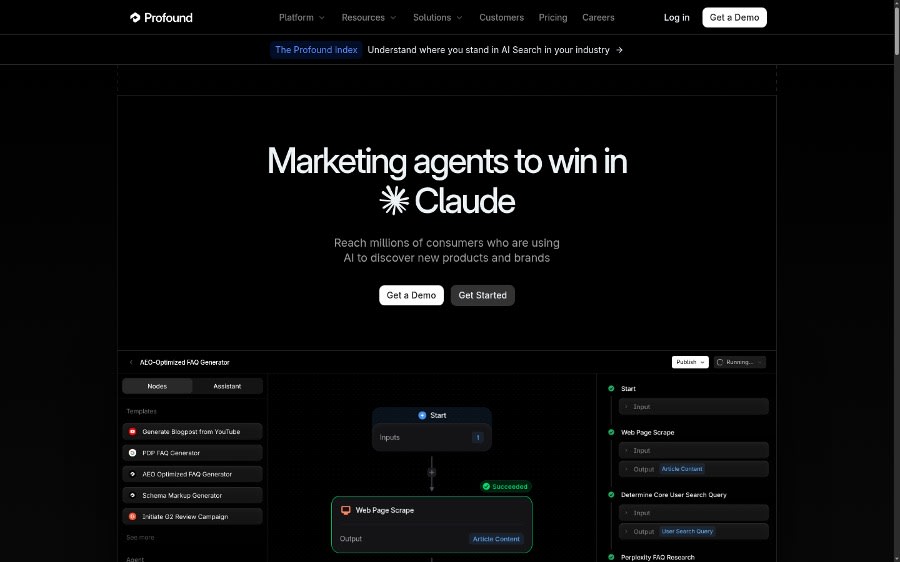
Profound sells AI answer monitoring as an enterprise program, with a free trial as the only self-serve entry.
Best for: brand organizations where procurement and security approve every vendor.
Standout: Enterprise extends AI Marketer credits to the whole team, and Context Manager stores your brand knowledge for agents. It reads up to 10 answer engines daily on a custom prompt plan, keeps all-time history, and exports CSV or JSON.
Pros:
- Supports SSO/SAML and SOC 2 for vendor reviews
- Gives unlimited seats to PR and content
- Adds API access and Agent Analytics
Cons:
- No self-serve paid brand tier between trial and Enterprise
- Trial prompts are a fixed industry set, not your own
Pricing: Free 7-day trial (50 prompts daily, three engines); Enterprise custom.
Tone verdict: Profound suits a brand running AI framing as a governed program with budget, security review, and staff. The trial won't run your own objection prompts before you sign.
4. Peec AI
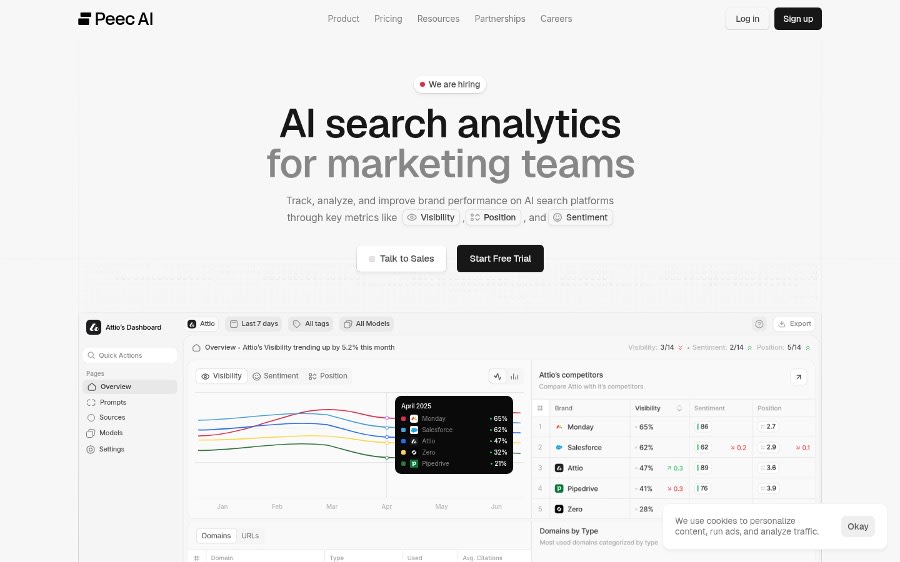
Peec AI scores the attributes AI models attach to a brand and checks claims against facts the team sets.
Best for: product marketing and brand leads tracking which buyer objections AI raises.
Standout: Brand Perception scores brand attributes on every plan. Objections lists doubts AI repeats, monthly on Pro and weekly on Advanced. Fact checks run chosen prompts against facts you set: 5 prompts and 5 facts on Starter, 25 and 50 on Advanced.
Pros:
- Allows unlimited users
- Offers MCP on every tier, API from Pro
- Connects to Looker Studio on Advanced
Cons:
- Self-serve plans read three models; extras cost from $30
- Starter skips objections
Pricing: Starter $95/mo (50 prompts), Pro $245/mo, Advanced $495/mo; 15% off annual billing.
Tone verdict: As an AI brand monitoring tool, Peec AI shows which attributes and objections engines attach and whether claims match your facts. It stops at three models below Enterprise, so other engines cost extra.
5. Otterly.AI
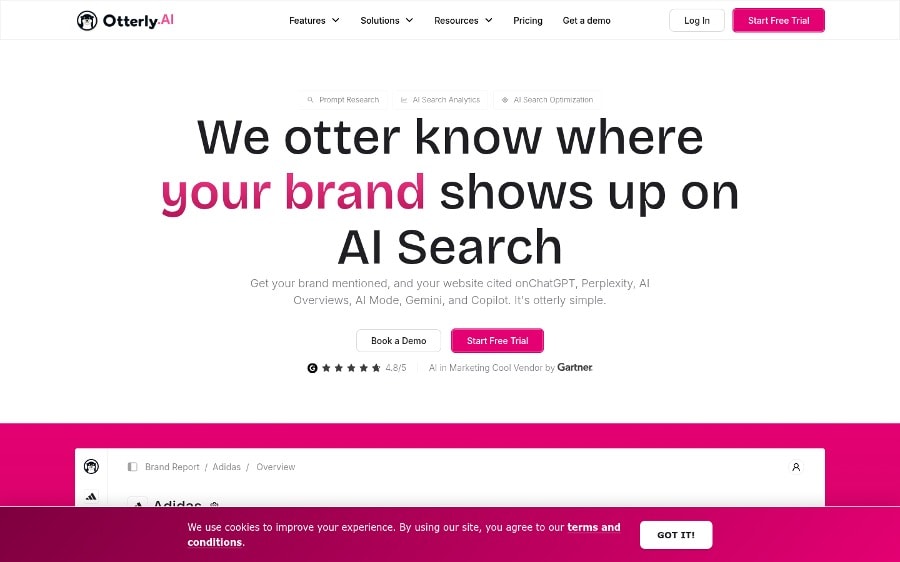
Otterly.AI pairs sentiment with a brand profile: which traits AI answers attach to you, and how warmly.
Best for: marketing teams logging tone against stable buyer questions.
Standout: Brand profiling records the traits each engine attaches to your brand, and sentiment shows whether that framing reads favorable or cold. Citation source tracking sits alongside, so a negative characterization arrives with the pages behind it. A GEO audit checks your pages.
Pros:
- Pairs sentiment with repeated brand traits
- Links answers to their cited sources
- Audits your pages for crawlability
Cons:
- Self-serve plans cap engines at 3 of 7; Claude answers cost 3 credits
- Lite has no API or MCP access
Pricing: Lite $29/mo (20 prompts), Standard $189/mo (160), Premium $489/mo (535).
Tone verdict: For AI brand tracking on a stable prompt set, Otterly.AI shows which traits engines repeat and how favorably. The record is the product: correcting a cold characterization stays with your team.
6. Semrush AI Visibility Toolkit
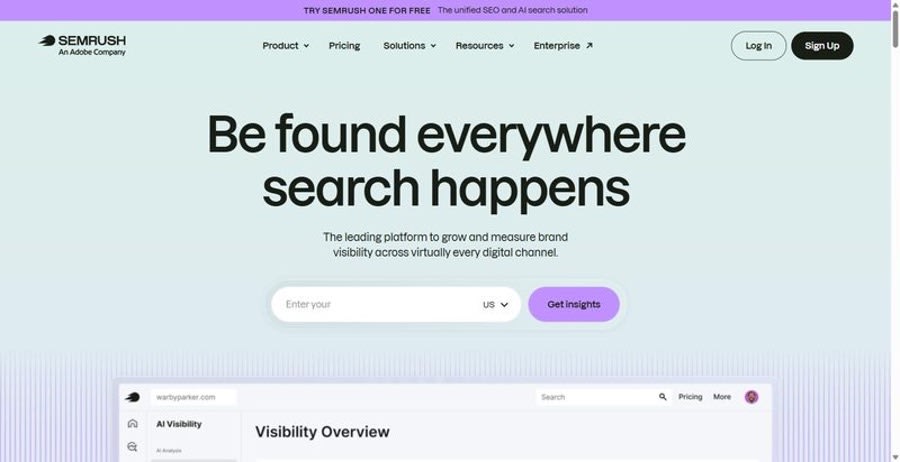
Semrush's toolkit runs two clocks: daily prompt tracking and a weekly narrative and sentiment read.
Best for: brand teams whose search colleagues already report from Semrush.
Standout: Brand Performance compares your share of voice, sentiment, and narratives with competitors, so the story an engine tells about you sits beside the one about a rival. Prompt Tracking adds 25 daily prompts on platforms like Google AI Mode and ChatGPT.
Pros:
- Sets narratives beside competitors'
- Tracks 25 prompts daily
- Adds Prompt Research and an AI Search Site Audit
Cons:
- Brand Performance covers one domain; extras cost $99 each
- Each teammate needs a $99 license
Pricing: $99/mo (1 domain, 25 prompts); no free trial.
Tone verdict: Semrush tells a brand leader which narratives engines repeat about the brand and its rivals. A midweek tone shift waits for the weekly report; turning a narrative into an owner and a fix stays with your team.
7. Scrunch
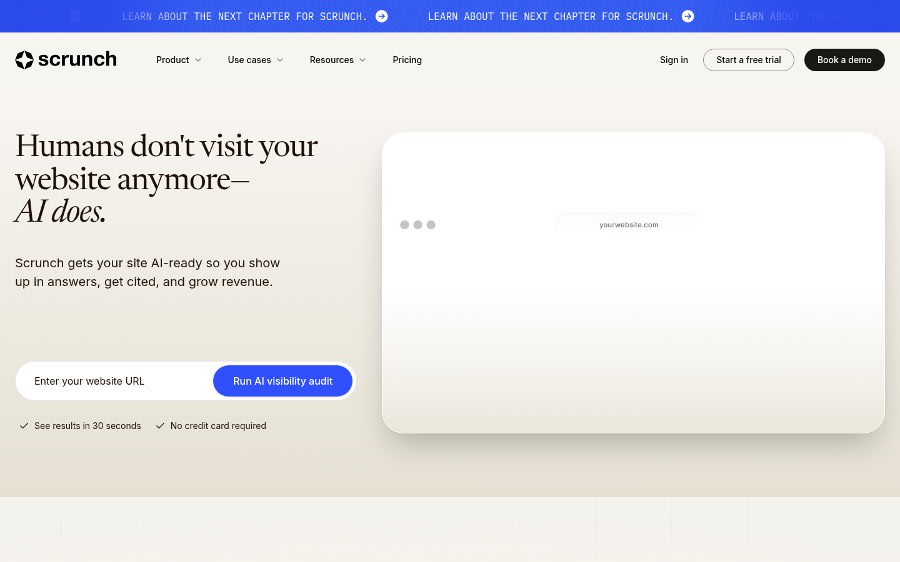
Scrunch reads sentiment by funnel stage, showing whether a cold tone appears early in research or near the decision.
Best for: brand teams reading tone by stage beside AI agent traffic to their site.
Standout: Core pairs sentiment analysis with citations, funnel stages, and AI bot traffic across 125 prompts and 5,000 monthly responses. Five competitors sit in the benchmark, so an unfavorable framing appears against named rivals, and recommendations suggest where a correction starts.
Pros:
- Separates tone by funnel stage
- Logs AI bots visiting your pages
- Includes five licenses on Core
Cons:
- One country and one language on Core limit a multi-market read
- API and Looker Studio wait for Enterprise
Pricing: Core $250/mo; Enterprise custom; 7-day free trial.
Tone verdict: Scrunch shows where in the buying journey the framing turns and which rivals sit beside it. Core tracks ChatGPT, Perplexity, Google AI Overviews, and Copilot; Gemini and AI Mode need Enterprise.
8. Evertune
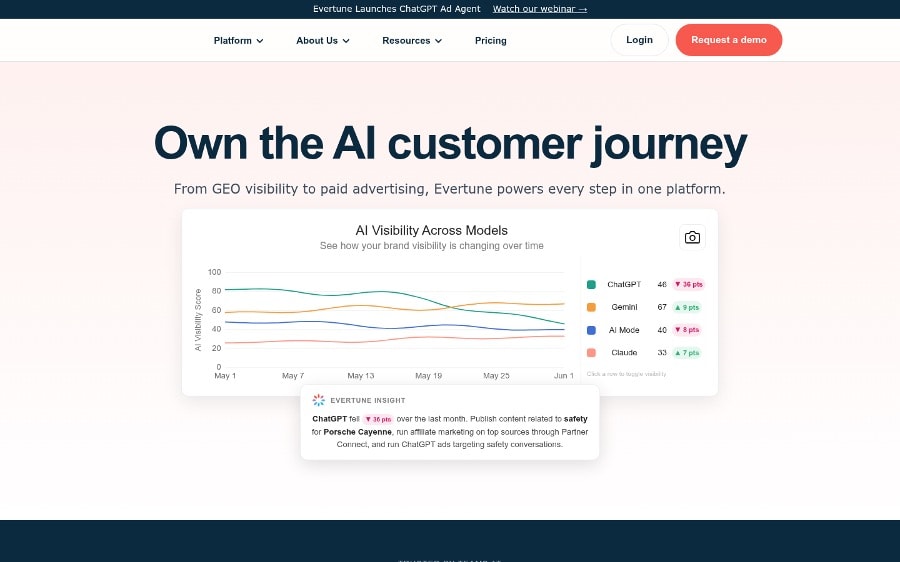
Evertune watches five AI models daily from its entry plan and keeps its sharpest tone tools for Enterprise.
Best for: brand teams wanting a daily five-model read before committing to sampled perception research.
Standout: On Starter, 5,000 prompt credits cover ChatGPT Search, Gemini Search, Copilot, AI Mode, and AI Overview, with daily monitoring and competitor benchmarking. Pro moves to 11 models and 100 samples per prompt, which matters when one harsh answer might be noise.
Pros:
- Benchmarks competitors from Starter
- Includes GEO Manager and Ads agents on Starter
- Adds a Content Agent, 25 articles a month, on Pro
Cons:
- 100-sample prompts start at Pro, billed annually
- Fact Checker and Keyword Sentiment are Enterprise-only
Pricing: Starter $60/mo; Pro $800/mo billed annually.
Tone verdict: From Pro, this AI brand monitoring tool shows whether a framing holds across 100 samples or came from one stray answer. Claim checks against your own fact list wait for Enterprise.
Which AI brand monitoring tool should a brand team choose?
For most brand teams comparing AI brand visibility tools, SE Visible is where to start. Follow a tone shift from the answer to its source page, then hand the fix to that page's owner. Route by need: Brand24 if press and social sit in one read, Peec AI if your fact sheet is the control, Profound if procurement leads.
Skip if: you need daily narrative reads (Semrush AI Visibility Toolkit refreshes them weekly), or fact checking on Evertune's Starter (it's Enterprise-only).
The description is the brand now. Give SE Visible a try. For the SEO side, SE Ranking covers Google and traditional search; the two platforms are complementary.
FAQ about AI brand monitoring
How do you monitor brand mentions in ChatGPT?
Build a fixed set of buyer prompts: branded, category, and comparisons with your closest rivals. Run them in ChatGPT on a schedule, store each full answer, and record the mention, its tone, and the cited sources. AI brand monitoring tools run this routine so you can monitor AI brand mentions across markets.
What are AI monitoring tools?
In a brand context, AI brand monitoring tools run prompts through AI assistants and record brand mentions, their tone, and the sources behind each answer. That differs from developers' model-performance monitoring and from brand monitoring tools for social listening, which read what people publish.
How often should you check what AI says about your brand?
Collect daily: the same prompt can return a different description tomorrow. Read the results as patterns, not single answers. Report monthly, with AI descriptions as a line in the brand-health read. That is how to monitor brand visibility in AI without chasing noise.
Want to publish a guest post on aamax.co?
Place an order for a guest post or link insertion today.
Place an Order